Jusangjeolli Cliff Jeju: Jeju’s Most Stunning Hexagonal Volcanic Rock Formation
Jusangjeolli Cliff Jeju: Jeju’s Most Stunning Hexagonal Volcanic Rock Formation
Jeju Island has no shortage of stunning natural scenery, but few places stop you in your tracks quite like Jusangjeolli Cliff. This remarkable hexagonal volcanic rock formation on Jeju’s southern coast is one of the island’s most distinctive natural wonders — thousands of geometric basalt columns rising from the sea in a landscape that looks almost too precise to be natural.
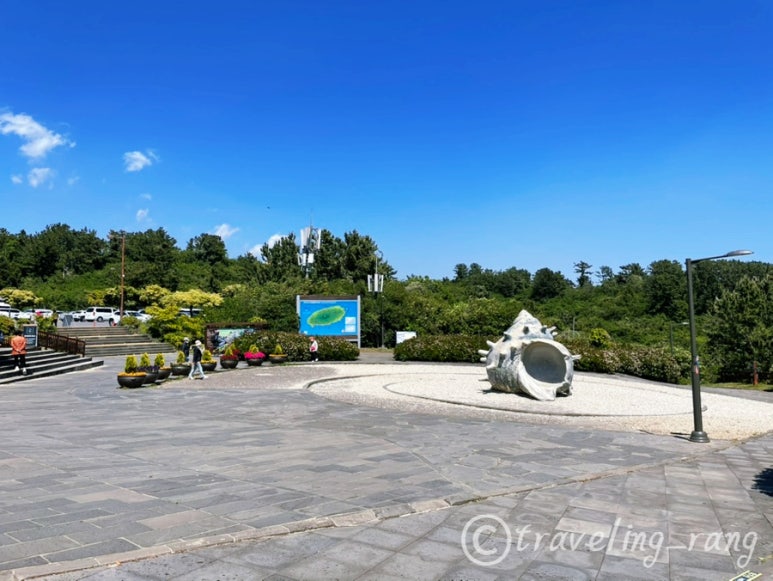
We visited as a family of four — and what started as a sightseeing stop turned into an unexpectedly rich learning experience for our two kids, each of whom found their own way to connect with what they were seeing.
Here’s everything you need to know before you visit Jusangjeolli Cliff on Jeju Island.
1. Jusangjeolli Cliff Jeju: Location and Essential Information
1) Where It Is
Jusangjeolli Cliff is located along the Daepo coastline in Jungmun-dong, Seogwipo-si — within the eastern edge of the Jungmun Tourist Complex on Jeju’s southern coast. The full address is 36-30, Ieodo-ro, Seogwipo-si, Jeju-do.
2) Getting There
By car or rental, Jusangjeolli Cliff is easily accessible with a large, well-maintained parking lot — one of the more relaxed parking experiences on the island, which matters if you’re navigating Jeju’s roads in an unfamiliar rental for the first time. Parking is paid on exit at a flat rate.
By public transport, take Airport Limousine Bus No. 600 from Jeju Airport and alight at the International Convention Center stop (approximately 50 minutes). From the Jeju Intercity Bus Terminal, the Jungmun Express Bus runs directly to the Jungmun Tourist Complex.
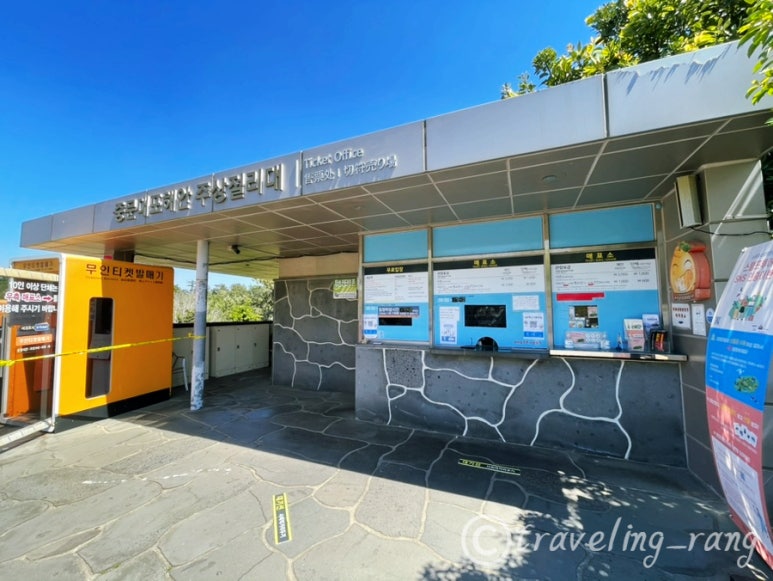
3) Opening Hours
Jusangjeolli Cliff opens at 9:00 AM daily. Closing time varies by season — last entry is typically around 5:40 PM in spring, with the site closing at 6:00 PM. If you’re planning a late afternoon visit, check the current closing time before you go, as it shifts throughout the year.
4) Admission Fees
a) Adults: KRW 2,000
b) Teenagers and children: KRW 1,000
c) Groups of 10 or more — Adults: KRW 1,600 / Children: KRW 600
d) Free: Children aged 6 and under, seniors aged 65 and above (ID required), and visitors with disabilities
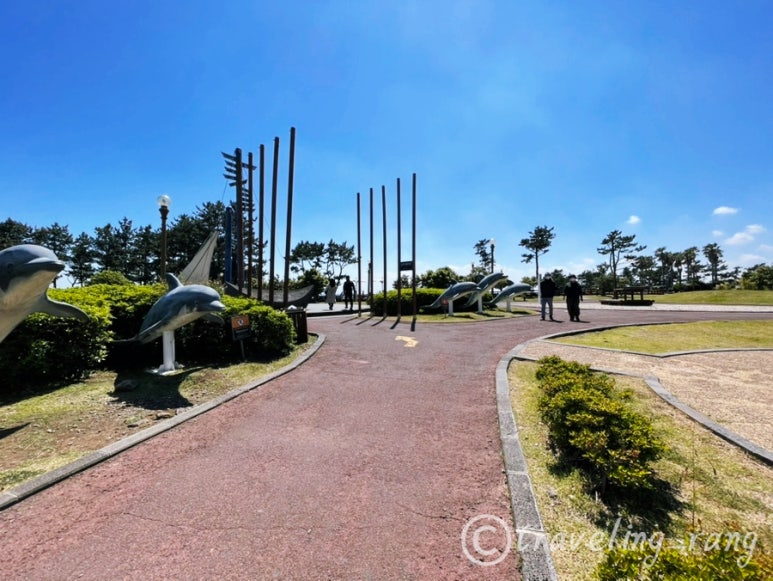
For a family trip, this is one of the most affordable paid attractions on Jeju Island — the entire experience costs less than a single cup of coffee at most Jeju cafés.
2. How Jusangjeolli Cliff Jeju Was Formed
1) A Volcanic Origin
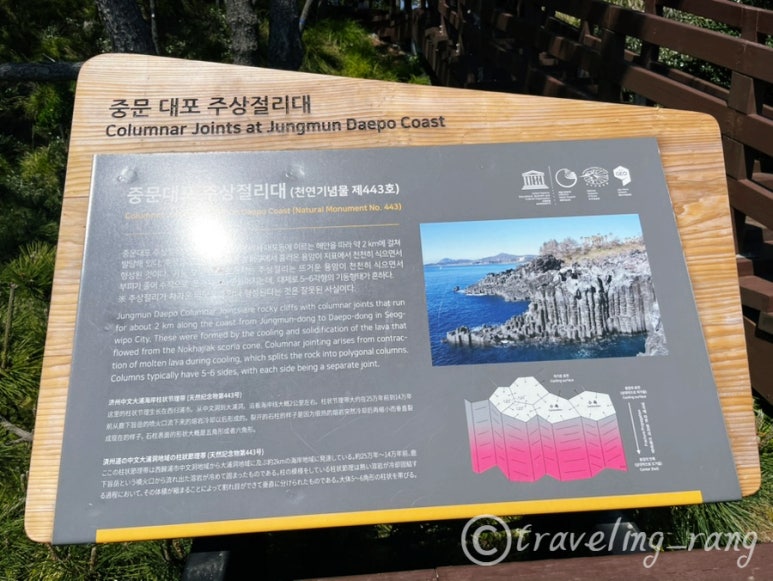
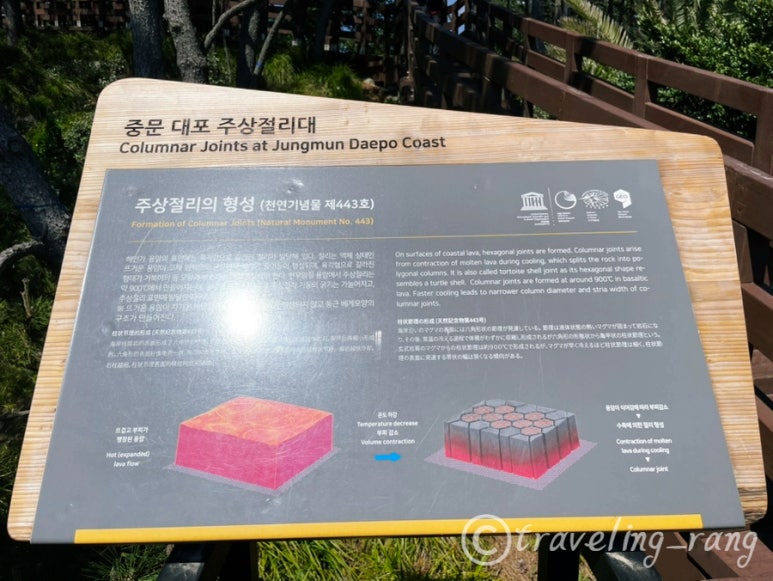
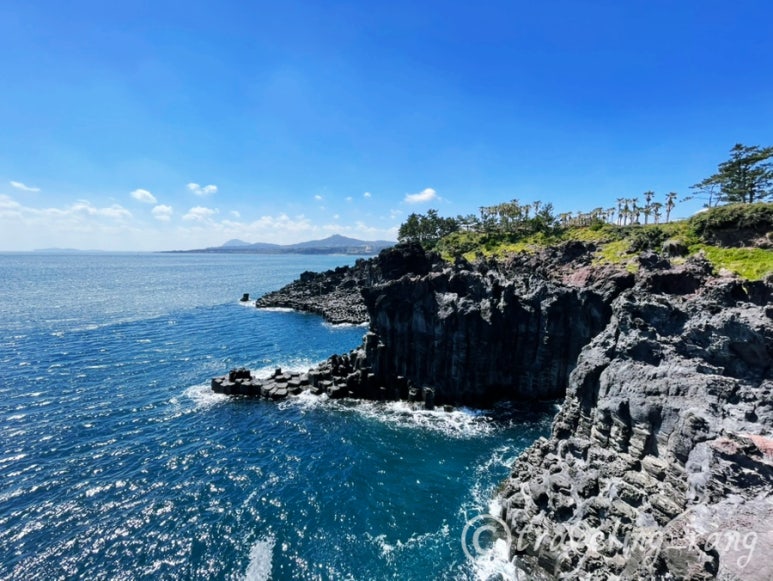
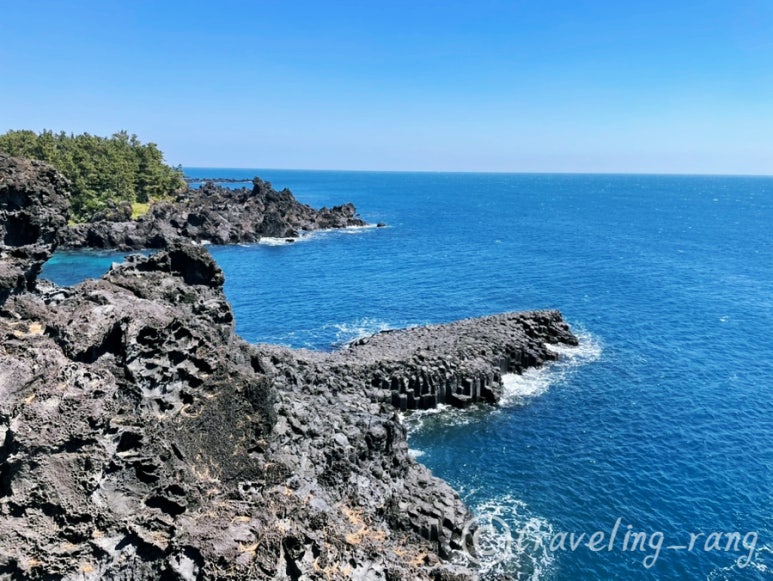
Jusangjeolli Cliff Jeju was formed approximately 140,000 to 250,000 years ago, when lava flowing from Hallasan — Jeju’s central volcano — reached the sea and cooled rapidly on contact with the cold seawater. The sudden contraction caused the lava to fracture along precise fault lines, producing the geometric columns visible today.
2) The Science Behind the Shape
The resulting structures are called columnar joints — a geological phenomenon that occurs when thick lava cools and contracts from the outside in. The fractures form at consistent angles, producing the characteristic five- or six-sided pillar shapes. The columns at Jusangjeolli Cliff range from 30 to 50cm in diameter and reach heights of up to 20 metres.
3) A Designated Natural Monument
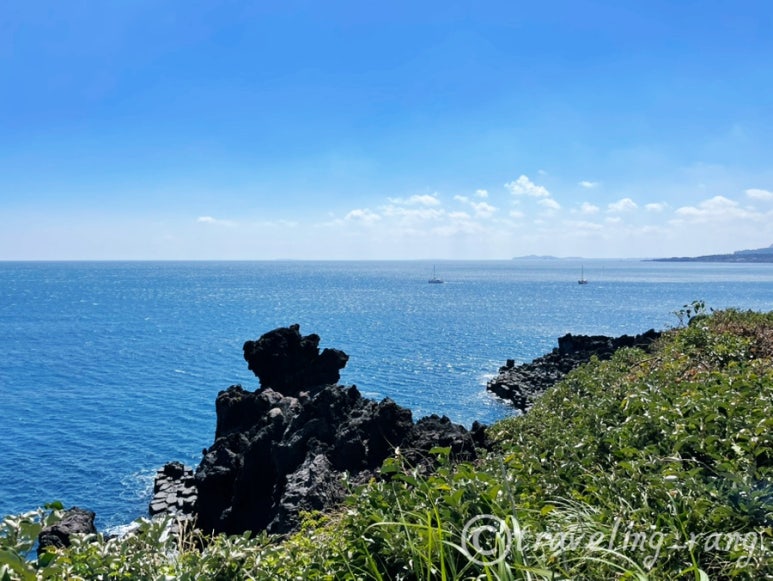
Jusangjeolli Cliff has been designated Natural Monument No. 443 of Jeju Island, recognising its geological significance. The site is considered one of the finest examples of columnar jointing in Asia, comparable in geological terms to the Giant’s Causeway in Northern Ireland — a comparison that comes up frequently among international visitors who have seen both.
4) When the Waves Hit
What makes Jusangjeolli Cliff particularly dramatic in person is the interaction between the columns and the sea. During strong wave conditions, water surges between the pillars and sends spray up to 20 metres into the air. Even on calmer days, the sound and movement of the waves against the geometric rock face is genuinely arresting.
3. Visiting Jusangjeolli Cliff Jeju With Kids: A Natural Classroom
1) More Than Just Sightseeing
For families with school-age children, Jusangjeolli Cliff Jeju offers something most tourist attractions don’t — a genuinely teachable landscape. The geometry is visible, the scale is impressive, and the formation process is explainable in terms children can actually follow.
2) Our Younger Child’s Connection
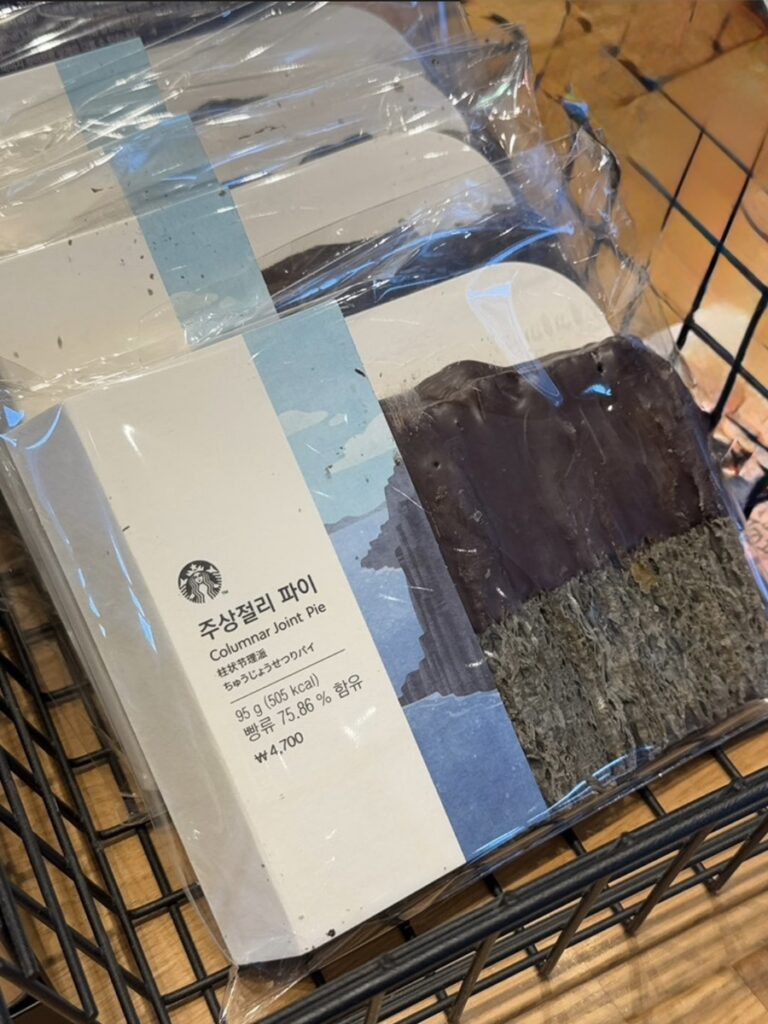
Our younger child had a moment of recognition that caught us off guard. She’d been eating Starbucks’ “Jusangjeolli Pie” for months without knowing what the name referred to. When she heard where we were going, her first question was whether the pastry’s hexagonal shape had come from here. Standing at the cliff’s edge, comparing the columns to the pattern on her favourite snack, she studied the rock face with considerably more focus than we’d anticipated.
3) Our Older Child’s Perspective
Our older child had recently covered geology at school, which gave her an immediate framework for what she was seeing. She recognised that columnar jointing forms vertically — as opposed to sheeting joints, which split horizontally — and was able to explain the difference to her younger sibling unprompted. Watching a child teach another child using an actual geological formation in front of them is one of those travel moments that stays with you.
4) What This Means for Families
Jusangjeolli Cliff is the kind of place that rewards even a small amount of preparation. If you can spend five minutes before arrival explaining what columnar joints are — or show your children a photo of the Giant’s Causeway for comparison — the visit becomes significantly more engaging for them.
4. What to See at Jusangjeolli Cliff Jeju
1) The Main Viewing Platform
From the ticket gate, a short walk leads to the primary observation deck, where the full scale of Jusangjeolli Cliff becomes visible. The columns rise in layered formation from the sea, and on a clear day, the contrast between the dark basalt and the deep blue water is striking enough to stop most visitors in their tracks before they’ve even reached the railing.
2) The Elevated Viewpoint
To the left of the main area, a higher viewing platform offers a more elevated perspective on the hexagonal volcanic rock formation. From here, the geometric patterning of the columns becomes even more apparent, and the scale of the cliff in relation to the sea gives a better sense of depth. This is the better spot for photography if you’re trying to capture the full structure.
3) The Coastal Walking Path
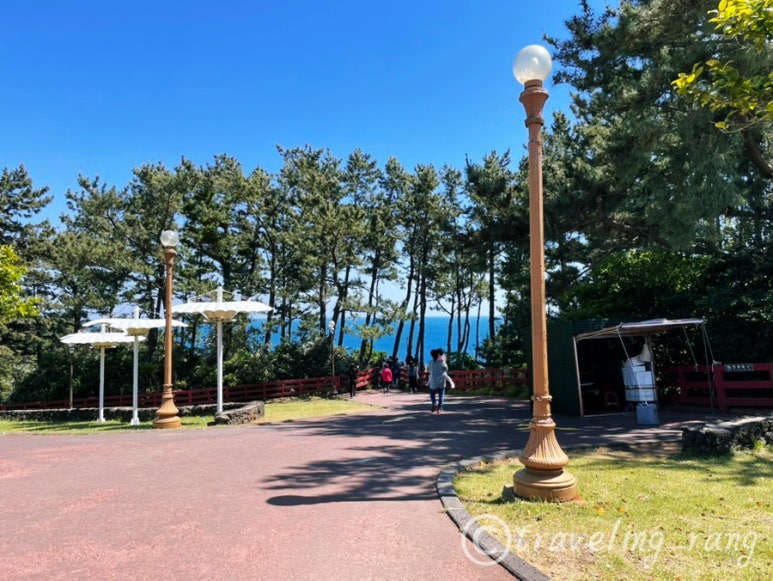
A short walking trail follows the cliff line, offering different angles of the formation as you move along it. The walk itself takes less than 30 minutes at a relaxed pace — short enough to do with young children, varied enough to make it worthwhile. Each position along the path reveals a slightly different composition of rock, wave, and horizon.
4) Hallasan in the Background
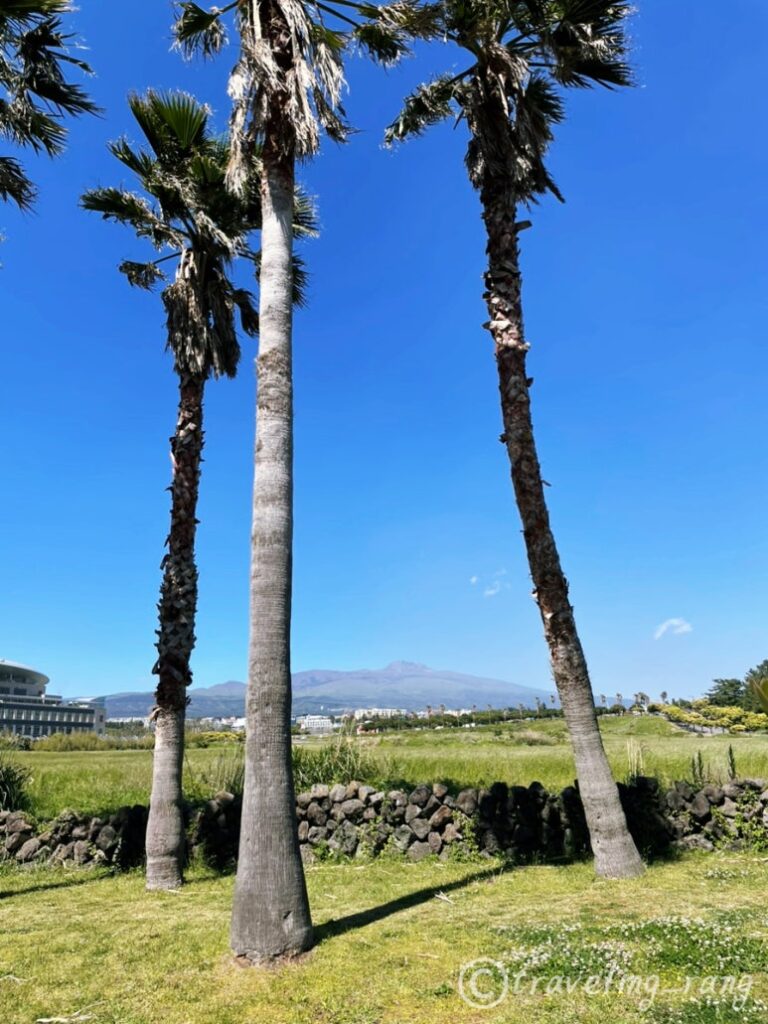
On a clear day, Hallasan is visible from several points along the Jusangjeolli Cliff trail. It’s a reminder of the geological connection between the island’s central peak and these coastal formations — the same volcanic activity that created the mountain also shaped these cliffs. Worth pausing to take in both together when the visibility allows.
5) Photo Spots
The site has clearly designated photo zones throughout, making it easy to find good positions for family photos. The combination of the cliff face, breaking waves, and open sea creates a backdrop that’s difficult to replicate elsewhere on Jeju Island.
5. Practical Tips for Visiting Jusangjeolli Cliff Jeju
1) Time Your Visit
Early morning visits (opening at 9:00 AM) offer the best combination of soft light and manageable crowds. Midday can get busy, particularly during peak summer months when tour groups arrive in volume. Late afternoon is also good for photography — the angle of the light on the basalt columns changes dramatically as the sun drops.
2) Watch the Weather and Wind
The cliff is accessible in most weather conditions, but wind and wave conditions significantly affect the experience. Strong swell makes the waves more dramatic and photogenic — but also means spray can reach the viewing areas. A light jacket is worth bringing even in warmer months.
3) What to Wear
Comfortable walking shoes are sufficient — the paths at Jusangjeolli Cliff are paved and well-maintained throughout. The walk from the car park to the main viewing area is short and accessible for most visitors, including those with strollers or elderly family members.
4) Parking
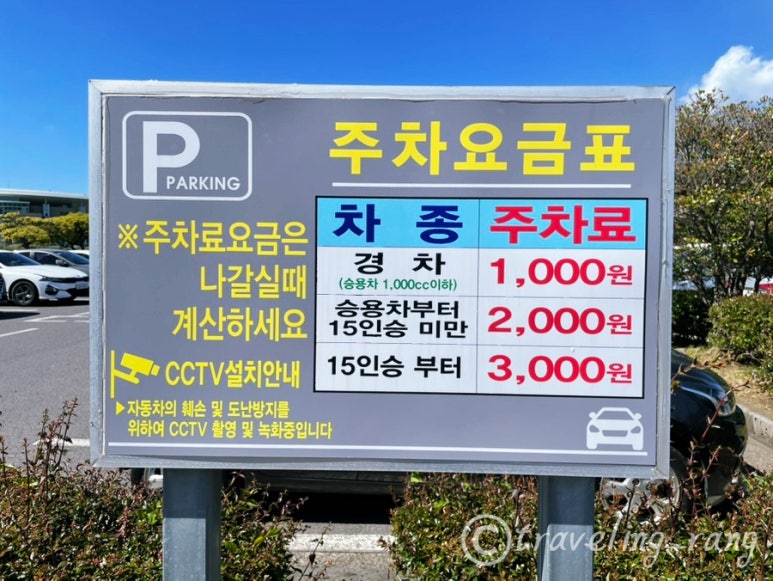
The parking lot is large and generally well-managed, operating on a flat-rate system paid on exit. Even during busier periods, finding a space at Jusangjeolli Cliff is rarely difficult — a practical detail worth noting if you’re coordinating a tight Jeju itinerary.
6. Nearby Attractions: Combining Jusangjeolli Cliff Jeju With a Full Day in Jungmun
Jusangjeolli Cliff sits within the Jungmun Tourist Complex, which means several other worthwhile stops are within easy reach. If you’re planning a full day in the area, these three pair well with the cliff visit:
1) Cheonjeyeon Waterfall
A three-tiered waterfall system set within a forested gorge, with dense vegetation and a natural cave at the base. A more immersive natural experience than Jusangjeolli — slower-paced and shaded, which makes it a good follow-up option on warmer days.
2) Yeomiji Botanical Garden
An indoor and outdoor botanical garden featuring tropical plants, themed garden sections, and a glass observatory. Well-suited for families with younger children who may need a break from outdoor walking after the cliff visit.
3) Jungmun Saekdal Beach
One of Jeju’s better-known surf beaches, with a wide sandy shoreline and both surfing and leisurely swimming available. A natural final stop for a late afternoon visit after Jusangjeolli Cliff, particularly in summer.
Combining Jusangjeolli Cliff with one or two of these stops makes for a well-rounded full day in the Jungmun area without feeling rushed.
Who Should Visit Jusangjeolli Cliff Jeju?
Jusangjeolli Cliff is worth visiting for:
- First-time visitors to Jeju — it’s one of the island’s most distinctive and photographically rewarding natural sites
- Families with school-age children, particularly those with any interest in nature, science, or geology
- Photographers looking for dramatic coastal compositions featuring hexagonal volcanic rock formations
- Anyone with limited time who wants a high-impact natural attraction that takes under an hour to visit properly
The site is compact, well-managed, and accessible — the kind of place that rewards the visit without requiring a full day’s commitment. If you’re building a Jeju itinerary and wondering whether Jusangjeolli Cliff deserves a slot, the answer is straightforwardly yes.
FAQ
Q1. How much does it cost to visit Jusangjeolli Cliff in Jeju?
Admission is KRW 2,000 for adults and KRW 1,000 for teenagers and children. Groups of 10 or more receive a discount (KRW 1,600 for adults / KRW 600 for children). Children aged 6 and under, seniors aged 65 and above (ID required), and visitors with disabilities enter free.
Q2. What are the opening hours for Jusangjeolli Cliff Jeju?
The site opens at 9:00 AM daily. Closing time varies by season — last entry in spring is approximately 5:40 PM, with the site closing at 6:00 PM. Check current hours before visiting if you’re planning a late afternoon trip, as times shift throughout the year.
Q3. How long does a visit to Jusangjeolli Cliff Jeju take?
Most visitors spend between 30 minutes and one hour at the site. The coastal walking trail is short, and the main viewing areas are compact. It’s a manageable stop within a larger day itinerary and pairs well with other Jungmun-area attractions such as Cheonjeyeon Waterfall or Jungmun Saekdal Beach.
recommended articles