Nakatsu Castle Oita: Family Guide 2026 — Free Kids Entry, Free Parking & Honest Tips
Nakatsu Castle (Nakatsu-jo), Oita: An Honest Family Guide for 2026
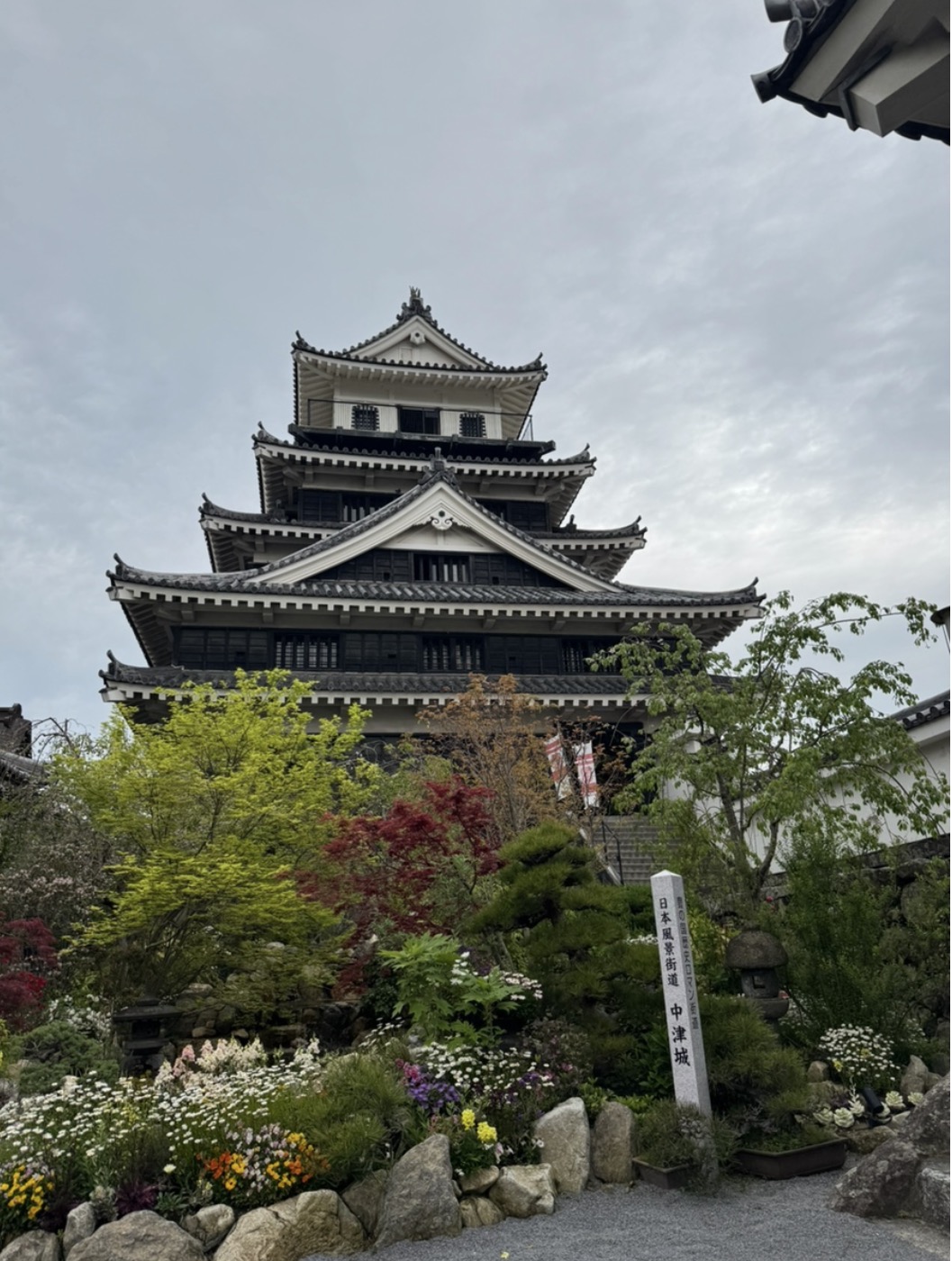
Nakatsu Castle sits right in the middle of one of Kyushu’s most popular driving routes — the road between Fukuoka and Beppu. We stopped here in April 2026, just after lunch at a local karaage restaurant, as the last cherry blossoms were drifting off the trees. It turned out to be one of the better unplanned stops of the trip.
Here’s everything a family needs to know before visiting: admission fees, what’s actually inside, the good and the quirky, and whether it’s worth your time.
What Is Nakatsu Castle?
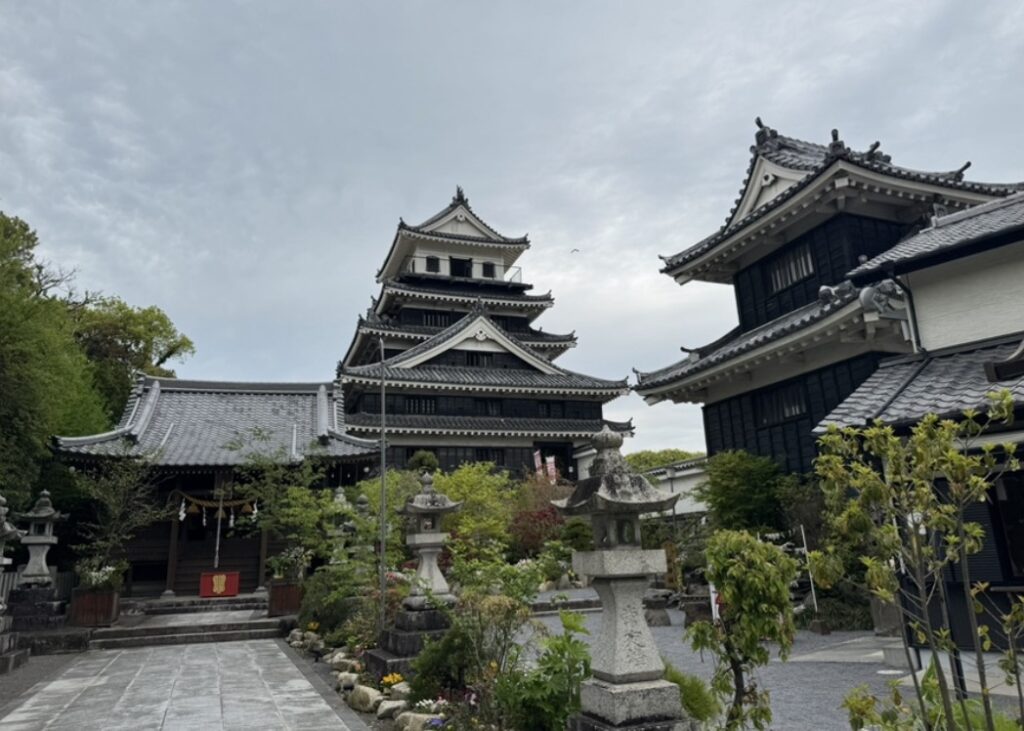
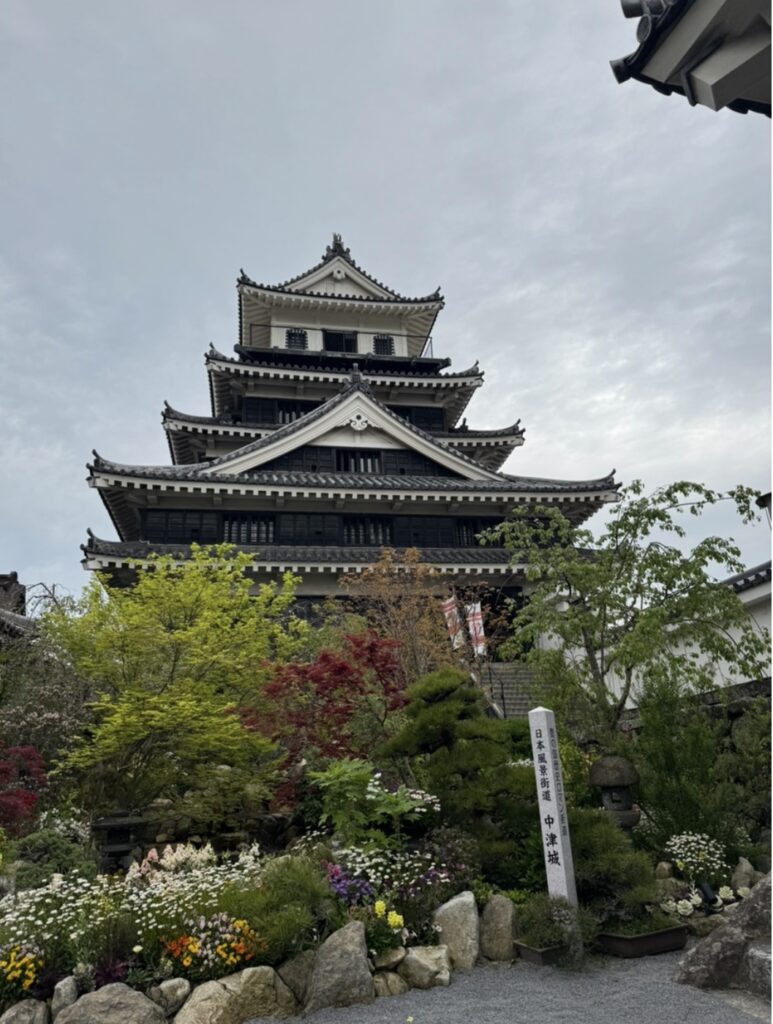
Nakatsu Castle (中津城, Nakatsu-jo) is a reconstructed Japanese castle in Nakatsu City, Oita Prefecture, northern Kyushu. It is one of Japan’s Three Great Water Castles — alongside Takamatsu Castle and Imabari Castle — because its moat draws in seawater directly from the sea. At high tide, the castle can appear to float on the water, a sight that sets it apart from the majority of Japan’s inland fortresses.
A Brief History
Construction began in 1587 under Kuroda Kanbei (Kuroda Yoshitaka), a celebrated Sengoku-era military strategist who received the region from Toyotomi Hideyoshi. The castle subsequently passed to the Hosokawa and Ogasawara clans before the Okudaira family — hereditary vassals of the Tokugawa shogunate — took control in 1717 and held it until feudal domains were abolished in 1871. The present five-story keep was reconstructed in 1964 and now operates as a private museum.
Why It’s Called a Water Castle
Unlike most Japanese castles built on elevated terrain, Nakatsu Castle was deliberately sited at the mouth of the Nakatsu River, with seawater drawn into its moat as a defensive measure. On calm days, the castle’s reflection in the moat creates a striking photographic opportunity, particularly in the early morning or around dusk.
Nakatsu Castle Admission Fee and Hours — What Families Need to Know
Children under 12 enter free. Parking is free. No advance booking required.
| Category | Fee |
|---|---|
| Adults (high school age and above) | ¥1,000 |
| Children under 12 / preschool and infants | Free |
| Opening Hours | 9:00 AM – 5:00 PM (open daily) |
| Parking | Free |
Is the Adult Fee Worth It?
The ¥1,000 adult ticket is on the higher end for a regional castle of this scale, and visitors expecting the grandeur of Osaka Castle or Himeji Castle may find the exhibitions modest. That said, for families traveling with children under 12, the free kids’ entry makes the overall cost very reasonable. We visited as two adults and two children under 12 and paid only for the two adult tickets.
One practical note: children must enter with a paying adult guardian. Free admission does not allow unaccompanied entry.
For the latest admission fees and opening hours, visit the official Oita Tourism website.
Getting to Nakatsu Castle by Rental Car
Nakatsu Castle is ideally located as a midway stop on a Fukuoka–Beppu road trip, and free on-site parking makes it particularly convenient for drivers.
Driving Times at a Glance
| From | Estimated Drive Time |
|---|---|
| Central Fukuoka | Approx. 1 hour 30 minutes |
| Beppu | Approx. 1 hour |
| Nakatsu IC (Higashi-Kyushu Expressway) | Approx. 20 minutes |
Address: 1273-2 Ninocho, Nakatsu City, Oita Prefecture 871-0050
Parking: Free. Available near the castle grounds with no reservation required.
Getting There Without a Car
JR Nakatsu Station on the Nippo Main Line is the nearest rail stop, approximately 15 minutes on foot from the castle. The station is accessible from both Fukuoka (Kokura) and Oita directions.
What to See Inside Nakatsu Castle
The Museum Collection
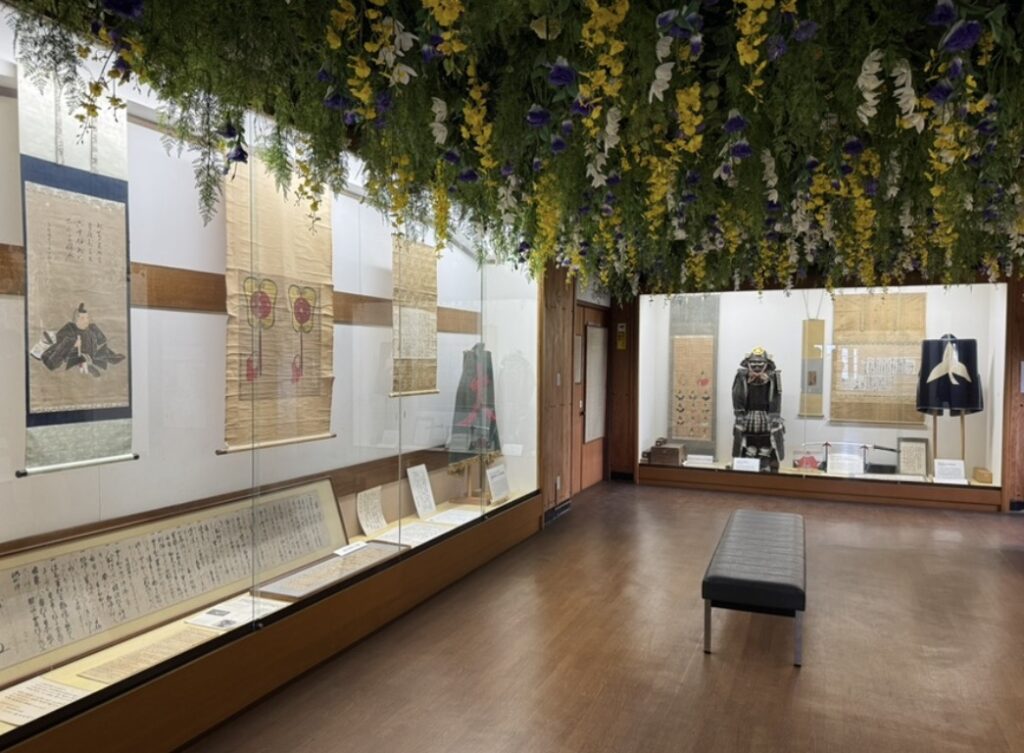
The five-story keep functions as the Okudaira Historical Museum. Each floor displays artifacts from the Okudaira family’s long tenure as lords of Nakatsu: swords, armor, battle garments, and ancient documents, including items connected to the Battle of Nagashino and writings attributed to Tokugawa Ieyasu himself. All floors are accessible by stairs only — there is no elevator.
Foreign-language pamphlets, including Korean, are provided at the ticket counter. Most exhibit labels are in Japanese, so the pamphlet is a useful companion. A basic familiarity with Sengoku-era Japanese history will enrich your visit considerably, though it is by no means required to enjoy the space.
The Artificial Flower Displays — Quirky, Divisive, and Very Japanese
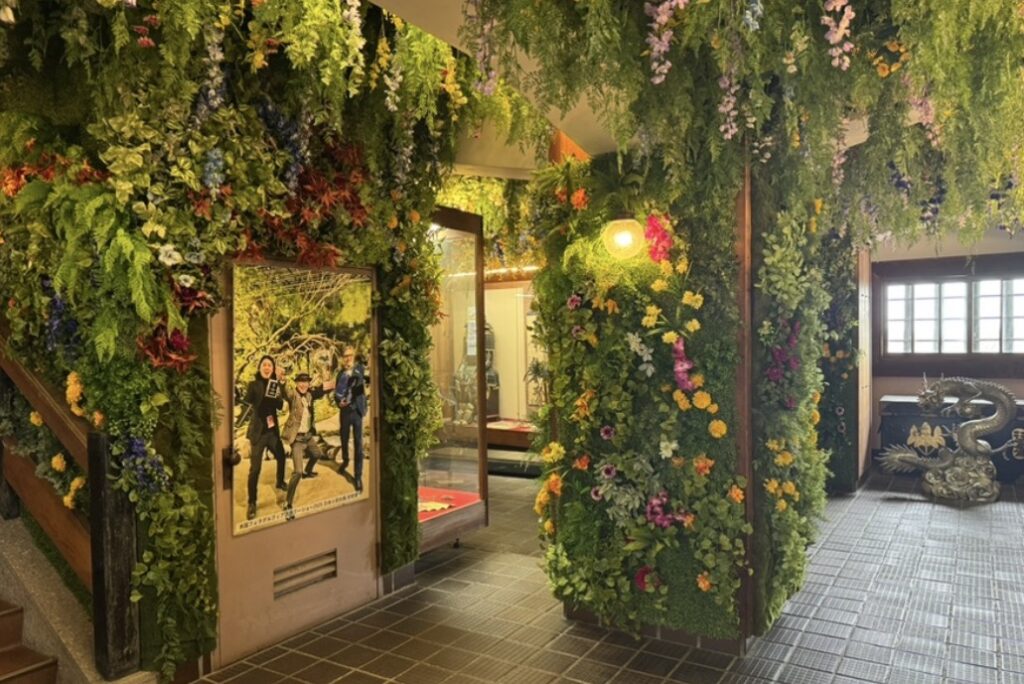
One detail that catches almost every visitor off guard: each floor of the keep is decorated with elaborate artificial flower arrangements, displayed alongside the historical armor and artifacts.
It is, to put it plainly, an unusual curatorial choice. The contrast between centuries-old battle relics and vivid decorative florals is not to everyone’s taste — and if you’re a purist about historical presentation, it may feel jarring. That said, Japanese visitors appeared to embrace it enthusiastically, with many stopping to take photographs in front of the flower displays. If you go in knowing this is part of the experience, it reads less as an oddity and more as a distinctly Japanese interpretation of how a castle museum can also be a cheerful, photogenic space.
The View from the Fifth Floor
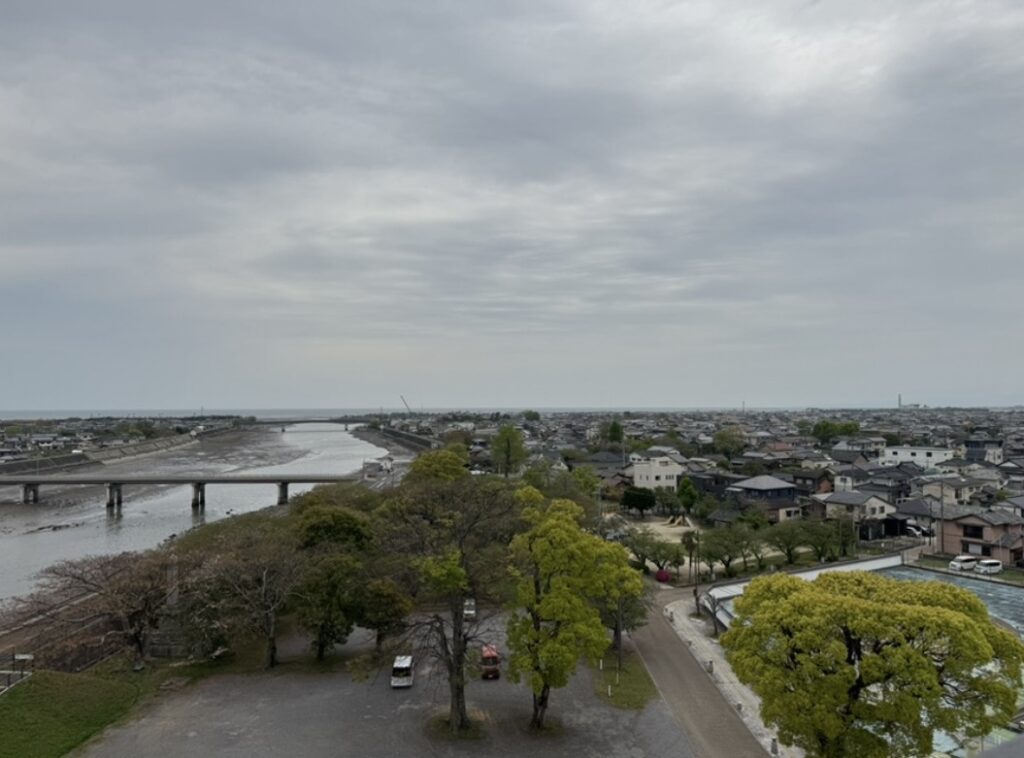
The top floor opens onto a viewing platform with panoramic views over Nakatsu City, the river estuary, and the mountains of Oita beyond. For the scale of the castle, the view is genuinely impressive — and on a clear April day with the last cherry blossoms still visible on the trees below, it made for a memorable few minutes at the top.
The Moat and Stone Walls
Outside the keep, the northern section of the inner citadel preserves original stonework from the castle’s construction period, with visible differences between the Kuroda-era and Hosokawa-era techniques. The moat walk is quiet and unhurried, and the waterside reflection of the castle is a reliable photography spot in good conditions.
Visiting During Cherry Blossom Season
We visited in mid-April 2026, when the cherry blossoms were nearly finished. Peak bloom in the Nakatsu area typically falls in late March to early April, depending on the year. The tail end of the season carries its own distinct appeal: fewer crowds, a quieter pace, and the soft green of new leaves beginning to replace the fallen petals. For families with children, the post-peak period is arguably the more relaxed and enjoyable time to visit.
Combining Nakatsu Castle with Nakatsu Karaage
Nakatsu City is nationally recognised in Japan as the home of karaage — Japanese fried chicken. The city has dozens of long-established karaage specialty restaurants, and a lunch stop here before or after the castle visit is practically mandatory.
We ate at Torishin just before visiting the castle. If you’re planning the same Fukuoka–Beppu route, a karaage lunch in Nakatsu followed by the castle makes for a very satisfying half-day stopover — and Torishin is a solid choice for first-timers and repeat visitors alike.
Nearby Attractions Worth Adding
Fukuzawa Yukichi Memorial Museum
A short walk from the castle, this museum commemorates the Meiji-era thinker and educator Fukuzawa Yukichi — the face on Japan’s ¥10,000 banknote — who was born in Nakatsu. The exhibits are well-presented and give useful context to the city’s cultural history.
Yabakei Gorge
Approximately 20–30 minutes by car, Yabakei is a dramatic rocky gorge with walking paths, historic stone bridges, and seasonal scenery. It pairs well with a castle visit for a comfortable full-day itinerary.
Frequently Asked Questions About Nakatsu Castle
Q1. Is Nakatsu Castle free for children?
Yes. Children under 12, including preschool-aged children and infants, enter free of charge. Children must be accompanied by a paying adult guardian at all times.
Q2. Is there free parking at Nakatsu Castle?
Yes. Free parking is available near the castle grounds with no advance reservation needed, making it one of the more accessible stops on a Kyushu road trip.
Q3. How long does a visit to Nakatsu Castle take?
The castle keep alone takes approximately 30–40 minutes. Add the moat walk, a stop at the Fukuzawa Yukichi Memorial Museum, and lunch at a karaage restaurant, and a half-day (2–3 hours total) is a comfortable budget.
Q4. Can I visit Nakatsu Castle as a stop between Fukuoka and Beppu?
Yes — this is arguably the ideal way to visit. Nakatsu sits roughly halfway along the Fukuoka–Beppu driving route, with free parking on site. It adds under two hours to your journey and makes for a much more interesting drive than the highway alone.
Q5. What is the artificial flower decoration inside the castle?
Each floor of the Nakatsu Castle keep features decorative artificial flower displays placed alongside the historical exhibits. Opinions vary — it is not a traditional curatorial approach, and visitors with strong preferences for authentic historical presentation may find it unexpected. Japanese visitors, however, tend to enjoy it as a photogenic element of the experience. Either way, it’s worth knowing about before you go.