Umi Jigoku Beppu: Inside Japan’s Most Beautiful Hot Spring Hell
If you’re road-tripping through Kyushu, Beppu is probably already on your list — and if it is, Umi Jigoku Beppu should be at the top of it. Forget the mental image of fire and brimstone: this “hell” is a jaw-droppingly blue hot spring pond that looks more like a tropical lagoon than anything infernal. We visited on a family road trip from Fukuoka, driving south through Munakata and a quick stop at Nakatsu Castle before arriving at what turned out to be one of the most photogenic stops of the entire trip.
Here’s everything you need to know before you go — what this hot spring actually looks like, what it costs, how it fits into the wider Beppu hell tour, and a few small things we wish we’d known in advance.
What Is Umi Jigoku Beppu?
Beppu is one of Japan’s most famous hot spring towns, and scattered around the city are seven geothermal sites collectively known as the Jigoku Meguri — literally, the “hell circuit.” These aren’t bathing onsens. They’re natural hot spring pools you view rather than soak in, each one strikingly different in color, temperature, and texture. Umi Jigoku, meaning “Sea Hell,” is the largest and most famous stop on the circuit, and for most first-time visitors, it’s the single best introduction to what makes a Beppu hell tour worth the detour.
The pool was formed roughly 1,200 years ago by an eruption of Mount Tsurumi. It sits at a scalding 98°C and is estimated to reach 200 meters in depth. Along with three of the other hells on the Jigoku Meguri route, it’s officially designated a National Place of Scenic Beauty by the Japanese government — this isn’t a roadside curiosity, it’s a genuinely protected natural landmark, and it shows in how well-kept the grounds are.
Getting to Umi Jigoku Beppu
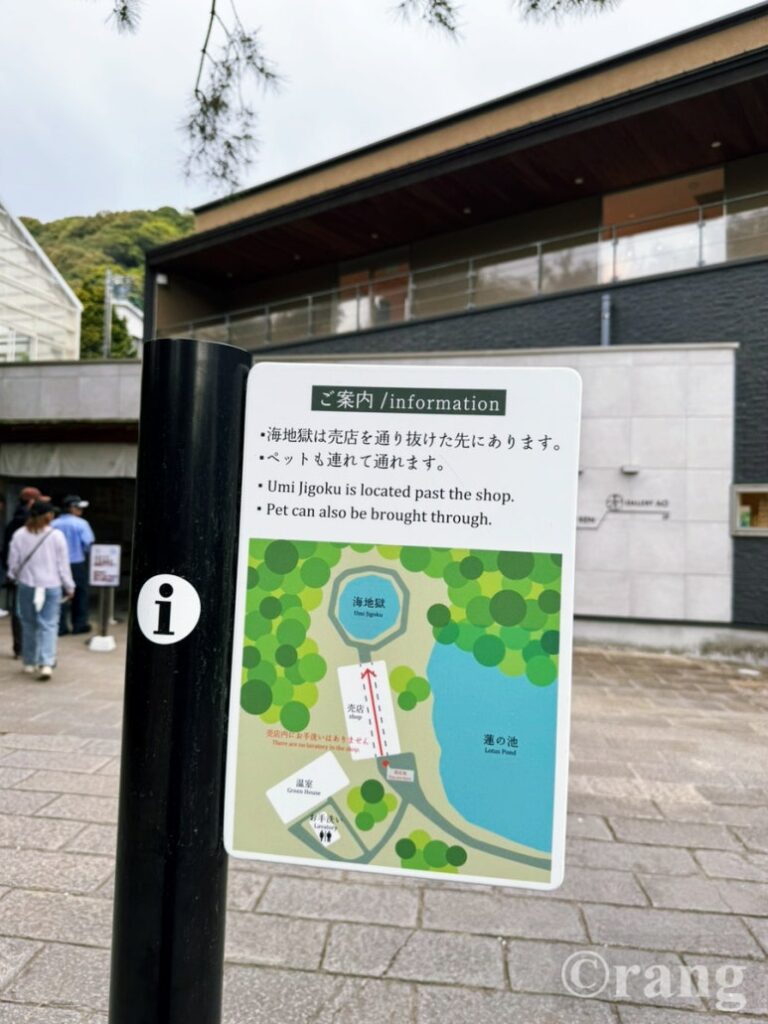
The site sits in Beppu’s Kannawa district, alongside four of the other six hells, which makes it easy to combine with a short walking loop if you have extra time for the fuller Beppu hell tour.
- By car: About 5 minutes from Beppu IC on the Ōita Expressway, via Route 500 toward Kannawa. Free parking is available on-site — genuinely rare and welcome in Japan, where parking fees add up fast.
- By bus: Roughly 20–25 minutes from JR Beppu Station on the Kamenoi Bus line to the Umijigoku-mae or Kannawa stop.
- Address: 559-1 Kannawa, Beppu, Ōita 874-0045
We drove, coming from a hotel stay near Munakata outside Fukuoka, and the free parking alone made the detour feel worth it before we’d even stepped through the gate.
Admission & Hours
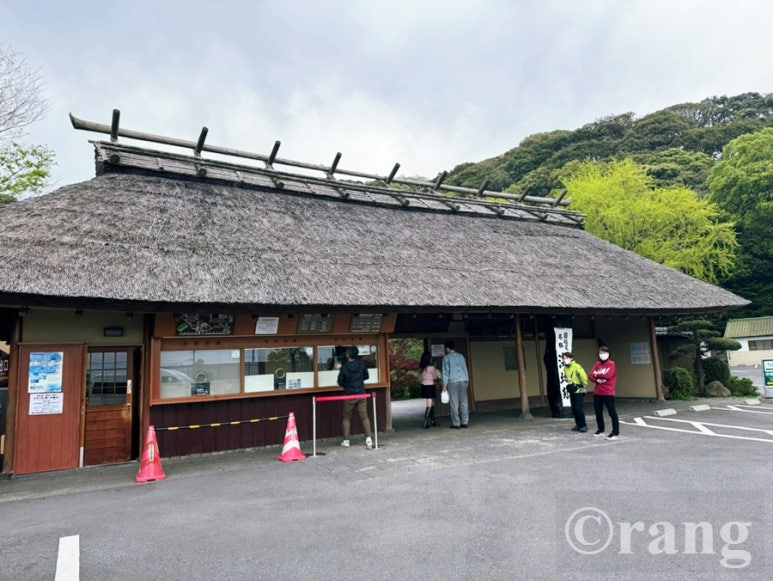
- Individual entry (Umi Jigoku Beppu only): ¥500 for adults (high school age and up), ¥250 for children (elementary and middle school)
- Common Admission Pass (all 7 hells): ¥2,400 for adults, ¥1,200 for children — sold at the entrance of any of the seven hells
- Hours: 8:00 AM–5:00 PM, open year-round, no closed days
If this is the only stop on your list, paying individually makes sense. If you’re planning the full Beppu hell tour, the common pass works out cheaper the moment you visit a third location. We only had time for Umi Jigoku ourselves, traveling with kids on a tight schedule, and slightly regretted not budgeting time for the wider Jigoku Meguri circuit while we were already there.
Planning to see more than one hell? [Book the Beppu 7-Hell Pass on Klook →] and skip paying for individual tickets at each stop — it pays for itself the moment you visit a fifth hell.
What You’ll Actually See at Umi Jigoku Beppu
The Cobalt-Blue Main Pool
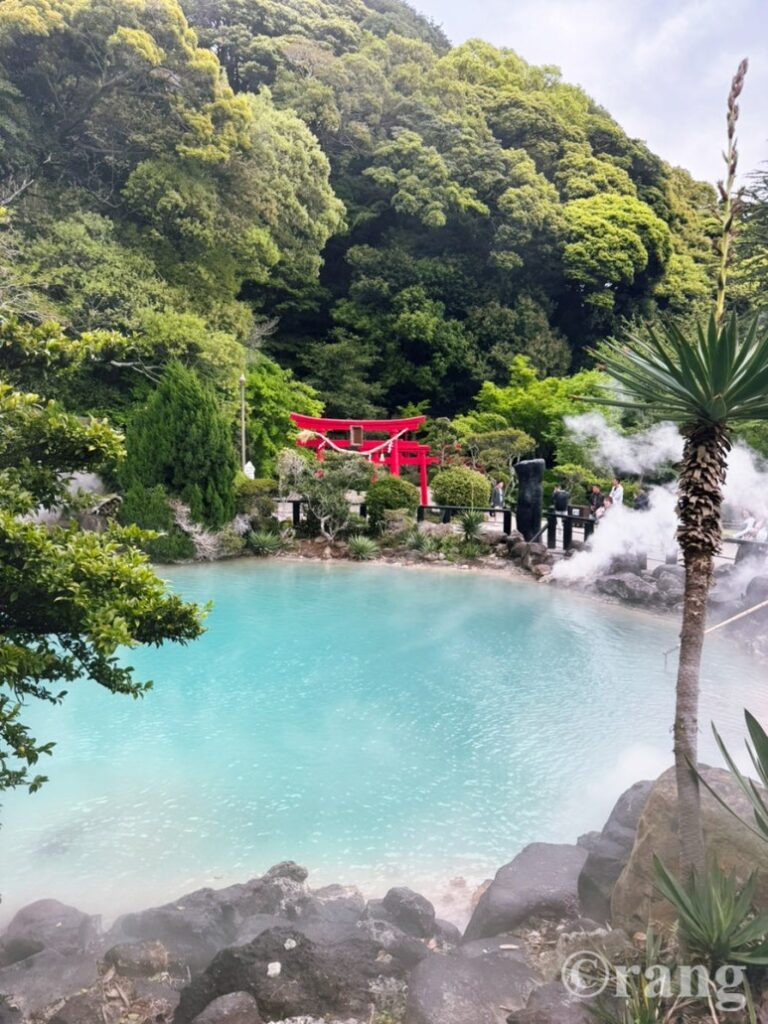
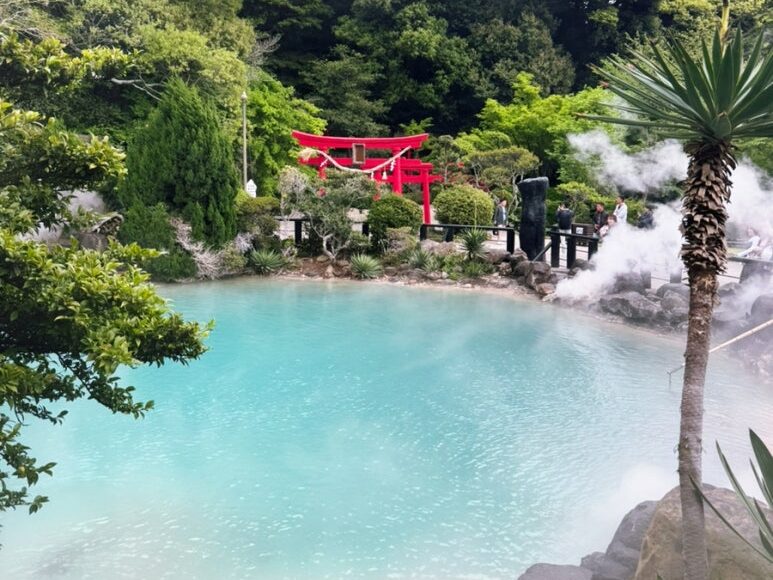
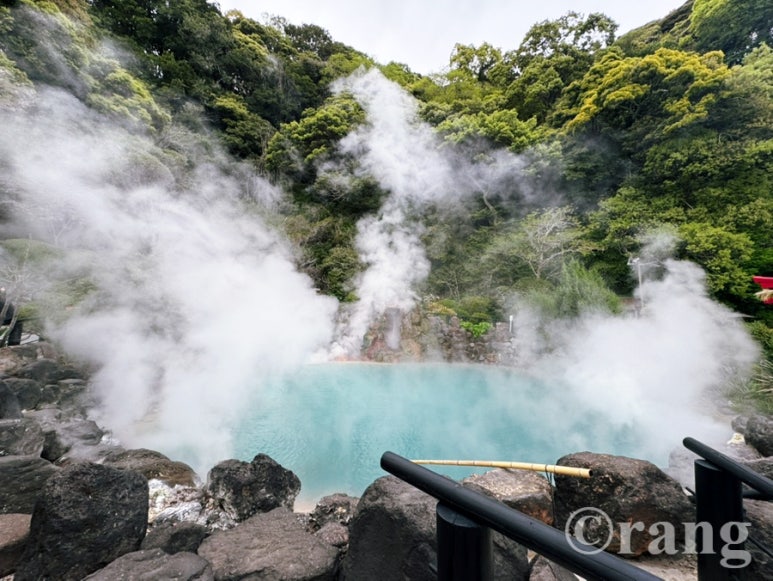
The name “Sea Hell” comes directly from the water’s color — a deep, otherworldly cobalt blue caused by dissolved iron sulfate scattering light. Photos genuinely don’t do it justice; the color reads even more vivid in person, especially through the drifting steam. A walking path circles most of the pool, and a red torii gate is visible across the water, marking the site as sacred ground. This single view is usually what convinces first-timers that this hell deserves its reputation as the prettiest stop on the Jigoku Meguri.
A Second Pool in a Completely Different Color

A short walk uphill from the main pool is a smaller spring in shades of orange and red, caused by a different mineral composition in that particular vent. Seeing two dramatically different colors within the same small complex is one of the more surprising parts of the visit, and a good conversation starter if you’re traveling with curious kids.
A Free Foot Bath
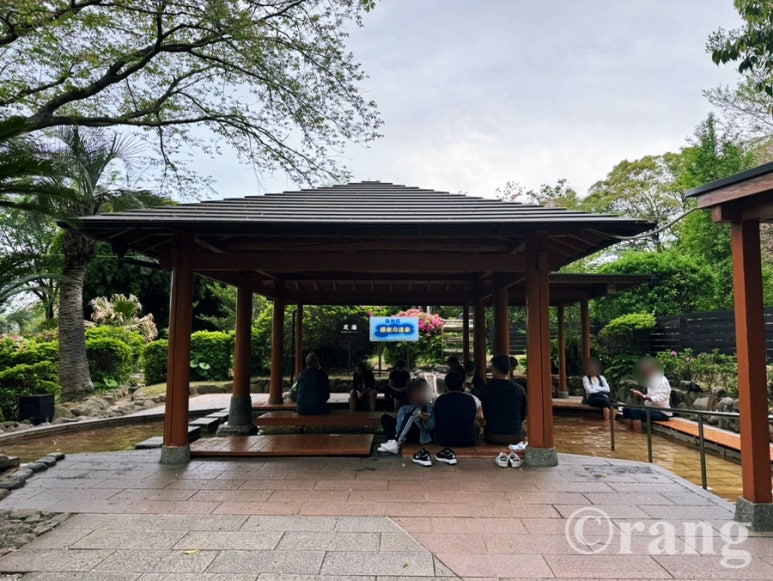
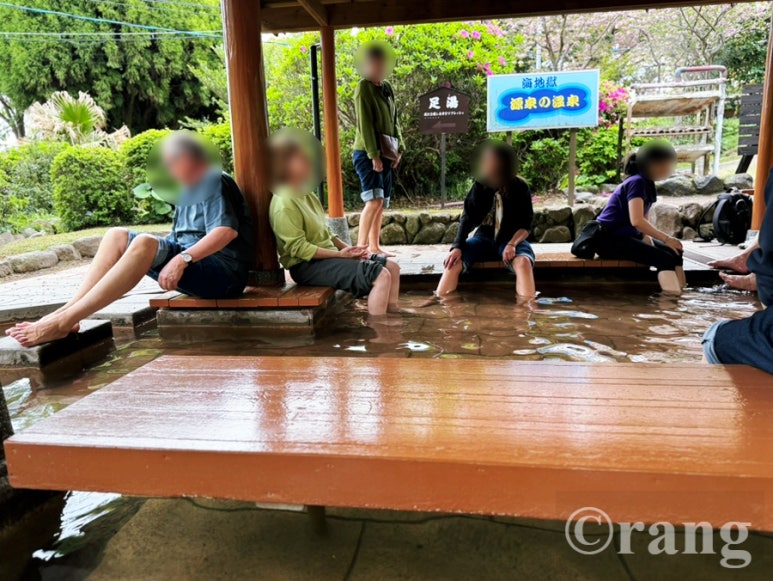
There’s a covered, free foot bath (ashiyu) on-site — a genuinely nice place to rest after a day of walking. Bring a small hand towel if you plan to use it; towels are sold on-site too, but we were glad we’d packed our own.
Hot Spring Eggs and a Garden Worth Slowing Down For
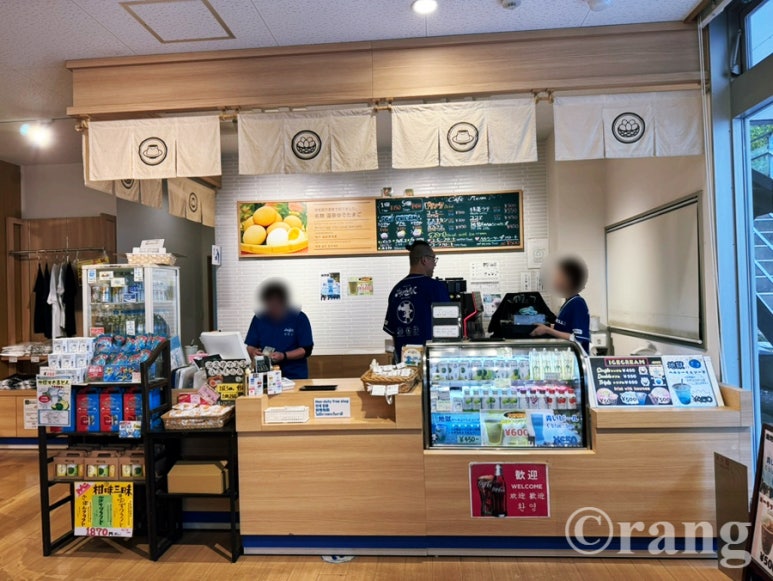
Beyond the main pools, the grounds also include a landscaped Japanese garden, a lotus pond, and a small greenhouse with tropical water lilies. Near the exit, vendors sell hot spring eggs cooked using the geothermal heat of the springs — a novelty snack more than a culinary revelation, but a fun one to try on-site with kids. (Verify current price — see Notes for Anthony below.)


Tips for Visiting Umi Jigoku Beppu
- Go early. This is the most popular single stop on the Jigoku Meguri, and tour buses arrive mid-morning. Arriving close to the 8:00 AM opening gives you a much clearer view of the pool without crowds in every photo.
- Bring a small towel for the free foot bath, and comfortable shoes — paths are sometimes wet or slightly uneven near the steam vents.
- Budget 45 minutes to an hour if this is your only stop, longer if you plan to see the garden, greenhouse, and gift shop as well.
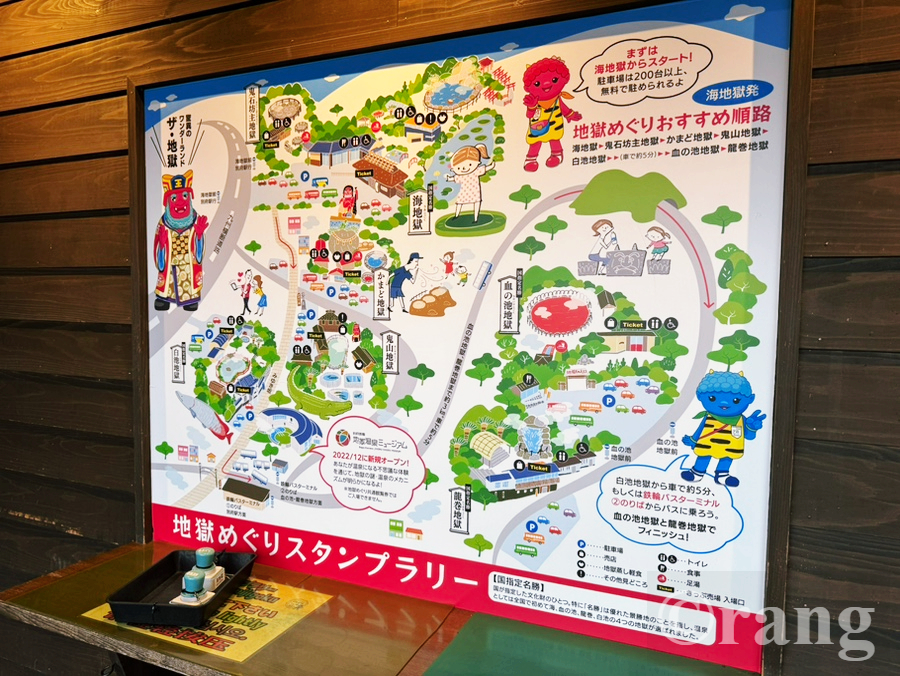
- Combine it with the wider Beppu hell tour if you have half a day — five of the seven hells, including this one, are within easy walking distance of each other in the Kannawa district.
- Check the weather. Steam volume and visibility change with rain and wind, and a foggy day can obscure the famous blue color, so a clear morning is ideal.
Best Time to Visit
Late April into early May, when we visited, brings occasional rain but also the last of the cherry blossoms scattered around the grounds — a nice contrast against the blue water. Summer brings the giant lotus leaves into full bloom on the pond near the entrance, strong enough in some seasons for young children to be photographed sitting on them under staff supervision. Winter mornings tend to produce the thickest, most dramatic steam, though photography can be trickier with visibility reduced. Whatever season you visit, mornings consistently offer calmer crowds and clearer views than afternoons.
What to Pack
A small hand towel for the foot bath, comfortable closed-toe shoes for slightly uneven and occasionally wet paths, and a light jacket even in warmer months — the steam keeps the air noticeably humid near the main pool. Cash is worth carrying too; while the ticket booth and gift shop increasingly accept cards, smaller food stalls near the exit sometimes don’t.
Is Umi Jigoku Beppu Worth Visiting?
Yes — especially if you’re already in Beppu or driving through Kyushu. It’s an easy, low-effort stop with genuinely striking scenery, free parking, a free foot bath, and enough small experiences to fill 45 minutes to an hour comfortably. If you have more time, the full Beppu hell tour is worth considering, but if you can only fit one stop into a road trip itinerary, this is the one most guides — and we — would point you to.
A Sample Itinerary: Fukuoka to Beppu
If you’re planning a similar route, our own trip looked like this: an overnight stay near Munakata outside Fukuoka, a mid-morning stop at Nakatsu Castle, lunch along the way, and an afternoon arrival at Umi Jigoku Beppu before continuing on to a hotel in Beppu itself for the evening. It’s an easy, scenic day of driving, and this stop makes a natural highlight to build the rest of the day around.
FAQ
Is Umi Jigoku Beppu a place you can bathe in? No. The water reaches around 98°C, far too hot for bathing. It’s a viewing attraction, not a soaking onsen. The free foot bath on-site is the closest you’ll get to touching the water.
How long does a visit take? Most visitors spend 45 minutes to an hour here alone, longer if you’re also using the foot bath or trying the hot spring eggs.
Should I buy the single-site ticket or the full Beppu hell tour pass? If this is your only stop, the ¥500 individual ticket is more economical. If you plan to see three or more stops on the Jigoku Meguri, the ¥2,400 common pass works out cheaper.
Is Umi Jigoku Beppu stroller and wheelchair accessible? The main paths are wide and mostly flat, though expect some wet, steamy patches and minor slopes in places. Not all areas are fully wheelchair accessible — check with staff on arrival if this is a concern.
Can I visit Umi Jigoku Beppu as a day trip from Fukuoka? Yes. Beppu is roughly a 2–2.5 hour drive from central Fukuoka, making it a feasible, if long, day trip, or a better fit as an overnight stop on a broader Kyushu road trip, as we did.
You Might Also Like
Dazaifu Tenmangu Fukuoka: Complete Guide to This Famous Shrine