Fukuoka Unagi Restaurant: Edo Nadai Amon Hakata Sumiyoshi Review
If you’re looking for a Fukuoka unagi restaurant that doesn’t require a special-occasion budget, Edo Nadai Amon’s Hakata Sumiyoshi branch is worth building into your itinerary. Tucked just across the street from Canal City Hakata, this eel specialty shop serves rich, glossy unaju rice bowls starting in the 1,000-yen range — a rare find for a dish usually reserved for splurges in Japan. Our family of four visited on a rainy weekday during a Fukuoka trip and left full, happy, and already talking about going back.
Family Reunion Kicks Off the Food Tour
Our trip started in two separate legs — my daughter and I flew in first, followed a day later by my husband and son. Once the whole family was finally together in Fukuoka, we kicked off our food tour with the dish my husband had been planning for weeks: unagi don, the Japanese grilled eel rice bowl. Everyone in our family loves eel, so expectations were high heading into our first proper meal together in Japan.
About Edo Nadai Amon: A Michelin Pedigree, Budget-Friendly Price
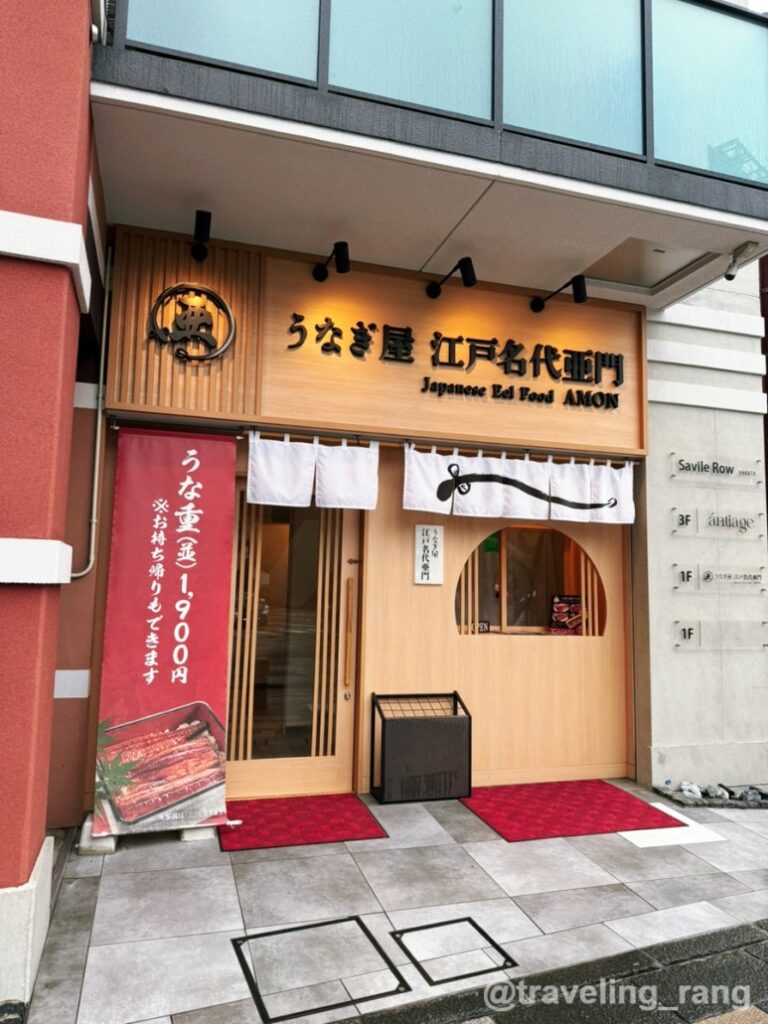
Edo Nadai Amon (うなぎ屋 江戸名代亜門) is an eel restaurant brand that began expanding as a chain in the fall of 2023, and the Hakata Sumiyoshi location marked the brand’s first branch on Kyushu. The restaurant’s signature sauce (tare) was developed by a founder with a Michelin-starred restaurant background, and the eel itself — the same species of Japanese eel used at high-end restaurants — is raised abroad under strict conditions from the same juvenile stock, then shipped directly through the company’s own supply route. That direct-sourcing model is how the restaurant keeps prices low without sacrificing quality on the fish itself.
The tare sauce is also built on a base from a Kyushu soy sauce maker with roughly 120 years of history, giving it a naturally sweeter, deeper flavor than a generic eel sauce.
In short: a Michelin-trained chef’s take on affordable, high-quality unagi.
Edo Nadai Amon Hakata Sumiyoshi — Location and Access
Address: 2-16-28 Sumiyoshi, Hakata Ward, Fukuoka, 812-0018, Japan (Saville Row Hakata Bldg, 1F)
- About a 5–7 minute walk from Kushida Jinja-mae Station (Exit 4)
- About a 10-minute walk from Hakata Station
- Directly across the street from Canal City Hakata — easy to pair with a Canal City visit
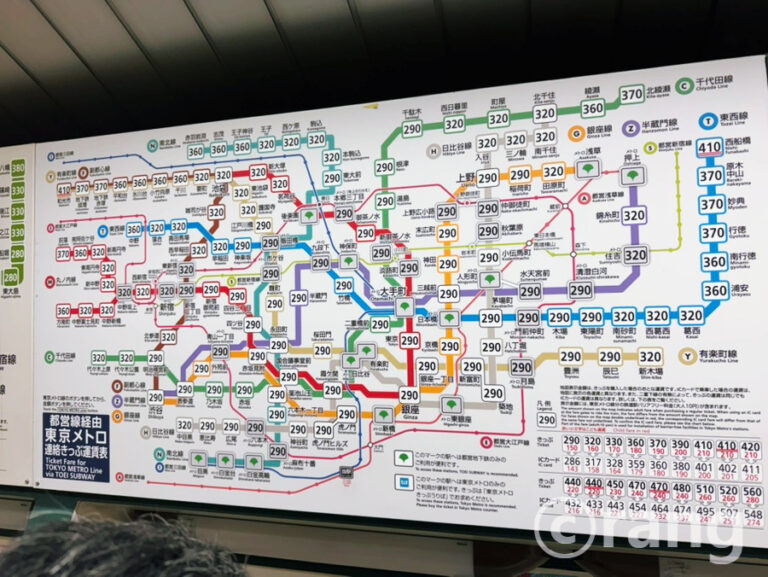
The Hakata, Canal City, and Gion area is compact enough that walking and taking the subway take roughly the same amount of time for most nearby spots. We took the subway on the way there and simply walked back, sightseeing along the way.
This branch opened in May 2025 and quickly built a reputation for selling out its eel supply on busy days, so a reservation is strongly recommended before you go.
Hours and Reservations
Hours:
- Lunch: 11:00 AM–3:00 PM (last food order 2:30 PM, last drink order 2:30 PM)
- Dinner: 5:00 PM–10:00 PM (last food order 9:30 PM, last drink order 9:30 PM)
- Open daily, with irregular closures
How to reserve:
- By phone: Call 070-8498-4761. Staff respond in Japanese, so it helps to have a Japanese speaker make the call, or ask your hotel’s front desk for assistance.
- Online: The restaurant takes reservations through Japanese booking platforms; Tabelog is a good option since it offers Korean-language support. This is the method we used.
- Instagram DM: The official account (@hakatasumiyoshi_amon) is active and responds to direct messages, since it’s a newer, actively promoted location.
The restaurant also lists English-language and Korean-language menus and has English-speaking staff on hand, so it’s approachable even without any Japanese.
What We Ordered
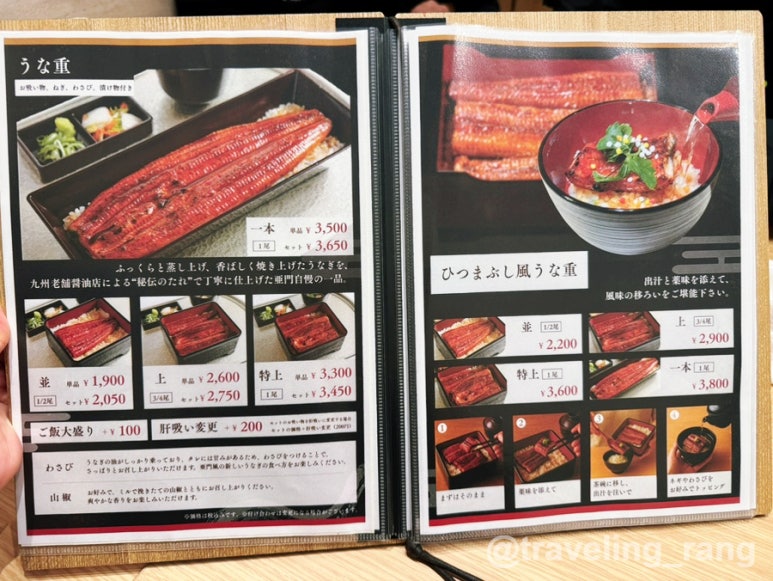
Everything on the menu revolves around eel — the main differences are portion size and whether you order the hitsumabushi-style set.
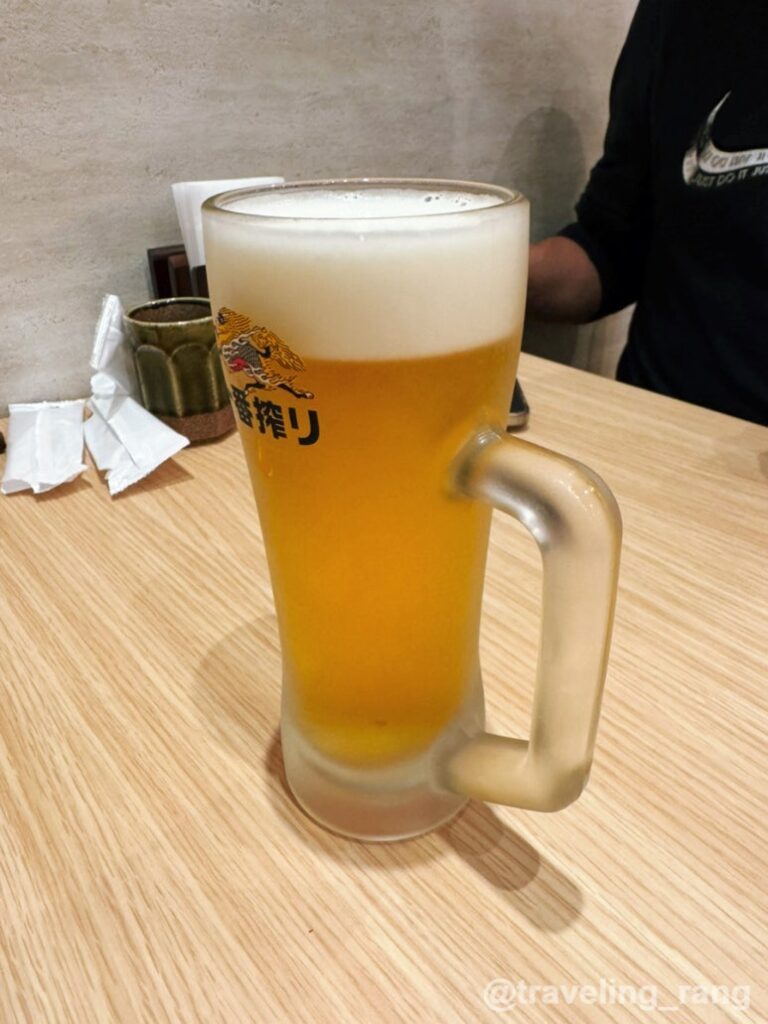
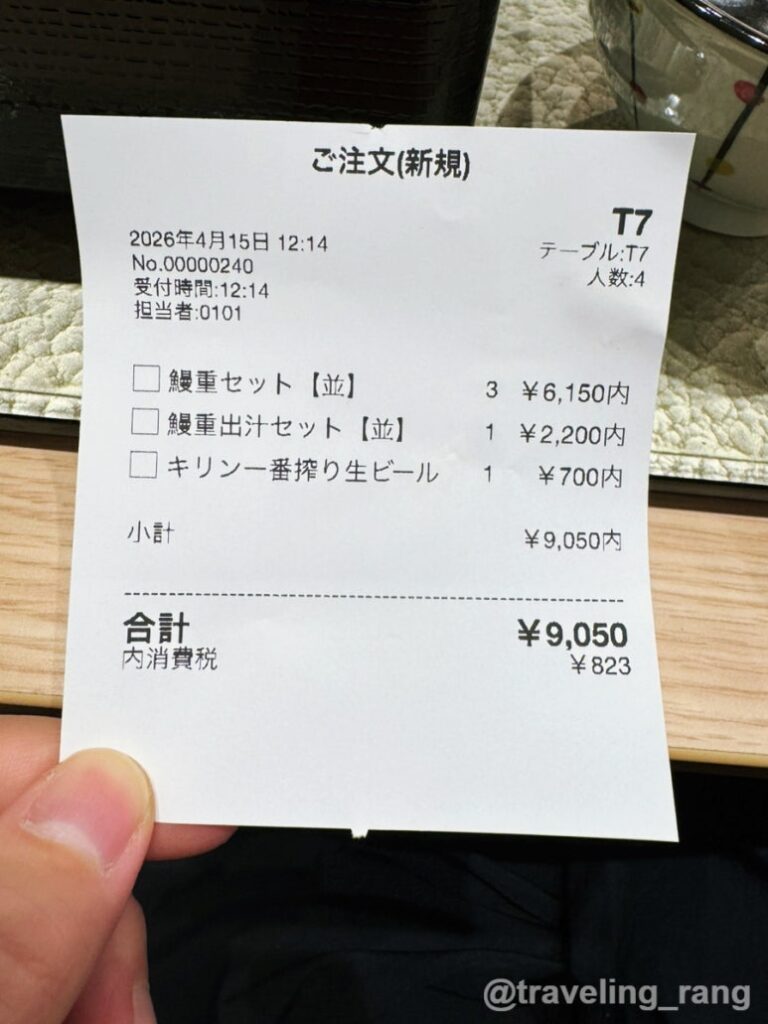
- Kirin Ichiban Shibori draft beer — 700 yen. My husband, who enjoys a good beer, ordered this, and I stole more than one sip thanks to its thick, creamy foam.
- Unaju set — 2,050 yen. Since we were traveling and had more meals planned that day, we kept our orders to the smaller portion size across the table.
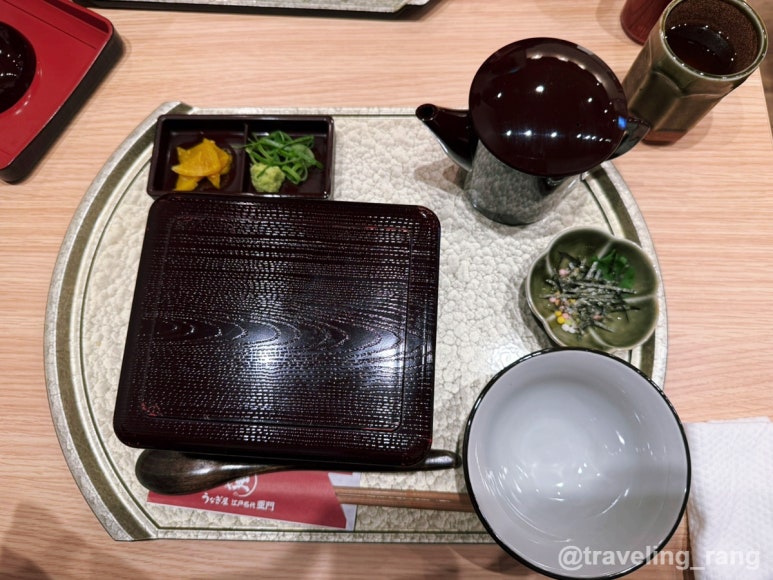
- Unaju dashi set (hitsumabushi-style) — 2,200 yen. This is the set that lets you eat the eel Nagoya-hitsumabushi style, and it’s the one I ordered.
How to Eat Hitsumabushi-Style
Hitsumabushi is traditionally a specialty of Nagoya, but you can enjoy the same eating style here. It typically breaks down into four steps:
- Eat the unaju as-is first, to taste the eel and rice on their own.
- Add yakumi (scallion, wasabi, and other condiments) and eat a second portion.
- Transfer a portion into a teacup, pour the dashi (broth) over it, and eat it ochazuke-style.
- Add more scallion or wasabi to taste for the final portion.
I’m a genuine fan of the hitsumabushi style, so I chose this set again without hesitation, and it didn’t disappoint.
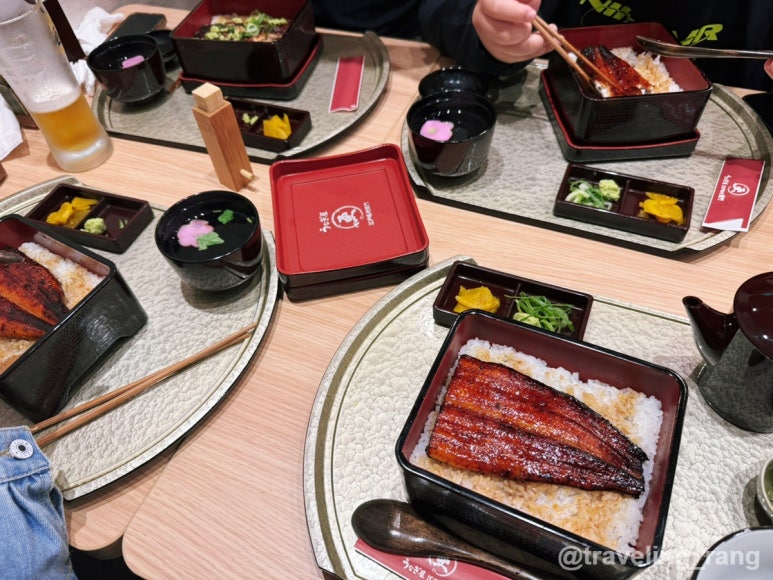
In hindsight, ordering just one hitsumabushi set for the table worked out well. The base components are nearly identical to the regular unaju set, and only the hitsumabushi order comes with a generously sized pot of dashi — enough that everyone at the table can try the ochazuke-style version too. Our kids preferred eating their eel plain, while my husband used the dashi left in my pot to try the hitsumabushi style himself.
Since the dashi portion is generous, if there are two of you, ordering one hitsumabushi set and one regular unaju set to share is a solid approach.
The Food: Texture, Flavor, and Portions
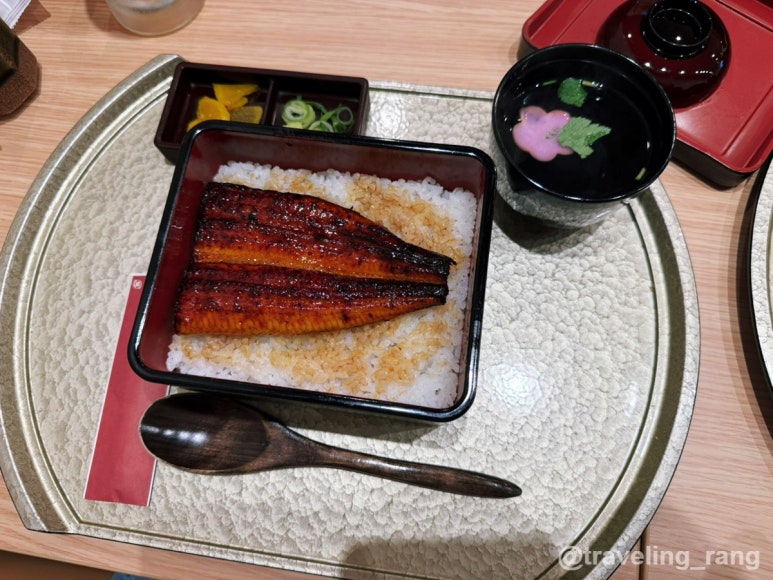
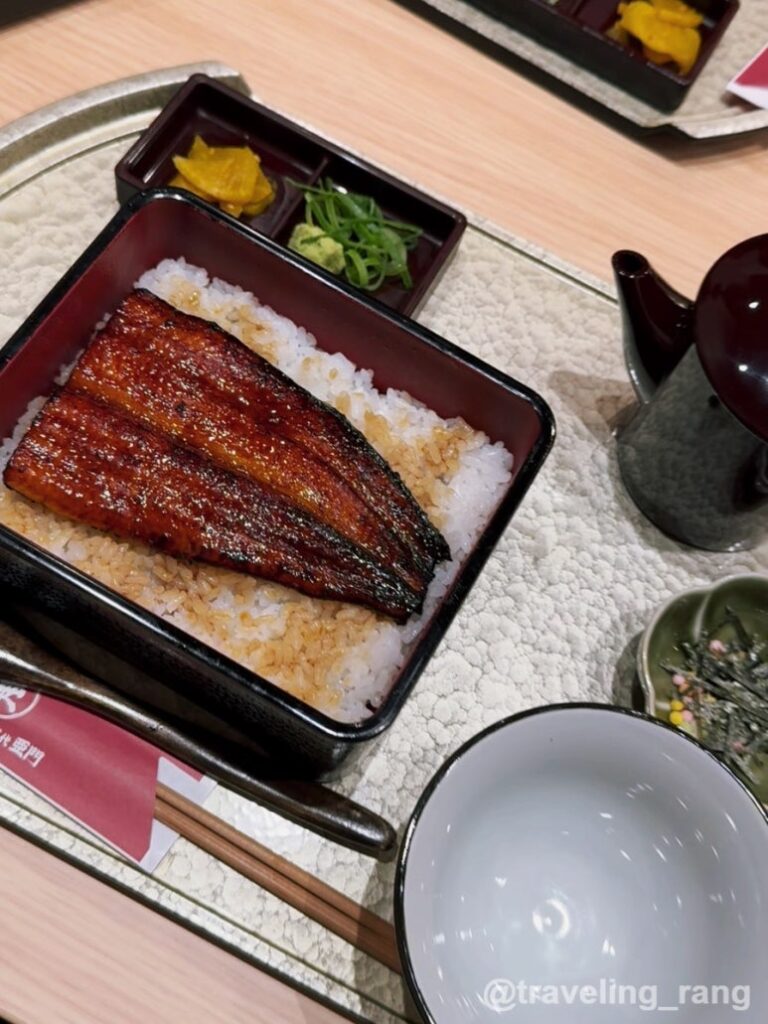
The moment we lifted the lid on the black lacquered bento box, the sweet, savory aroma of the tare sauce hit immediately. The eel was thick and glossy, practically glowing — the kind of presentation that makes you hungry just looking at it.
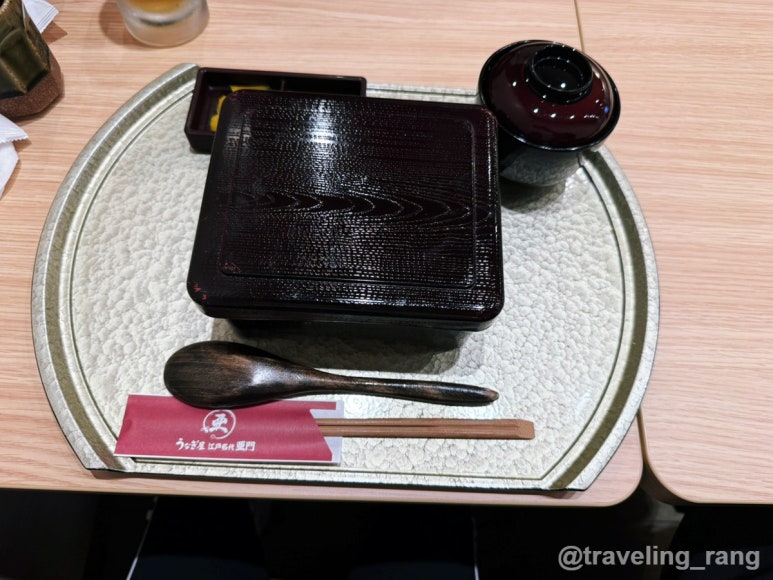
Taking that first bite, the outside had a slight bounce while the inside stayed moist and tender — exactly the texture you want. The tare sauce wasn’t overly sweet, with a deeper, more complex flavor that paired perfectly with the rice. Fresh wasabi came on the side, and adding a touch of it took the dish over the top for me — if you like wasabi, don’t skip it.
My daughter, who’s a notoriously picky eater, seems to have a natural affinity for Japanese food — she’s always made Japanese friends even back in Malaysia, and Japanese cuisine consistently agrees with her. Out of everything we ate in Fukuoka, this eel rice bowl is the one she still brings up. She finished every last grain of rice, which almost never happens with her portions.
Total Cost and Value
For our family of four, the total came to 9,050 yen before tax — roughly 2,000 to 2,300 yen per person. For the quality on offer, that’s a genuinely reasonable price point. If you have a bigger appetite, consider sizing up, since the portion I ordered may run small for heavier eaters.
Is Edo Nadai Amon Hakata Sumiyoshi Worth It?
For a properly prepared unagi meal at a price that doesn’t feel like a splurge, this spot delivers quality that holds up against pricier, more formal eel restaurants — while staying approachable for families traveling with kids. The option to try hitsumabushi-style eating adds a bit of variety to the meal too.
Since it sits directly across the street from Canal City Hakata, it’s an easy stop to fold into a Canal City day — which is exactly what we did, heading straight there after lunch.
FAQ
Is Edo Nadai Amon Hakata Sumiyoshi good for families with kids? Yes. The restaurant welcomes children (including infants and preschoolers) and allows strollers inside, and the menu’s simple, approachable eel-and-rice format tends to work well for kids’ palates.
Do I need a reservation? It’s strongly recommended, especially since the branch has developed a reputation for selling out its eel on busy days. You can book by phone, through Tabelog, or via Instagram DM.
Is there an English menu? Yes, the restaurant offers English and Korean menus, along with English-speaking staff.
How far is it from Canal City Hakata? It’s directly across the street, making it an easy pairing with a Canal City visit.
How much does a meal cost? Individual unaju sets start in the 1,000–2,000+ yen range depending on size, with our family of four spending about 2,000–2,300 yen per person for a full meal.