Cheonjeyeon Falls Jeju Island: Complete Guide to the Three-Tier Waterfall
Cheonjeyeon Falls Jeju Island is one of the most rewarding stops on the island’s southern coast — a three-tiered waterfall set inside a lush subtropical gorge, just steps from the Jungmun Tourist Complex. Unlike Jeju’s other famous cascades, Cheonjeyeon isn’t a single dramatic drop. It’s a series of three connected falls and pools that you walk between, crossing a striking arched bridge along the way.
If you’re building a Jungmun-area itinerary, Cheonjeyeon Falls Jeju Island is one of the easiest, most affordable, and most photogenic half-days you can spend on the island, and it pairs naturally with almost anything else on a southern-coast route.
What Is Cheonjeyeon Falls?
The name Cheonjeyeon translates roughly to “Pond of the Emperor of Heaven,” tied to a local legend that seven celestial nymphs once descended at night to bathe in its pools. The site sits inside the Jungmun Tourist Complex, Jeju’s largest resort area, formed where the Jungmun stream flows from Hallasan toward the coast.
Because the falls are fed partly by rainfall rather than a constant spring, the very first tier only flows visibly after heavy rain — a detail worth knowing before you go, so you’re not caught off guard if the top pool is calm and mirror-still instead of thundering.
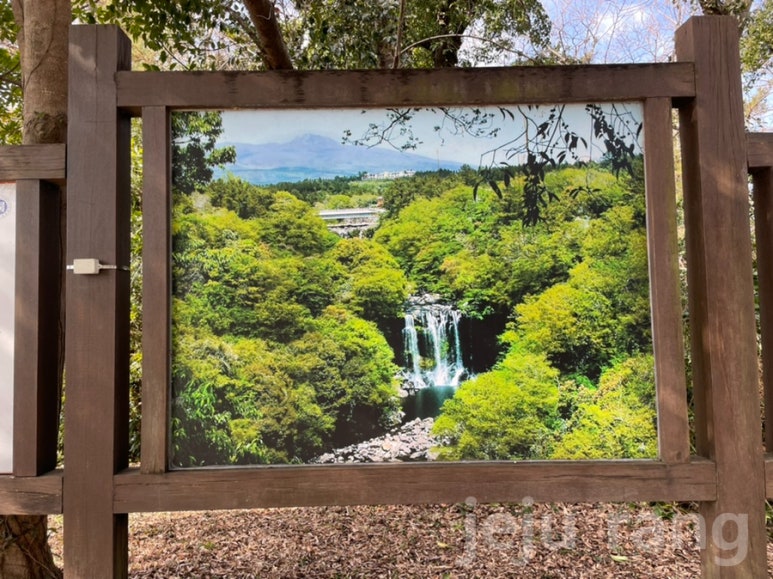
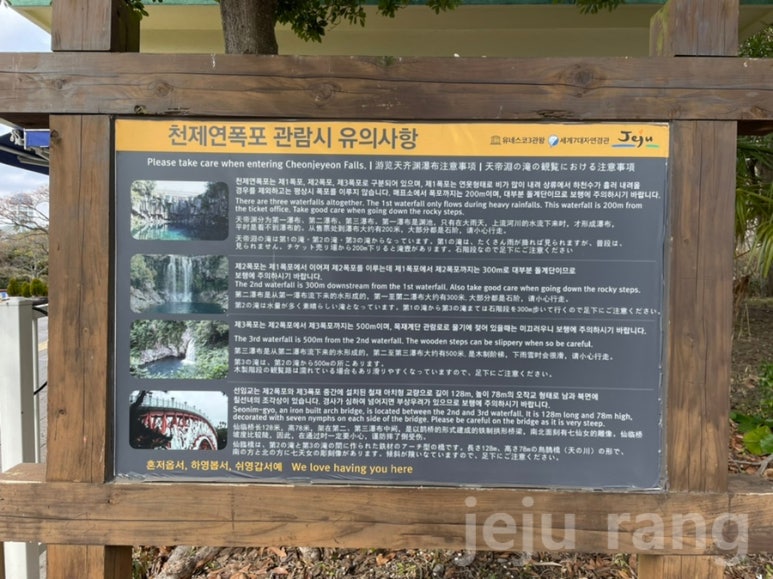
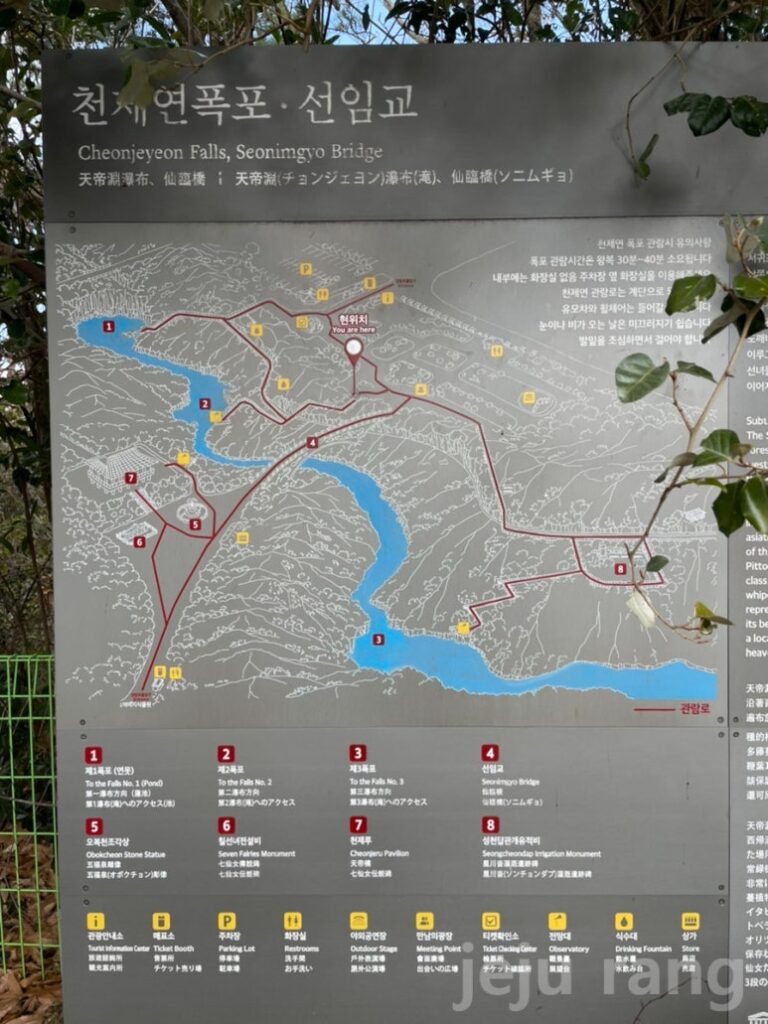
What makes Cheonjeyeon Falls Jeju Island stand out from Jeju’s other waterfalls is exactly this three-part structure. Where Cheonjiyeon and Jeongbang are each a single dramatic drop, Cheonjeyeon unfolds gradually as you walk a roughly 1.6-kilometer loop trail, moving from a still, emerald pool at the top, down through the widest and most photographed tier, and — for those with time and energy — on to a third, quieter cascade. Budget around 30 minutes of easy walking if you’re skipping the third tier, or closer to an hour if you want to see all three.
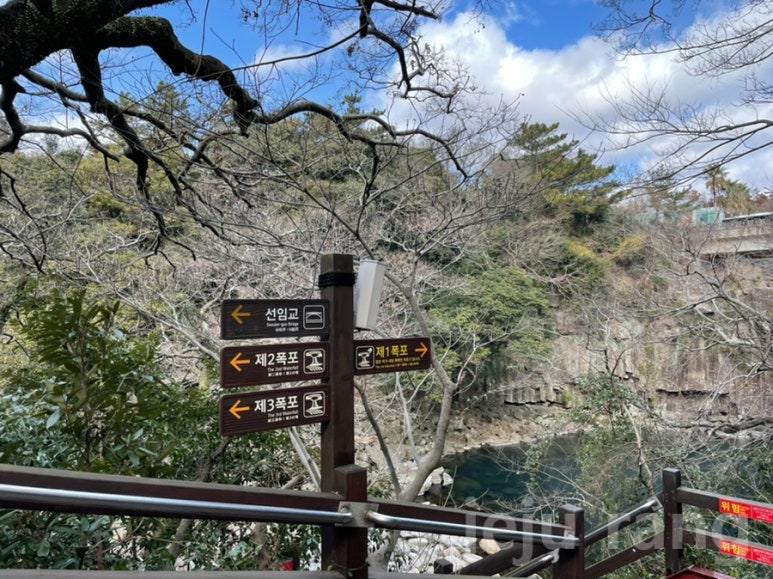
The Three Waterfalls, One Walking Loop
First Falls (제1폭포): The highest of the three, dropping 22 meters into an emerald-toned pool with a depth of 21 meters. The cliff face here shows the hexagonal basalt columns typical of Jeju’s volcanic landscape. This tier only runs with water after rainfall — on dry days, you’ll instead find a still, glass-clear pool reflecting the surrounding cliffs, which many visitors find just as striking.
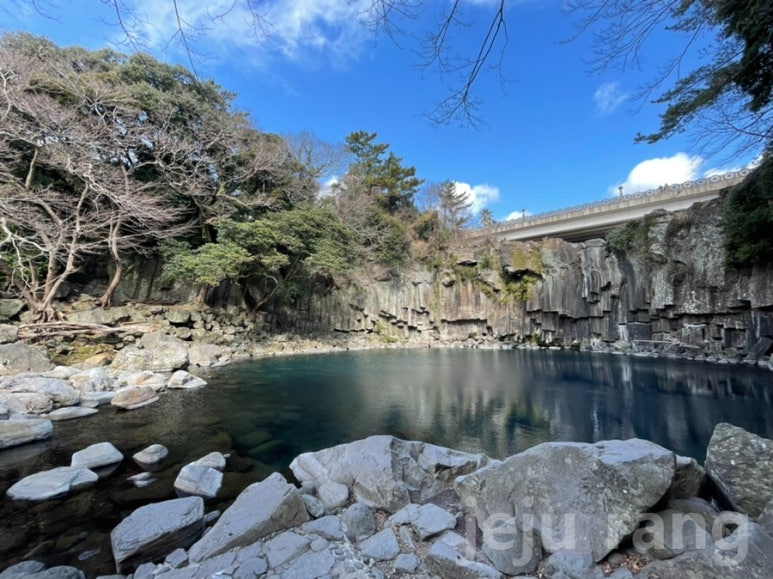
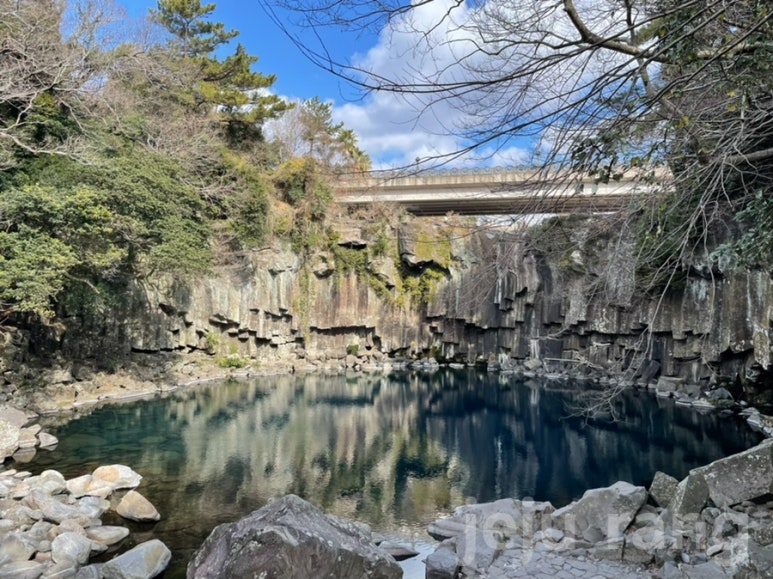
Second Falls (제2폭포): Reached by descending a long staircase, this is where water carried down from the first pool spreads into a roughly 30-meter-wide sheet as it falls. It’s considered the most consistently photogenic of the three, and it’s also the waterfall depicted in a historical painting by a Joseon-era Jeju magistrate.
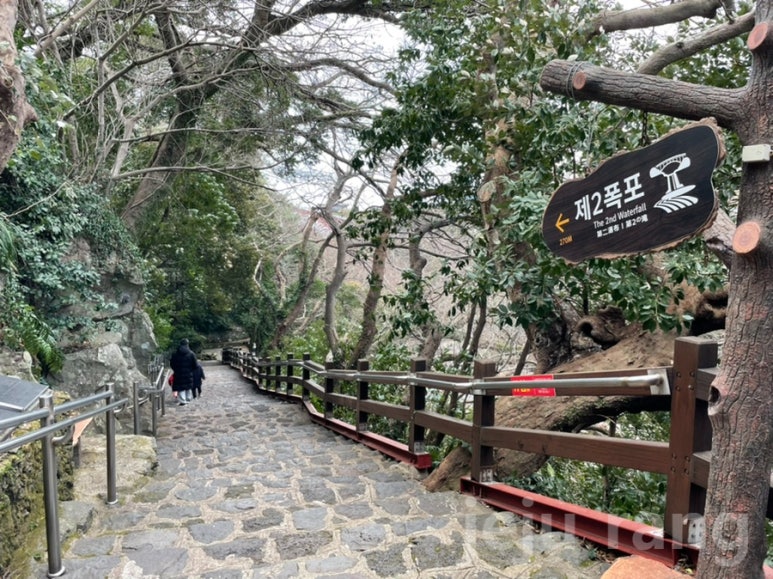
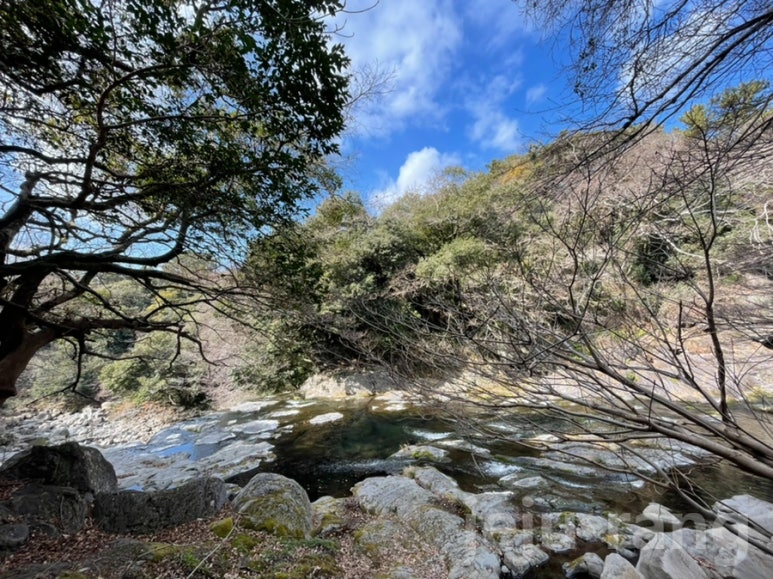
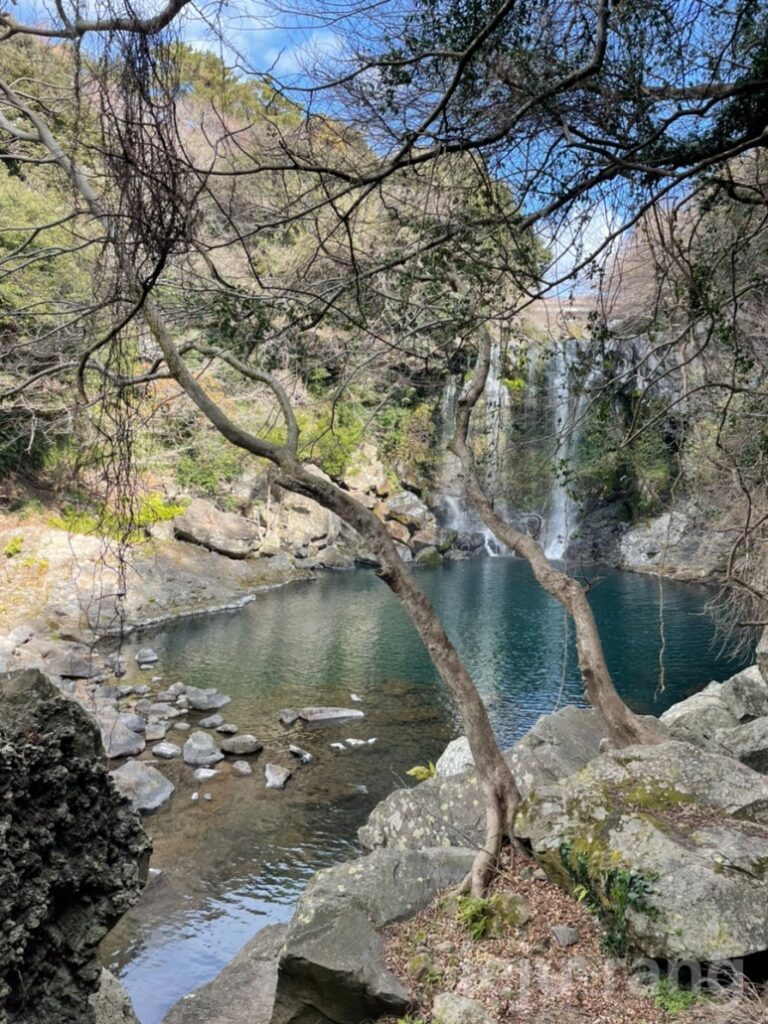
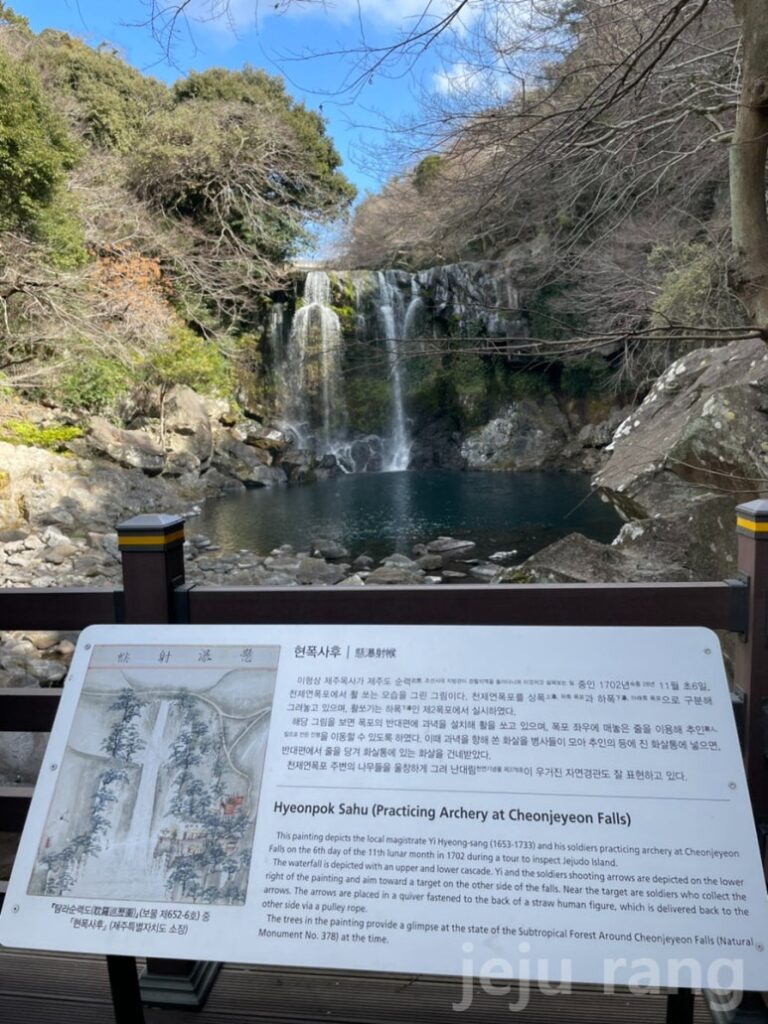
Third Falls (제3폭포): The final tier requires a rougher path and is often skipped by families with small children or anyone with mobility concerns — the staircases throughout the site are extensive and there’s no stroller or wheelchair access. If you’re short on time or energy, most visitors get the full Cheonjeyeon Falls Jeju Island experience by seeing the first two falls and crossing Seonimgyo Bridge instead, which is where most of the best photo spots are concentrated anyway.
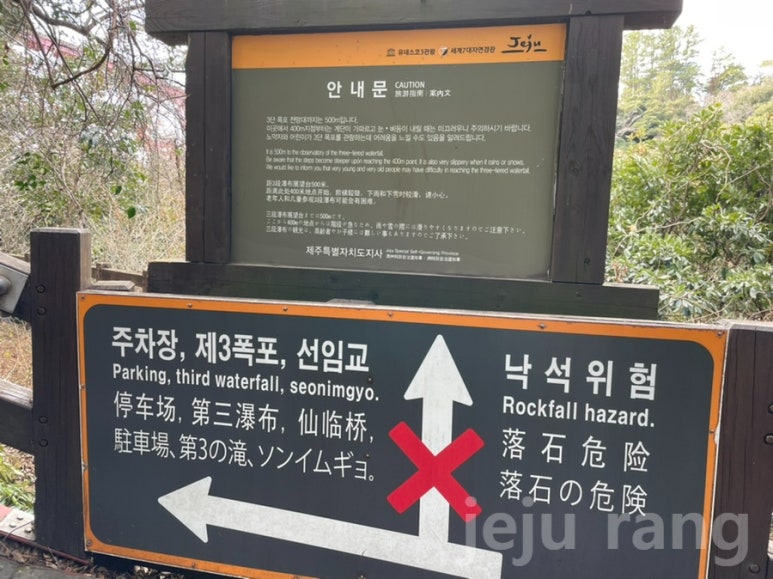
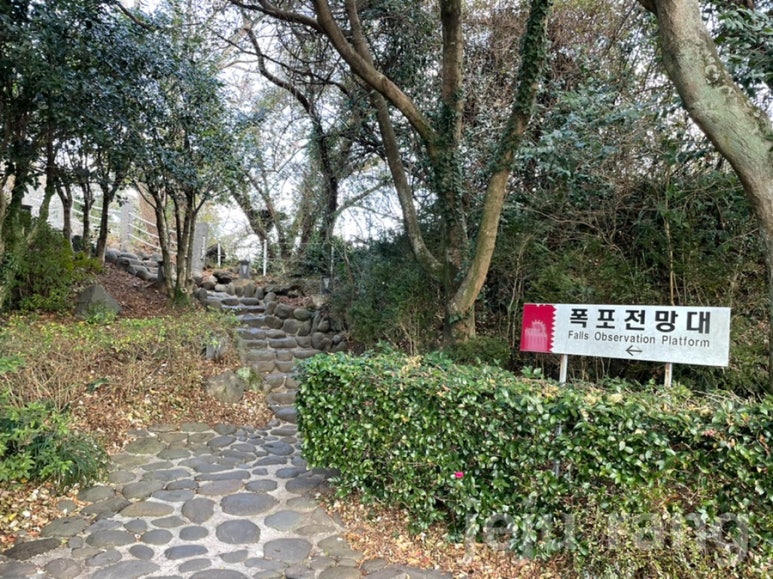
Walking between the three tiers, you’ll pass through dense subtropical forest that stays noticeably cooler than the open resort areas nearby — a welcome break if you’re visiting in summer. The trail is well-marked with signage throughout, so even without a guide it’s easy to find your way from one waterfall to the next.
Crossing Seonimgyo Bridge
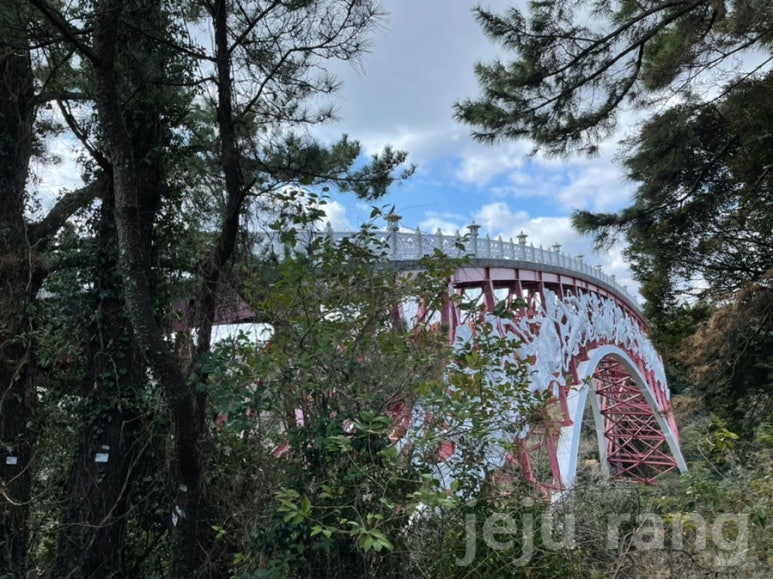
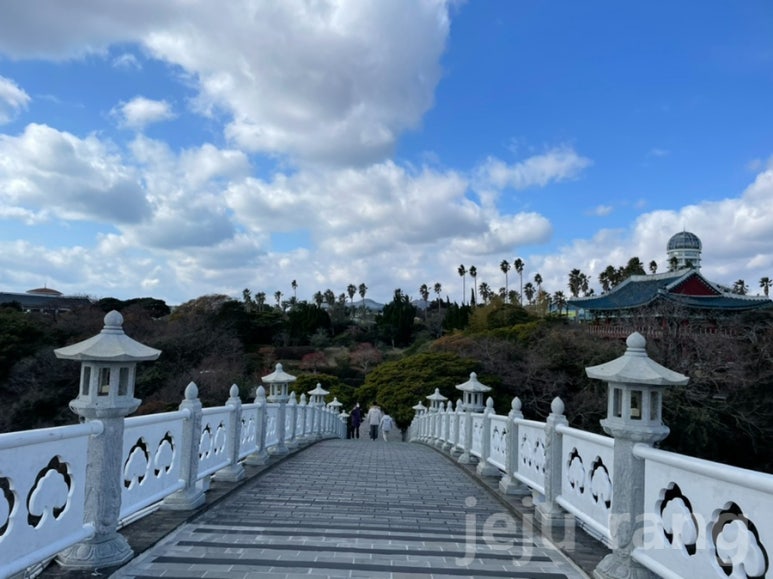
Above the second waterfall sits Seonimgyo Bridge, an arched pedestrian bridge also known as the “Seven Nymphs Bridge,” designed to echo the Chilseonnyeo legend the falls are named for. It connects Cheonjeyeon with the Jungmun Tourist Complex side of the park.
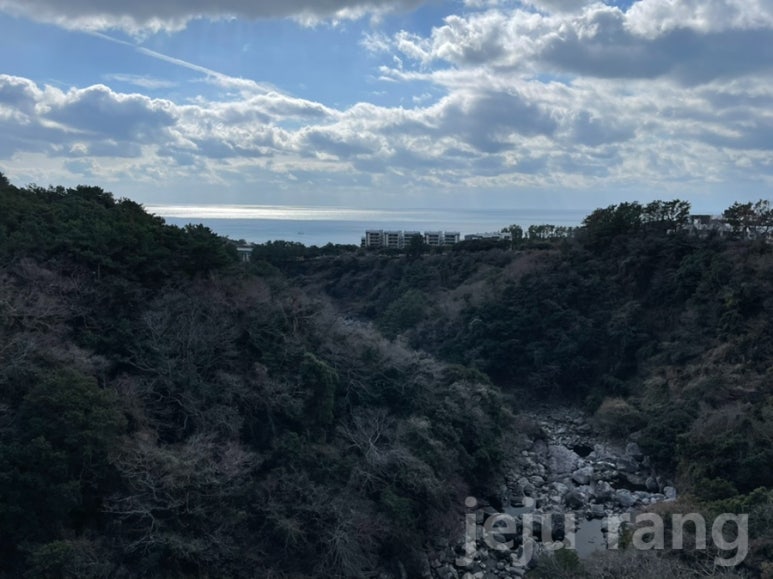
It’s higher off the ground than it looks from a distance — enough that a few visitors get genuinely nervous crossing it. The payoff is a panoramic view in both directions: Hallasan Mountain inland, and the coastline toward the sea.
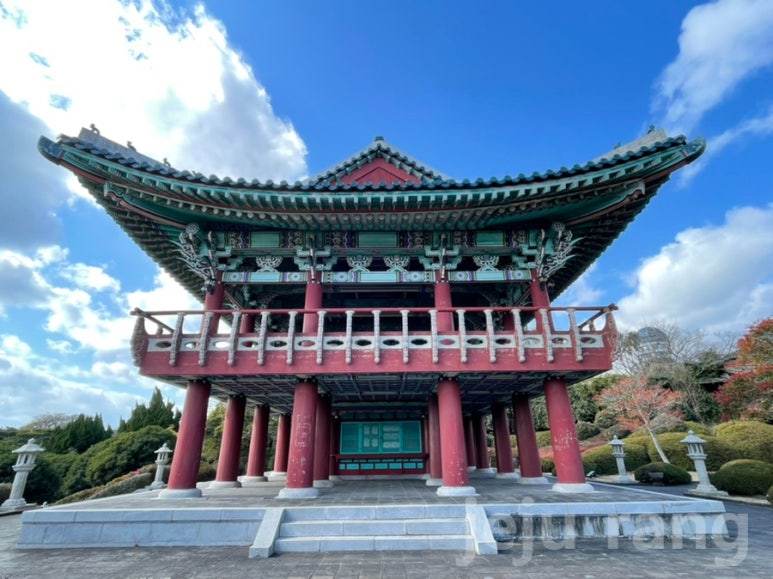
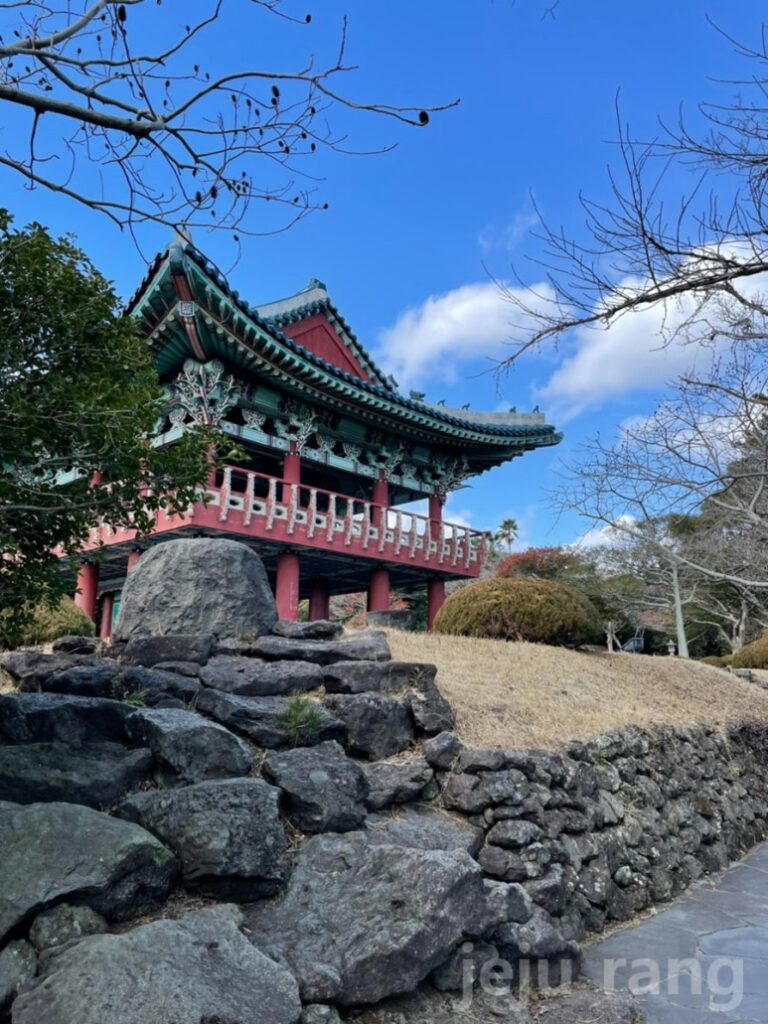
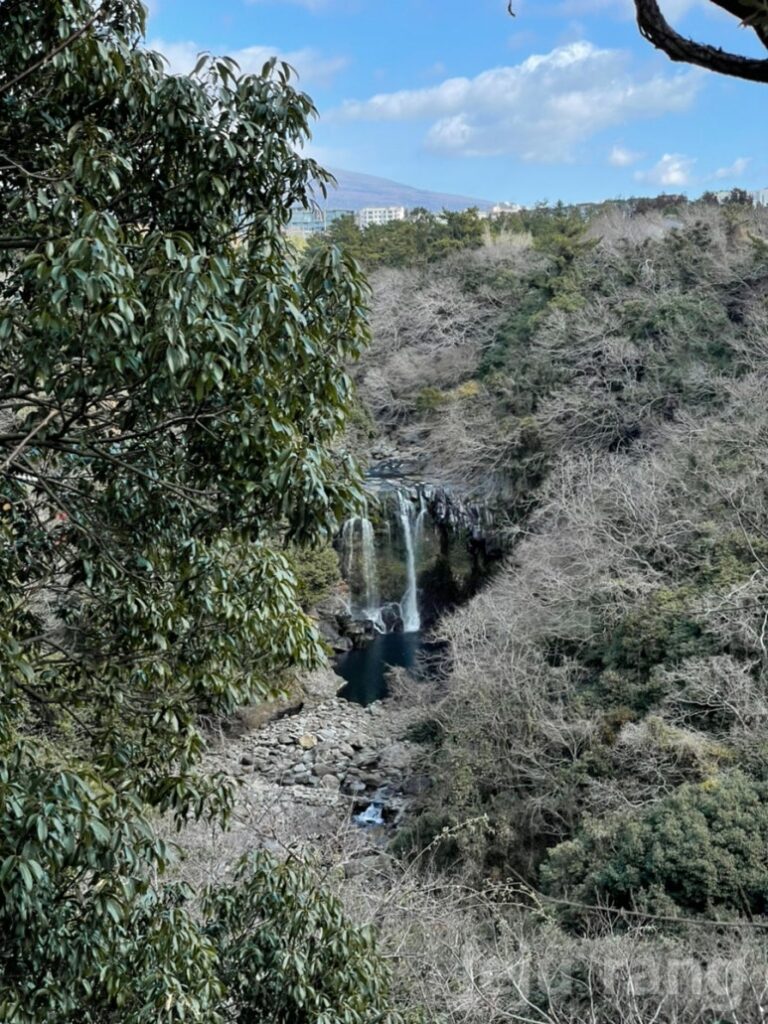
The bridge’s stone pillars are carved with images of the seven nymphs from the legend, and there’s a small platform nearby where visitors traditionally toss a coin for luck. Crossing over gives you access to a waterfall viewing deck looking back at the second falls, plus a pavilion where people often stop for photos.
Cheonjeyeon Falls Jeju Island: Hours & Admission
According to the official Seogwipo City e-ticket office, current information is as follows:
- Address: 132 Cheonjeyeon-ro, Jungmun-dong, Seogwipo-si, Jeju-do
- Hours: 09:00–17:50 (last admission 17:10), adjusted seasonally for sunset time, and subject to closure in poor weather
- Admission: Adults 2,500 KRW / Youth & children (ages 7–12 and 13–24) 1,350 KRW
- Free admission: Children age 6 and under, seniors 65+, registered disabled visitors (plus one caregiver for severe cases), Jeju residents, and several other exemption categories with ID
- Facilities: Free public parking, restrooms
- Phone: +82-64-760-6331
Note that some third-party travel sites list slightly different hours (a common source of confusion for this attraction), so if your visit is time-sensitive, a quick call to confirm same-day hours is worth it, especially outside of peak season.
How to Get There
Cheonjeyeon Falls sits inside the Jungmun Tourist Complex on Jeju’s southern coast. From Jeju City, driving takes roughly an hour; from Seogwipo city center, it’s closer to 20 minutes. If you’re staying at one of the resort hotels within Jungmun itself, it can be just a few minutes’ drive or even a short walk, depending on your property. Public buses connect to Jungmun from both Jeju City and Seogwipo, though renting a car is the more flexible option if you’re combining this stop with other spots along the southern coast.
Best Time to Visit
Early morning is the quietest time to walk the falls before tour groups arrive. Weather matters more here than at most Jeju attractions: visiting after a rain means a much better chance of seeing the first falls actually flowing, while a dry stretch means calmer, mirror-like pools instead. Spring and autumn offer the most comfortable walking temperatures; note that mornings and evenings can be noticeably cooler than midday even outside of winter, so a light jacket is worth packing.
Tips for Visiting
- Budget 30–40 minutes for a relaxed walk through the first two falls and the bridge; add extra time if you’re continuing to the third falls.
- Wear comfortable shoes — there are a lot of stairs, and some sections can be slippery after rain.
- The site is not stroller- or wheelchair-accessible due to the staircases.
- Pets are not permitted inside.
- If the first falls are dry when you visit, it’s not a malfunction — it’s simply been a dry stretch. Come back after rain if you want to see it at full flow.
Nearby Attractions in Jungmun Tourist Complex
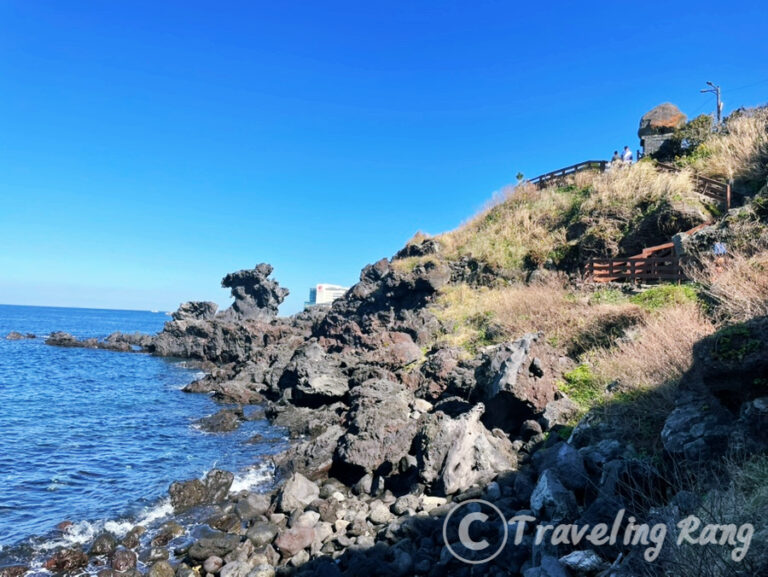
Cheonjeyeon Falls pairs naturally with other stops inside Jungmun. Yeomiji Botanical Garden, one of Asia’s largest indoor botanical gardens, sits right next door and makes for an easy add-on if you want an air-conditioned break between outdoor stops (full guide coming soon). Jusangjeolli Cliff, the hexagonal basalt column coastline, is a short drive away and free to view from its coastal walkway. If you have a full day, many visitors combine Cheonjeyeon with Jungmun Saekdal Beach or the Teddy Bear Museum to round things out.
Where to Stay Near Jungmun
Because Cheonjeyeon Falls Jeju Island sits inside Jeju’s largest resort district, there’s no shortage of hotel options within a short drive — or even walking distance for some properties. Staying inside Jungmun itself means you can visit the falls early, before tour buses arrive, then walk back for breakfast. [Compare Jungmun-area hotels on Agoda →] (affiliate link placeholder — insert with rel=”nofollow sponsored”, open in new tab)
Sample Half-Day Itinerary
If you’re short on time, here’s a simple way to combine Cheonjeyeon Falls Jeju Island with the rest of Jungmun:
- Morning (9:00–9:40 AM): Arrive early at Cheonjeyeon Falls to beat the crowds, walk the first two tiers, and cross Seonimgyo Bridge.
- Late morning (10:00–11:30 AM): Head to Yeomiji Botanical Garden for an air-conditioned break, or walk the free coastal path at Jusangjeolli Cliff.
- Midday: Grab lunch in Jungmun or continue toward Seogwipo, about 20 minutes away, for more food options.
This keeps the whole loop compact and walkable without needing to backtrack across the resort area.
FAQ
Is Cheonjeyeon Falls the same as Cheonjiyeon Falls? No — these are two different waterfalls with very similar-sounding names, a common source of confusion for first-time visitors. Cheonjeyeon Falls is inside the Jungmun Tourist Complex, while Cheonjiyeon Falls is near Saeyeon Bridge in central Seogwipo, about a 20–30 minute drive away.
Does the waterfall always have flowing water? Not always. The first and highest tier depends heavily on recent rainfall. During dry periods, you’ll see a calm, clear pool instead of a cascading waterfall. The second falls tends to have water flowing more consistently.
Can I swim at Cheonjeyeon Falls? No, swimming is not permitted at any of the three pools.
Is it stroller- or wheelchair-friendly? No. The site involves extensive staircases with no accessible route, so it’s not recommended for visitors with mobility limitations or for stroller use.
How long should I plan to spend there? Most visitors spend 30–40 minutes seeing the first two falls and crossing Seonimgyo Bridge. Add more time if you plan to hike to the third falls as well.
You Might Also Like
Jusangjeolli Cliff Jeju: Jeju’s Most Stunning Hexagonal Volcanic Rock Formation