Jeju Black Beef Restaurant Guide: Boreumsoe’s Rare Heukwoo, Explained
When people think about food in Jeju, black pork (heukdwaeji) is almost always the first thing that comes to mind. But there’s another Jeju specialty that flies under most travelers’ radar, and it might be even more special — and finding the right Jeju black beef restaurant can turn a good trip into a memorable one.
It’s called Jeju black beef, or heukwoo (흑우), and it’s one of the island’s most prized culinary treasures. In this guide, I’ll cover what heukwoo actually is, how to spot a genuine Jeju black beef restaurant, and a full breakdown of what to expect at Boreumsoe, one of the best-known spots for trying it.

What Is Jeju Black Beef (Heukwoo)?
Jeju black beef comes from a native black-haired cattle breed raised exclusively on Jeju Island for over 2,000 years. During Korea’s Joseon Dynasty, it was considered so valuable that it was reserved for royal tables.
Compared to standard Korean hanwoo, heukwoo is known for a more tender texture and deeper flavor. It’s also genuinely rare — Jeju black cattle make up only a small fraction of Korea’s total beef cattle.
The breed also requires roughly six extra months to raise compared to standard cattle, which is part of why so few restaurants serve it at all. Each animal yields a smaller amount of usable meat, too, so daily supply at any single restaurant is often limited to part of one animal.
That scarcity is exactly why so few kitchens outside of Jeju itself are able to offer it consistently, and why trying it while you’re actually on the island tends to be the most reliable option.
How to Choose a Good Jeju Black Beef Restaurant
Because heukwoo is rare and expensive to source, not every restaurant on the island that lists “black beef” on its menu is working with the real thing in meaningful quantities.
When evaluating a Jeju heukwoo restaurant, a few signs are worth checking: does it raise or directly source its own cattle rather than buying small amounts wholesale, does it offer both raw preparations (yukhoe, yuksashimi) alongside grilled cuts, and does it have a track record of recognition from independent guides rather than just self-promotion.
Boreumsoe checks all three boxes, which is a big part of why it’s become the reference point for this dish on the island.
Boreumsoe Jeju City: The Restaurant Behind the Beef
Boreumsoe Jeju City is the original restaurant and farm operation behind the Jeju black beef, located in Ara-dong. It’s worth understanding the Michelin story here, because it’s a bit more nuanced than a quick search suggests: Michelin Guide Korea currently covers only Seoul, and as of the 2026 edition, Busan — meaning restaurants on Jeju Island, including this one, aren’t independently rated by Michelin inspectors.
That said, the connection is real and worth mentioning. Boreumsoe’s sister restaurant in Samseong-dong, Seoul, has held a Michelin star for multiple consecutive years, and it sources its heukwoo directly from this same Jeju farm and restaurant.
In other words, eating at this Jeju black beef restaurant means trying the same beef that earned its sibling a star in Seoul, straight from the source, without the flight to the mainland.
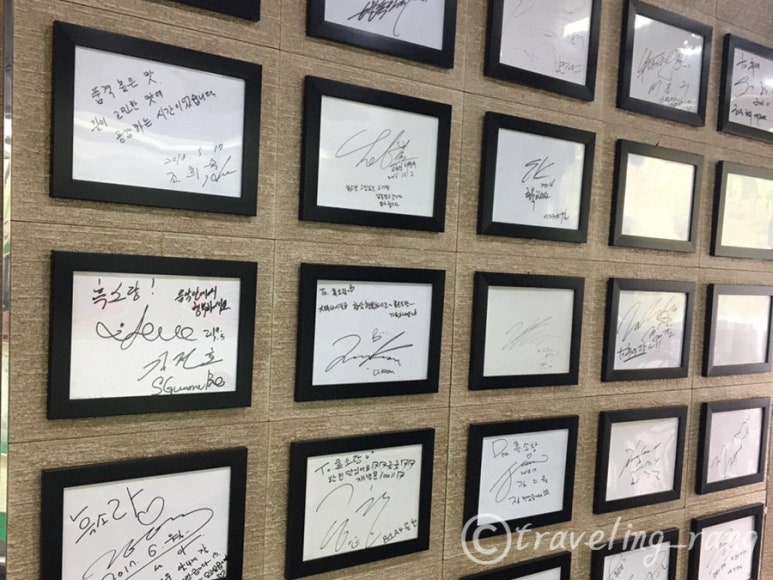
The Jeju location previously operated under the name “Heuksorang.” As the Michelin-starred Boreumsoe Seoul location grew more famous, the original Jeju restaurant adopted the Boreumsoe name to match. Step inside and the walls tell their own story too — they’re lined with autographs from Korean celebrities who’ve dined there over the years.
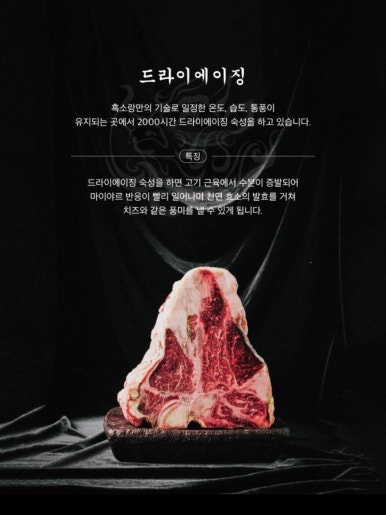
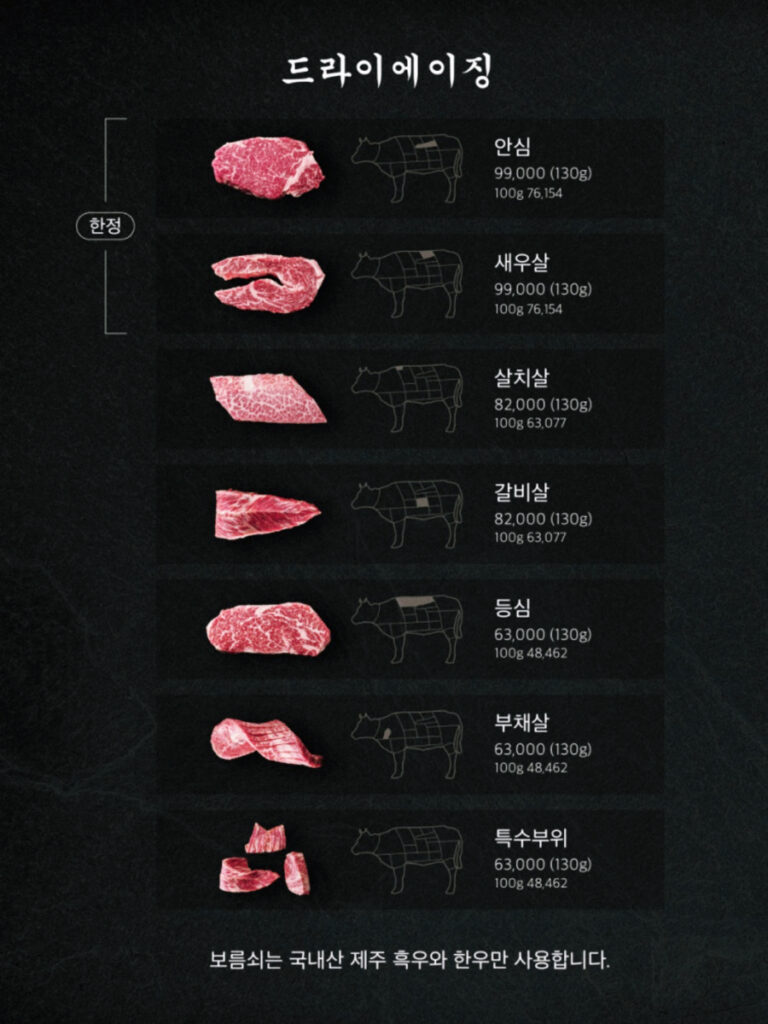
Boreumsoe specializes in premium cuts like dry-aged sirloin and aged tenderloin, grilled tableside by attentive staff who walk you through each piece as it hits the grill. Alongside the beef, the restaurant is known for its variety of hearty stews, and its side dishes are consistently well-prepared and thoughtfully plated. With spacious seating, it’s a solid choice for family meals or larger group gatherings, not just couples looking for a quiet dinner.


Location & Hours
- Address: Yeonbuk-ro 631, Jeju City, Jeju Island (Ara-dong)
- Hours: Daily, 11:00 AM–10:00 PM, with a break time from 3:00–5:00 PM. Open every day of the year, with no regular closing day.
- Phone: Available on the restaurant’s official Naver listing
The Jeju Black Beef Lunch Set: The Best-Value Way In
Let’s be honest — this Jeju black beef restaurant isn’t a cheap night out. Because heukwoo is rare and labor-intensive to age properly, dinner prices run noticeably higher than a typical Korean barbecue restaurant. That’s exactly why I recommend the Jeju black beef lunch set, priced at 33,000 KRW per person, as the best way to try it without committing to a full à la carte dinner.
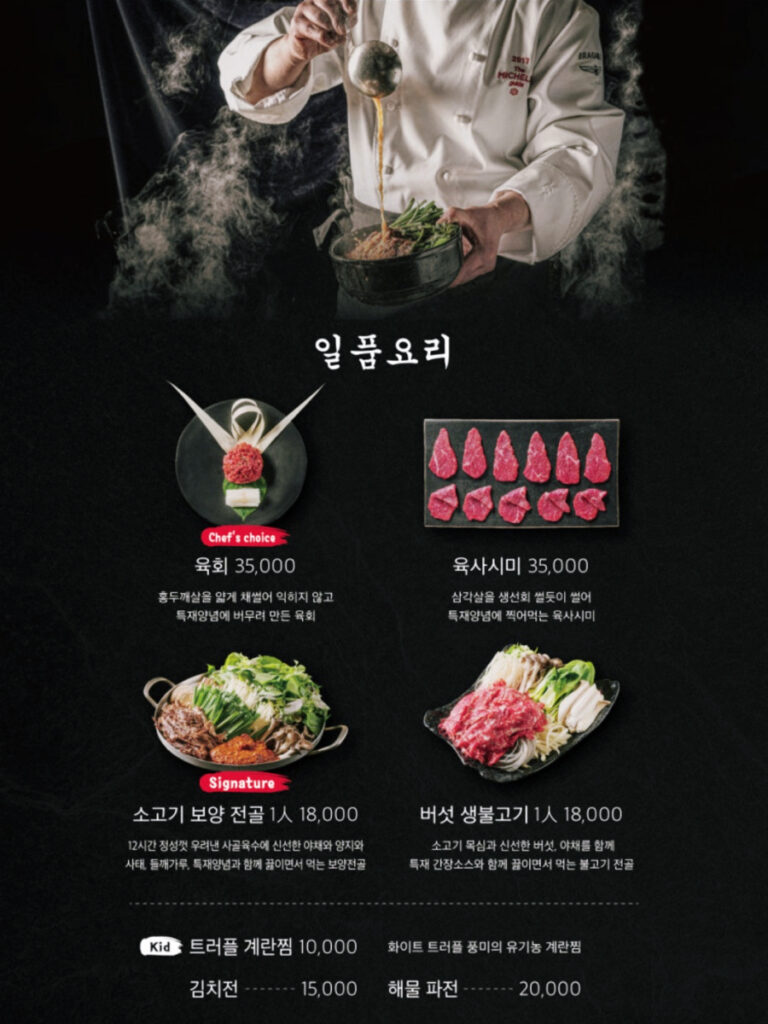
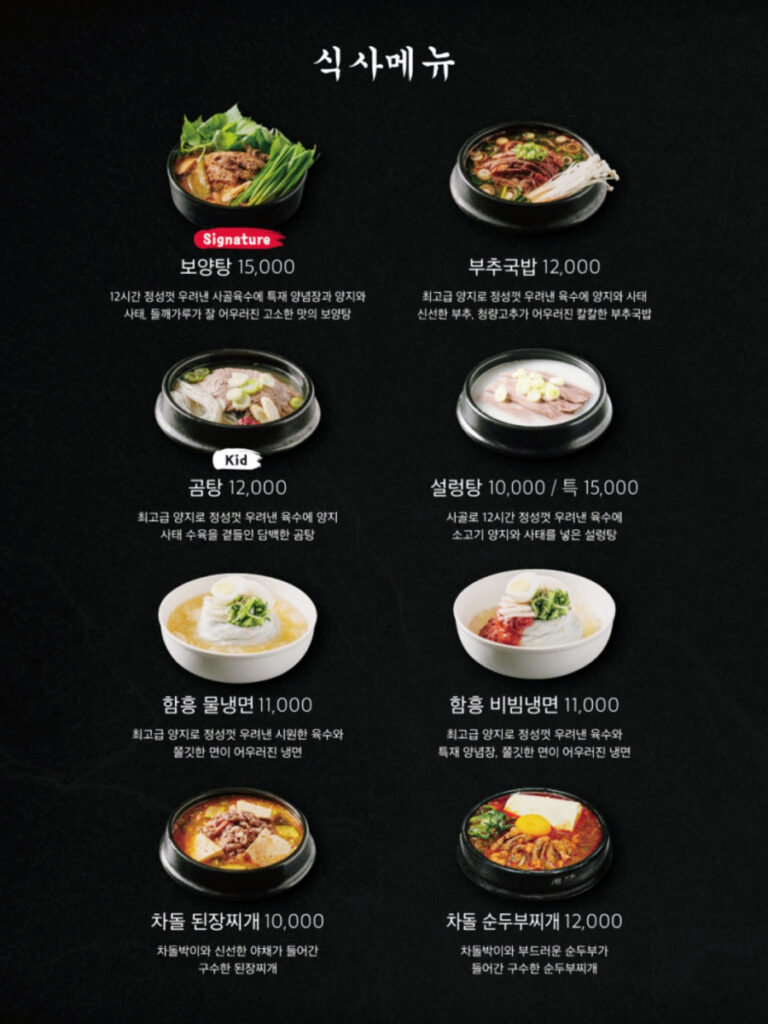
One tip: the lunch set is limited in quantity each day, so it’s worth arriving early or reserving ahead if lunch is your plan. If you follow the restaurant’s Naver page, you can also claim a 1,000 KRW discount coupon before your visit — small, but worth grabbing.

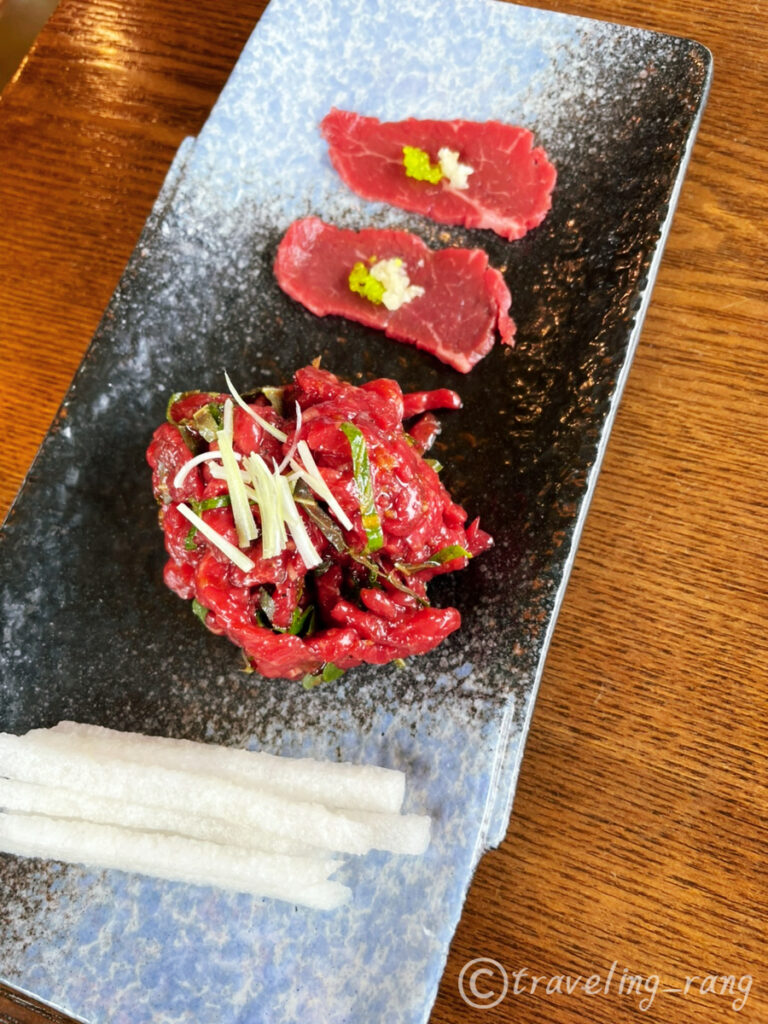
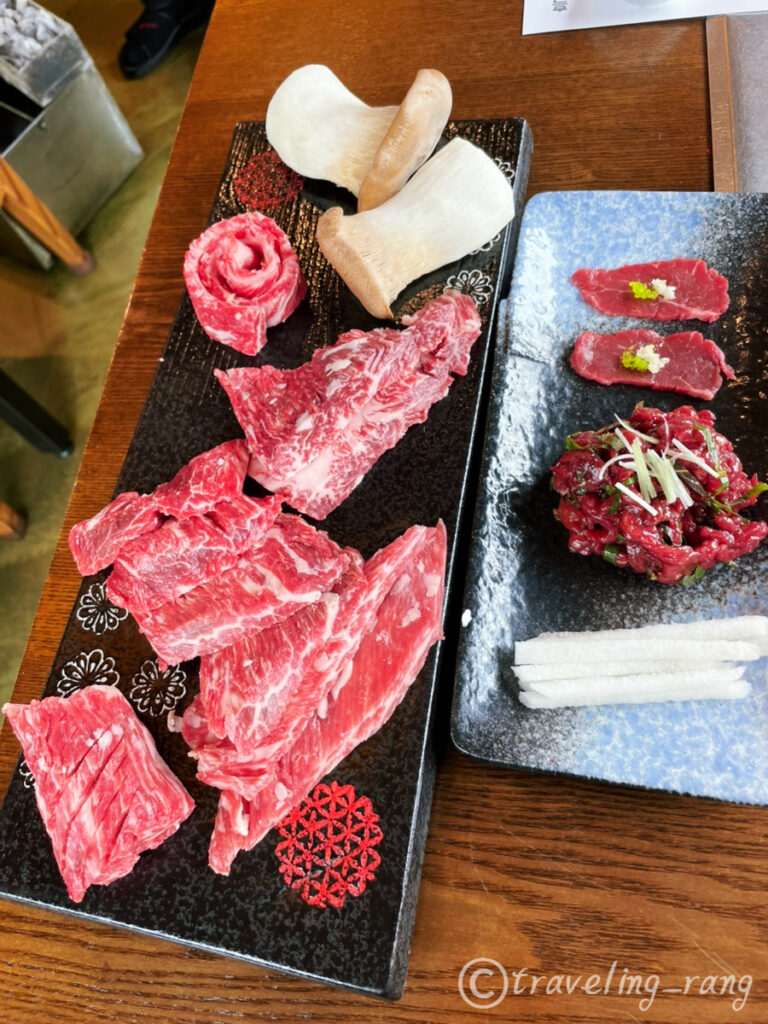
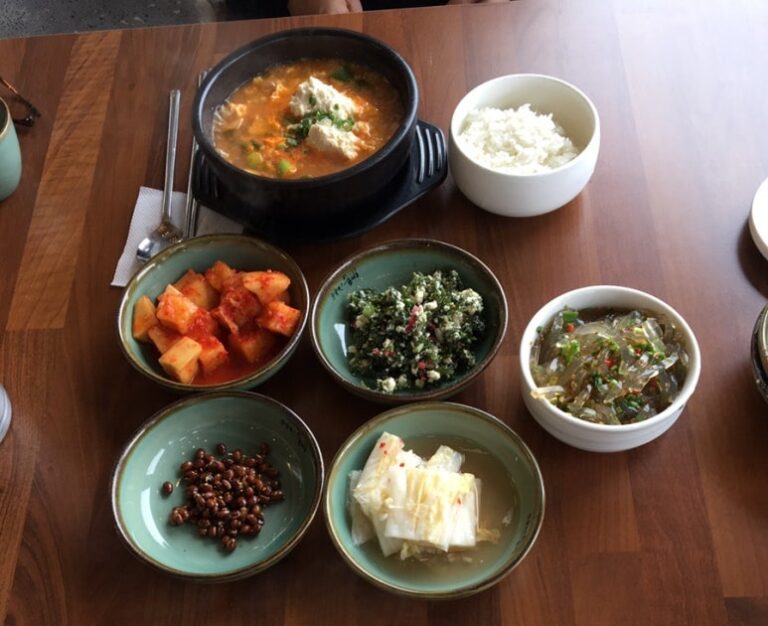
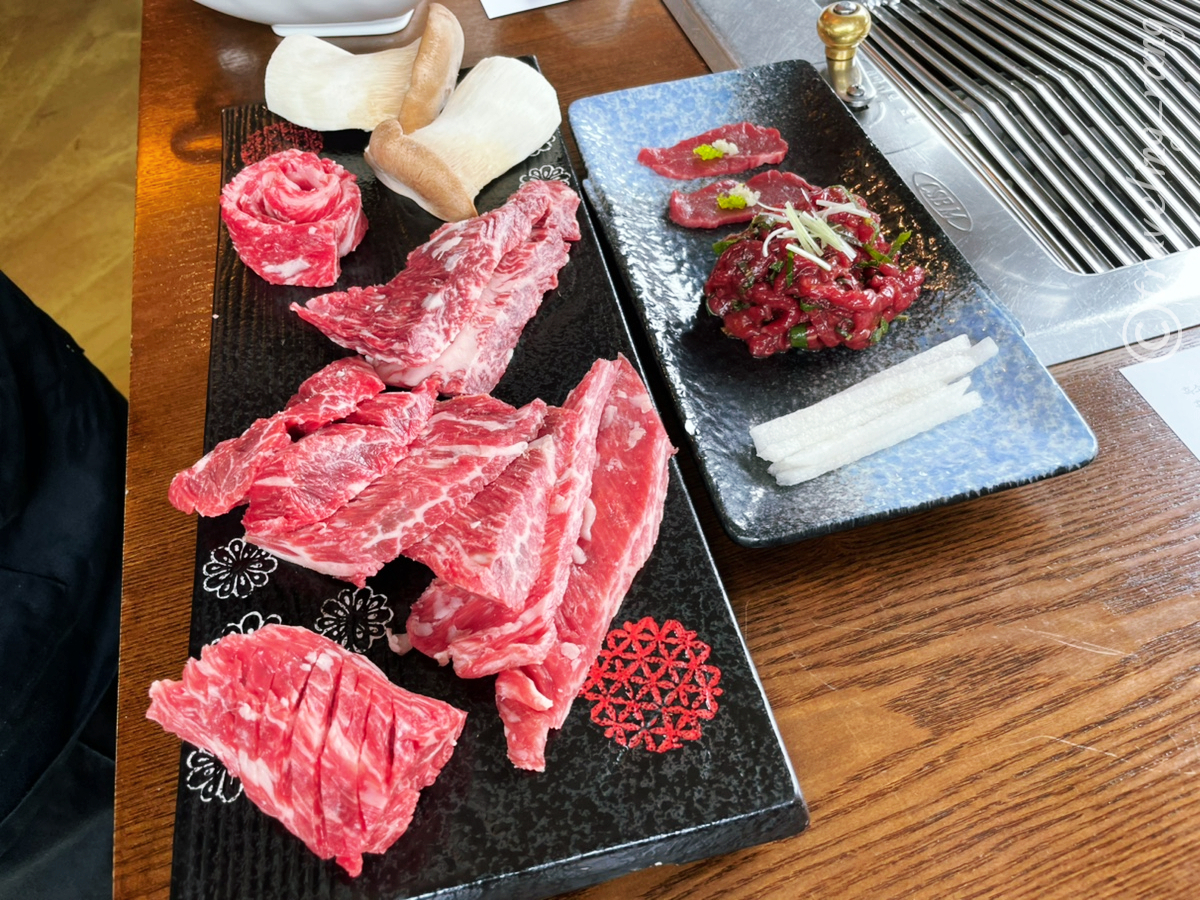
The banchan arrive first, more refined than you’d expect at a typical barbecue restaurant — a small dish of tender young chives paired beautifully with nearly every bite that followed. The set also includes a small serving of yukhoe (Korean beef tartare) and yuksashimi (raw beef slices), both remarkably fresh with a texture that borders on melting.

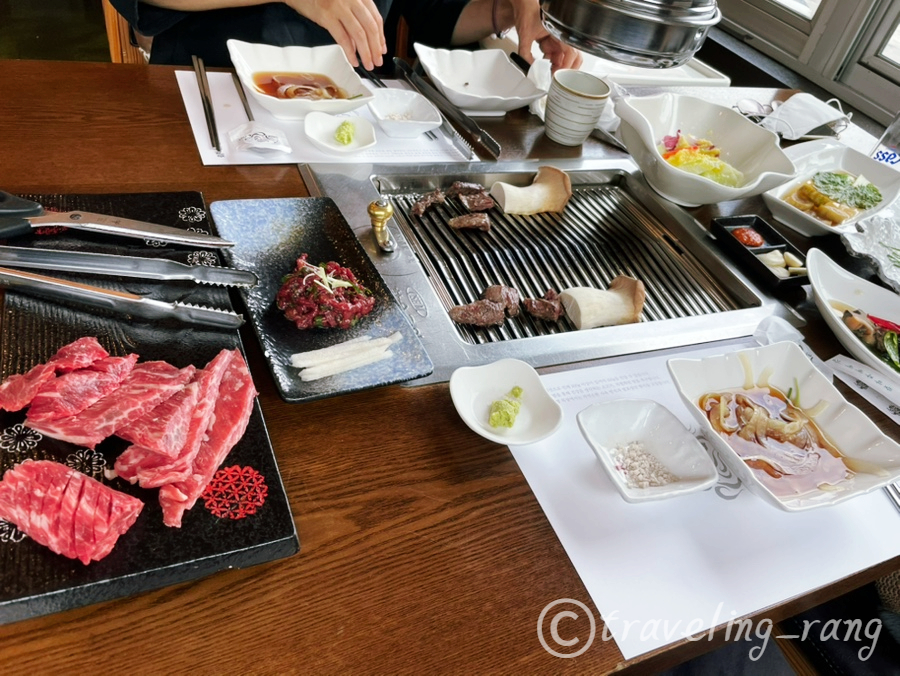
The main event is the grilled beef itself, either dry-aged or wet-aged depending on the cut, with staff explaining each one as it hits the grill — though once the meat starts sizzling, it’s genuinely hard to focus on anything else. Try it with a touch of wasabi or wrapped with the chive side dish; both pairings work beautifully. A cold glass of Hallasan soju, a Jeju-made rice spirit, is a popular local pairing if you’d like to drink the way many Jeju locals do alongside the meal. The set is rounded out with doenjang jjigae and a bowl of rice, finished with a cup of chilled plum tea that makes for a perfect close to the meal.
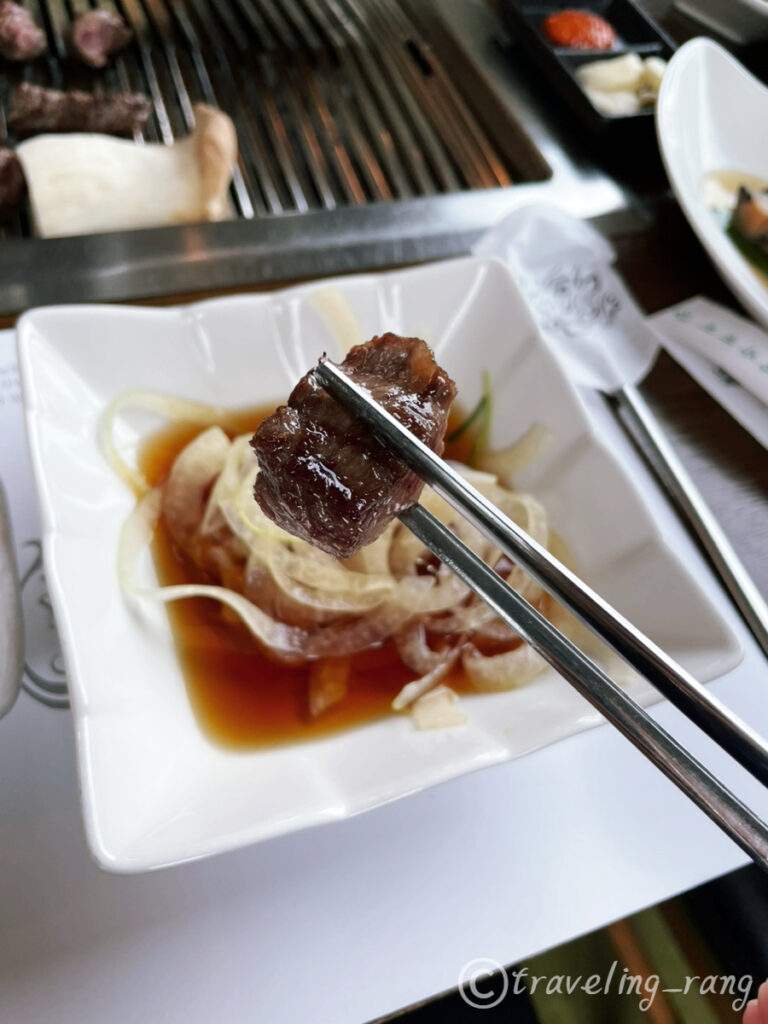
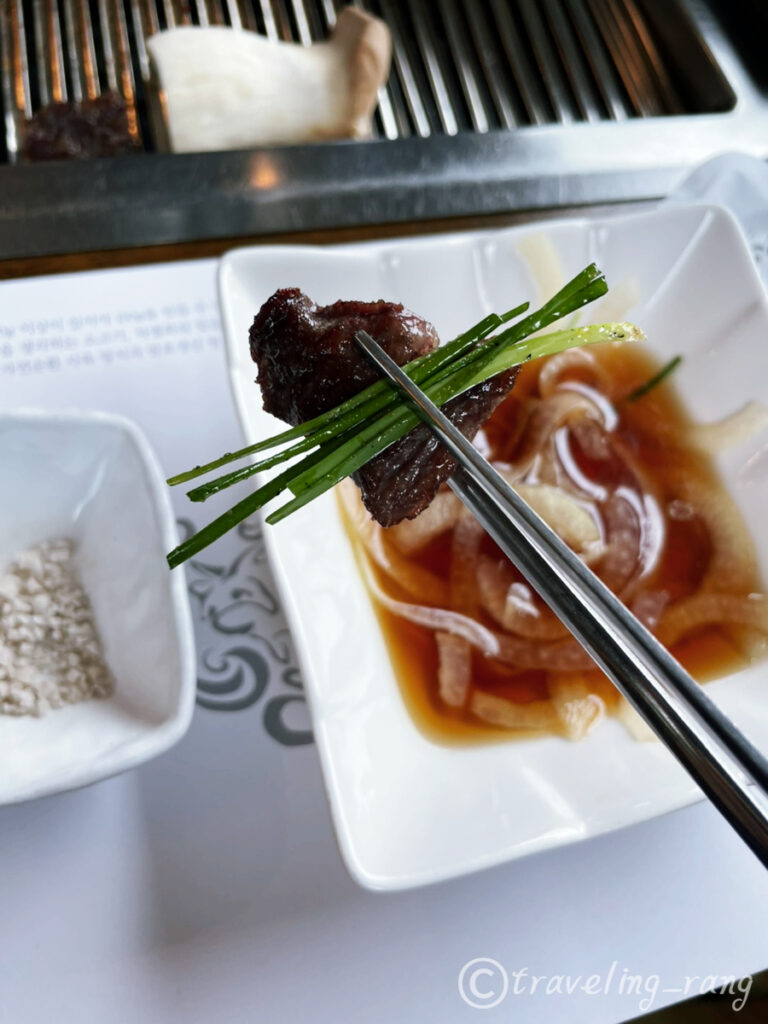
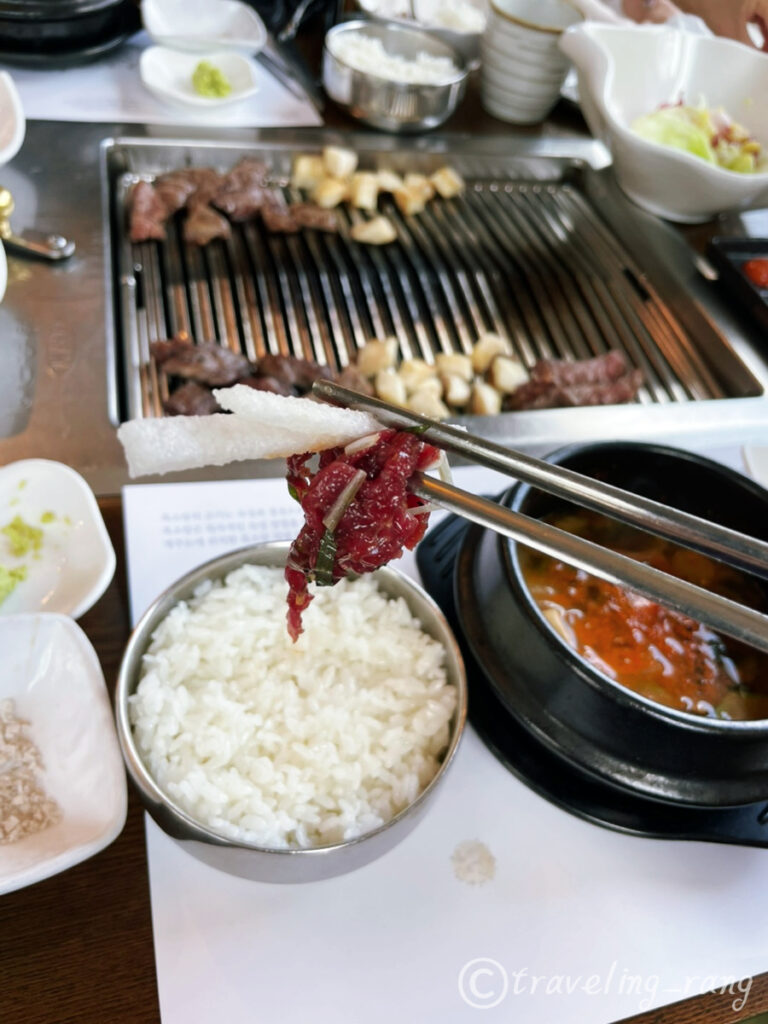
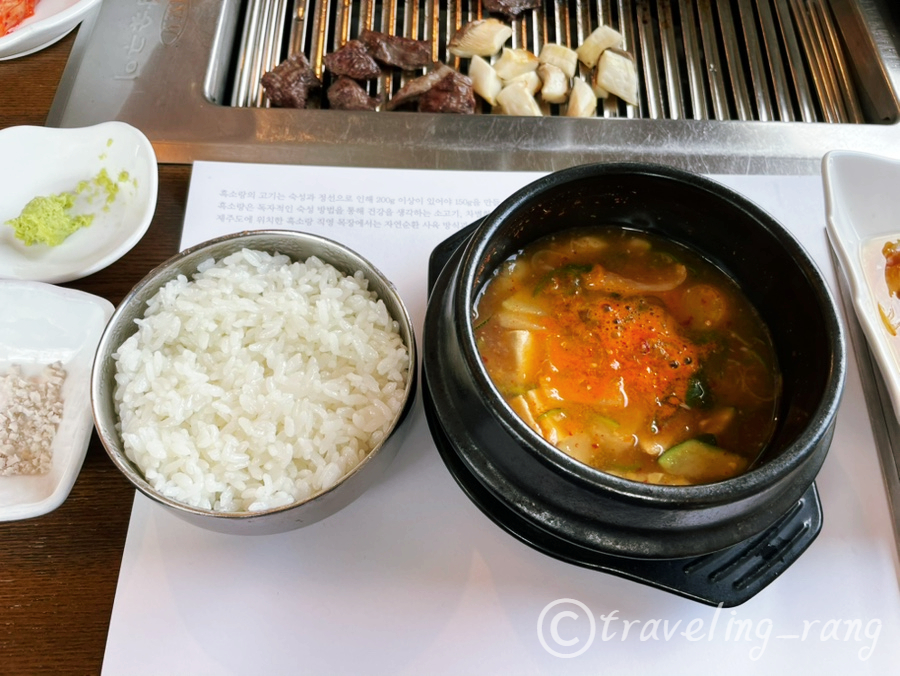
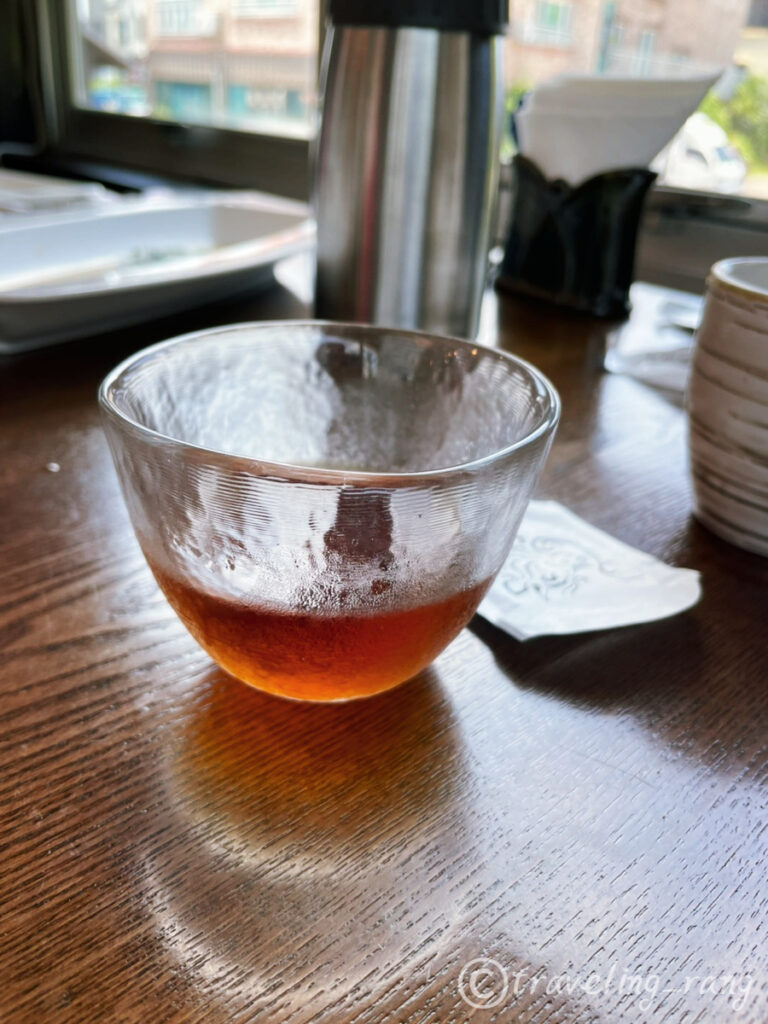
For travelers who want to explore beyond the lunch set, the dinner menu at this Jeju heukwoo restaurant expands into individual cuts sold by weight, so it’s worth asking staff for their current recommendations and pricing on the day, since availability shifts with what the farm has that week.
Getting to Boreumsoe
Boreumsoe sits in Ara-dong, a residential area a short taxi ride from central Jeju City rather than directly on the main tourist strip, so it’s worth building a few extra minutes into your plans compared to restaurants closer to the airport or the coastal hotel districts. Taxis are the simplest option for most visitors, and drivers are generally familiar with the restaurant given its reputation. If you’re renting a car, which is common for exploring Jeju’s more spread-out attractions, there’s parking available near the restaurant, which makes it easy to combine a meal here with a broader day of sightseeing around the eastern or central parts of the island.
Because the restaurant draws both local diners and food-focused travelers, weekends and dinner hours tend to be busier than weekday lunches. If your schedule is flexible, a weekday lunch not only gives you a better shot at the limited lunch set, but also means a quieter, more relaxed dining room overall.
Is It Worth the Trip?
For travelers who want to go beyond black pork and taste something genuinely rare to the island, Boreumsoe delivers — and knowing you’re eating from the same farm that supplies a Michelin-starred kitchen in Seoul only adds to the appeal. It’s not an everyday meal, but for a special occasion during a Jeju trip, it’s hard to beat as a Jeju black beef restaurant.
If you’re based in Seoul rather than Jeju, the Samseong-dong branch offers the same quality of beef, flown in directly from the island — and carries the Michelin star that the Jeju original helped make possible.
Final Thoughts
Black pork will always be Jeju’s headline food, but don’t let that stop you from seeking out a proper Jeju black beef restaurant at least once. It’s rarer, deeply tied to the island’s history, and worth the extra cost for a completely different flavor experience than anything else you’ll eat on the island.
FAQ
What is Jeju black beef (heukwoo)? Jeju black beef, or heukwoo, is a rare native cattle breed raised exclusively on Jeju Island for over 2,000 years, historically reserved for Korean royalty.
Is Boreumsoe in Jeju a Michelin-starred restaurant? Not independently — Michelin Guide Korea currently covers only Seoul and Busan, so Jeju restaurants aren’t rated. However, Boreumsoe’s sister restaurant in Seoul is Michelin-starred and sources its beef from this same Jeju farm.
Where can I find a good Jeju black beef restaurant in Jeju City? Boreumsoe Jeju City, located in Ara-dong, is one of the island’s best-known spots for heukwoo and the original source behind its Michelin-starred Seoul sibling.
Is the Jeju black beef lunch set good value? Yes. At 33,000 KRW per person, it’s a more affordable way to try heukwoo than the full à la carte dinner menu, though it’s limited in daily quantity.
What are Boreumsoe’s operating hours? Daily from 11:00 AM to 10:00 PM, with a break time from 3:00–5:00 PM, and no regular closing day.
You Might Also Like
Ollae Guksu Jeju: Full Guide to the Airport’s Famous Gogiguksu
estaurant Near Jeju Airport: Fresh Homemade Tofu Worth the Stop
Jeju Spicy Octopus Stir-Fry Restaurant: A Hidden Local Favorite