Dazaifu Tenmangu Fukuoka: Complete Guide to This Famous Shrine
Deciding whether to fit Dazaifu Tenmangu Fukuoka into your itinerary can be tricky — it’s a bit of a trek from the city center, and it eats up half a day you might have earmarked for something else. But after visiting with our kids, I can say confidently: skipping it would have been the real regret. Here’s everything I wish I’d known before going, from transport options to the one snack you absolutely cannot leave without trying.
Why Visit Dazaifu Tenmangu
Dazaifu Tenmangu is a Shinto shrine dedicated to the god of scholarship, and it’s one of Kyushu’s most visited sites, drawing an estimated 10 million visitors a year. Students and families travel from across Japan to pray for exam success and academic achievement — as a parent, that alone made it feel like a must-visit.
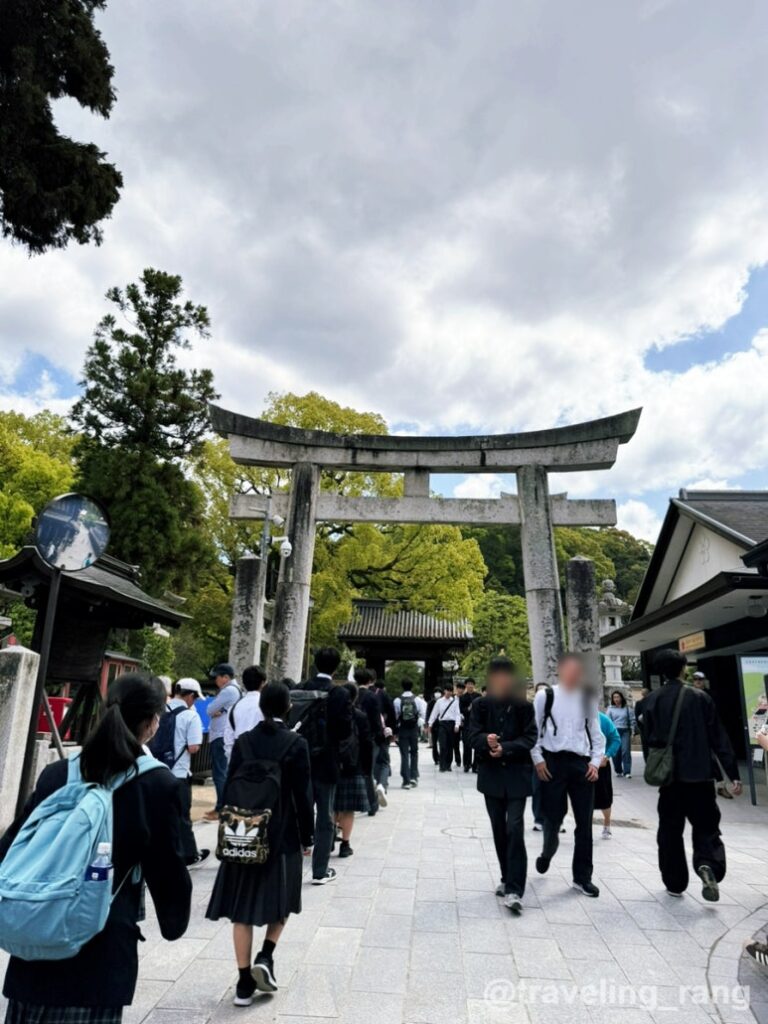
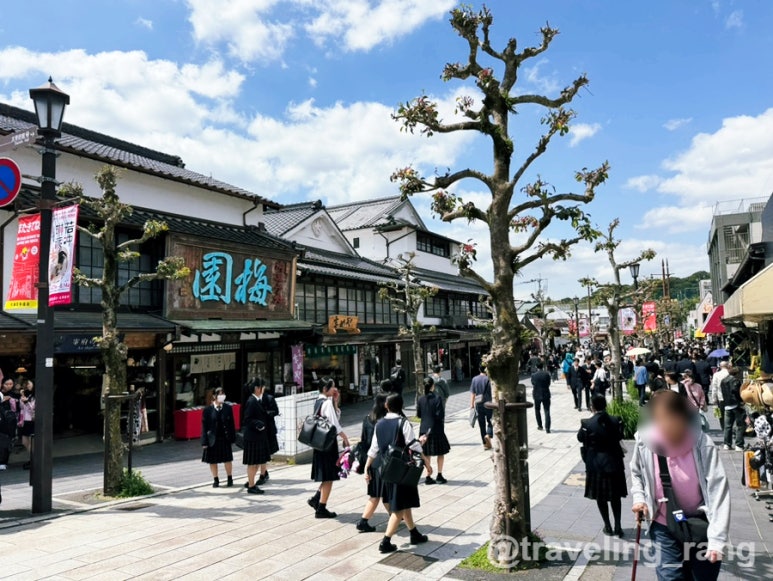
On the day we went, we saw groups of local students in school uniforms on what looked like a class field trip — and not just from one school. Multiple schools had clearly picked the same day. Watching serious, uniformed teenagers treat the shrine as a meaningful pilgrimage rather than a tourist stop gave the whole visit a different weight than we expected.
Quick facts:
- Admission: Free
- Worship hours: Vary by season (see Notes for Anthony below for current times)
- Parking: Paid lots near the entrance, cash only
How to Get to Dazaifu Tenmangu from Fukuoka
There are three main ways to reach Dazaifu Tenmangu from central Fukuoka. All directions below start from Hakata.
By Bus
The most convenient option is the direct highway bus, the “Dazaifu Liner Bus Tabito,” departing from platform 11 at Hakata Bus Terminal. It runs straight to the front of Dazaifu Station with no transfers needed. This is the best option if you’re traveling with kids or heavy luggage and want to avoid switching trains.
By Train
From Hakata Station, take the subway Airport Line to Tenjin Station, then transfer to the Nishitetsu Tenjin Omuta Line. Change again at Futsukaichi Station onto the Dazaifu Line, which takes you directly to Dazaifu Station. This route works well if you’re already based around Tenjin.
By Car (Rental Car)
We drove ourselves, since we were continuing on to Beppu and Yufuin afterward, and it made the whole day easier — less packing and unpacking, and the kids could rest in the car between stops. If your itinerary includes multiple stops beyond Dazaifu, a rental car is worth considering.
Parking at Dazaifu Tenmangu
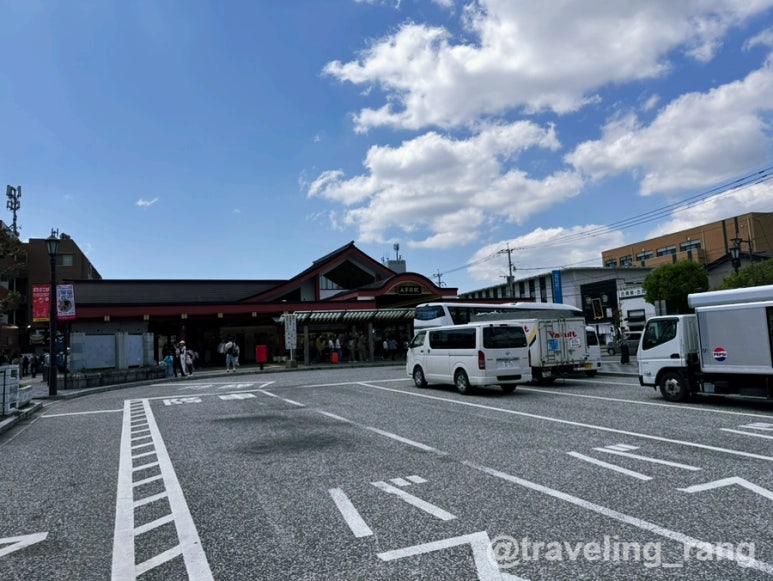
Right across from Dazaifu Station there’s a small parking lot, and cheaper options exist a little farther in if you don’t mind walking more. We chose to park close to the entrance to save our energy for the visit itself.
The lot directly in front of Tenmangu is about a 2-minute walk from the shrine, while the larger public lot, the Dazaifu Parking Center, is roughly an 8-minute walk but tends to be less expensive per visit.
Important: Most parking lots here are cash-only, so make sure you have coins and small bills on hand before you arrive.
Walking the Sando (Approach Street) to the Shrine
Once you’re parked, you’ll head straight into the sando — the approach street lined with souvenir shops and food stalls leading from Dazaifu Station to the shrine. It’s worth slowing down here; the walk itself is half the experience.
Shops sell everything from exam-success charms to Fukuoka’s famous mentaiko snacks. We told ourselves we’d shop on the way down, but it was hard not to browse on the way up too.
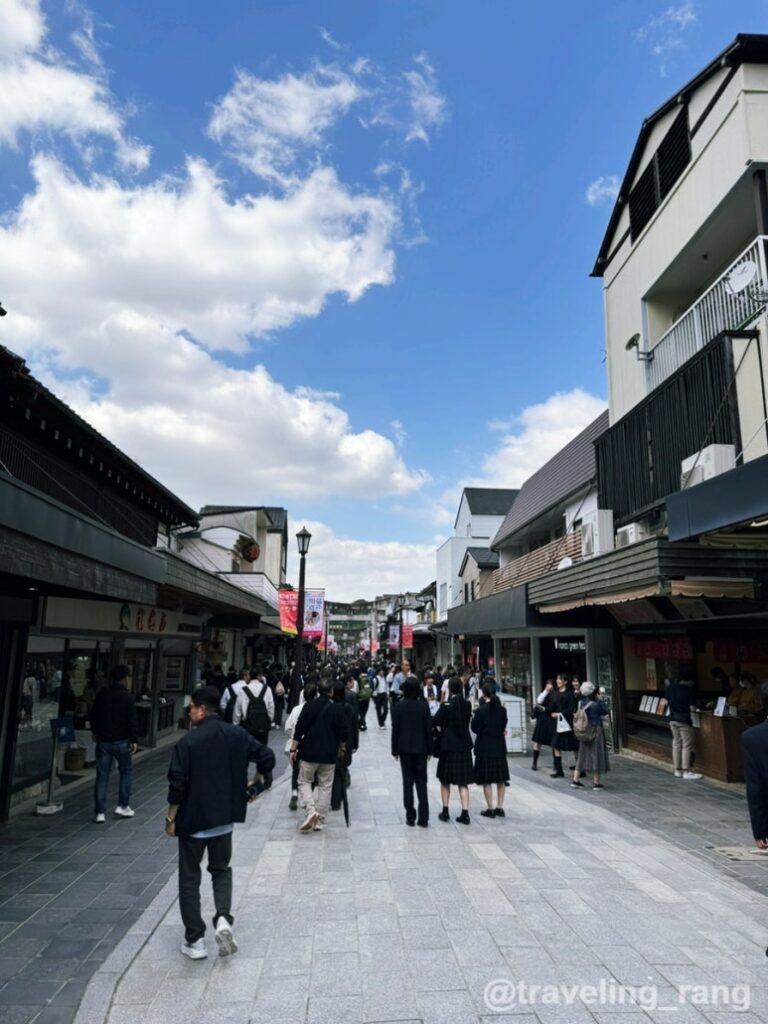
The stone torii gate at the start of the approach dates to the late Kamakura period and is said to be the oldest torii in Fukuoka Prefecture.
We visited in late April, so the cherry blossoms were already gone, but the fresh green foliage along the approach was beautiful in its own right. If you’re aiming for cherry blossoms, plan for mid-March through early April instead.
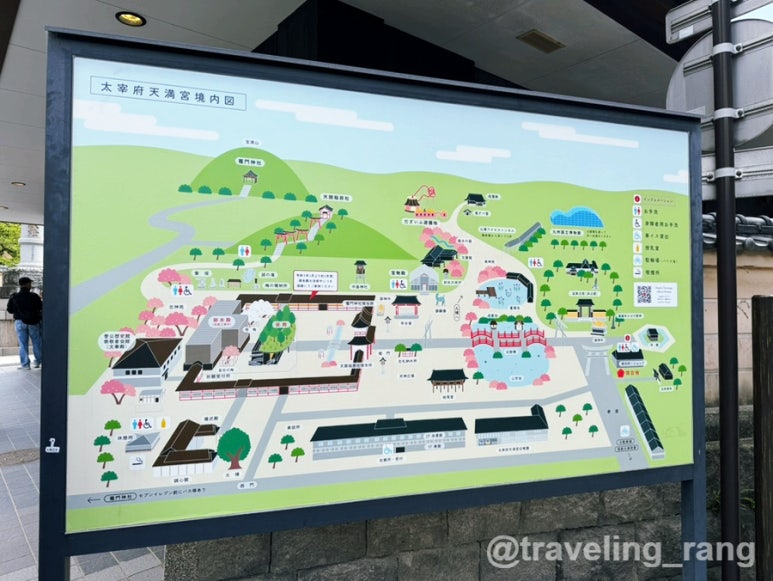
Sacred Cow Statues — The Legend Behind Them
Inside the shrine grounds, you’ll notice several ox statues — and there’s a story behind them. Sugawara no Michizane, the scholar deified at this shrine, was born in the year of the ox and died on an ox day. According to legend, his final wish was to be buried wherever the ox pulling his funeral cart stopped walking — and that spot became the site of Dazaifu Tenmangu.
Because of this connection, several bronze and stone ox statues are enshrined around the grounds, and there’s a belief that rubbing the head of one brings wisdom. That’s why the heads on all the statues are noticeably shinier than the rest of the statue.
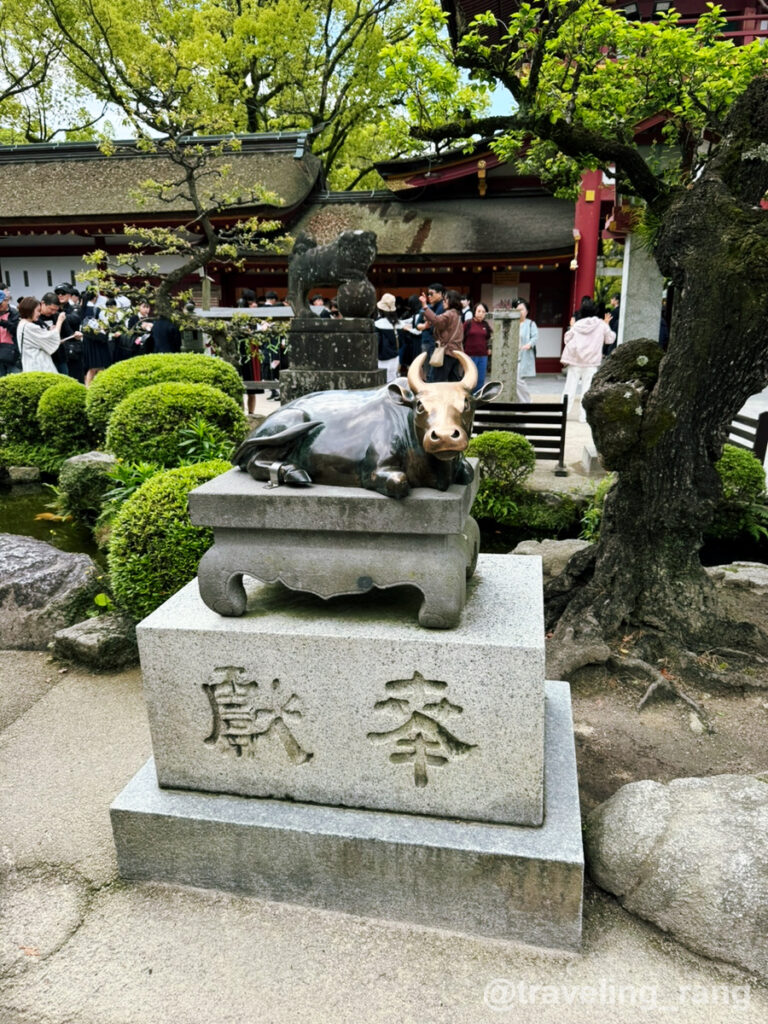
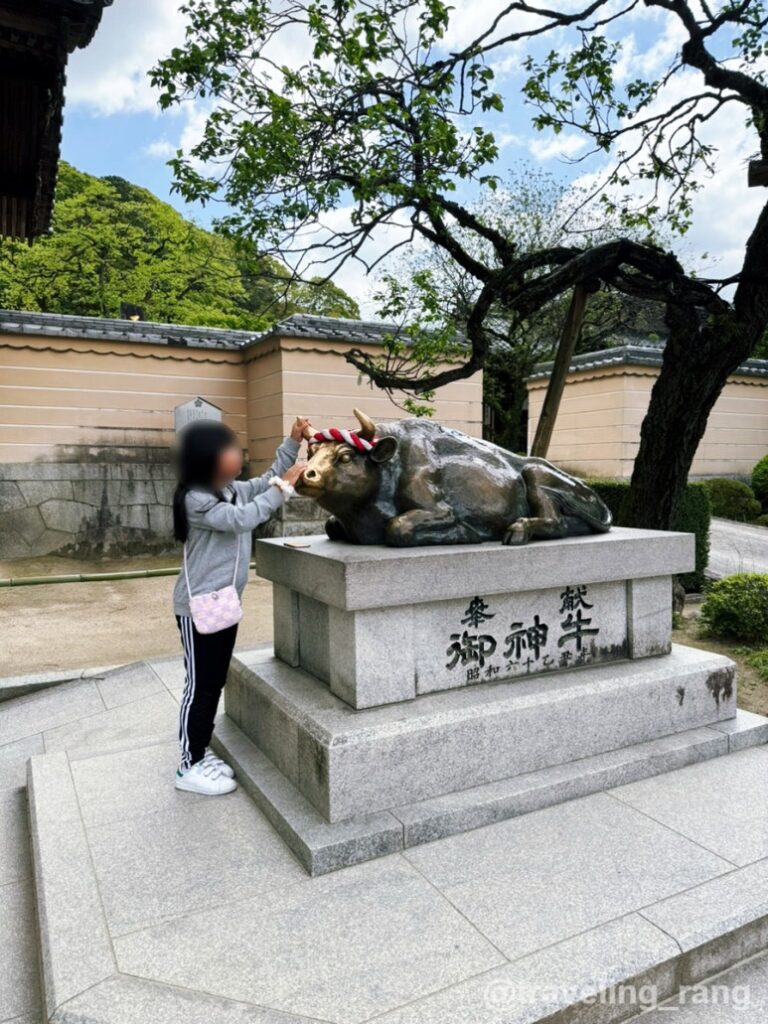
Our kids ran from one statue to the next trying to rub every single one — which, unintentionally, turned into a good way to explore the whole grounds without it feeling like a forced walk.
The Three Bridges of Past, Present, and Future
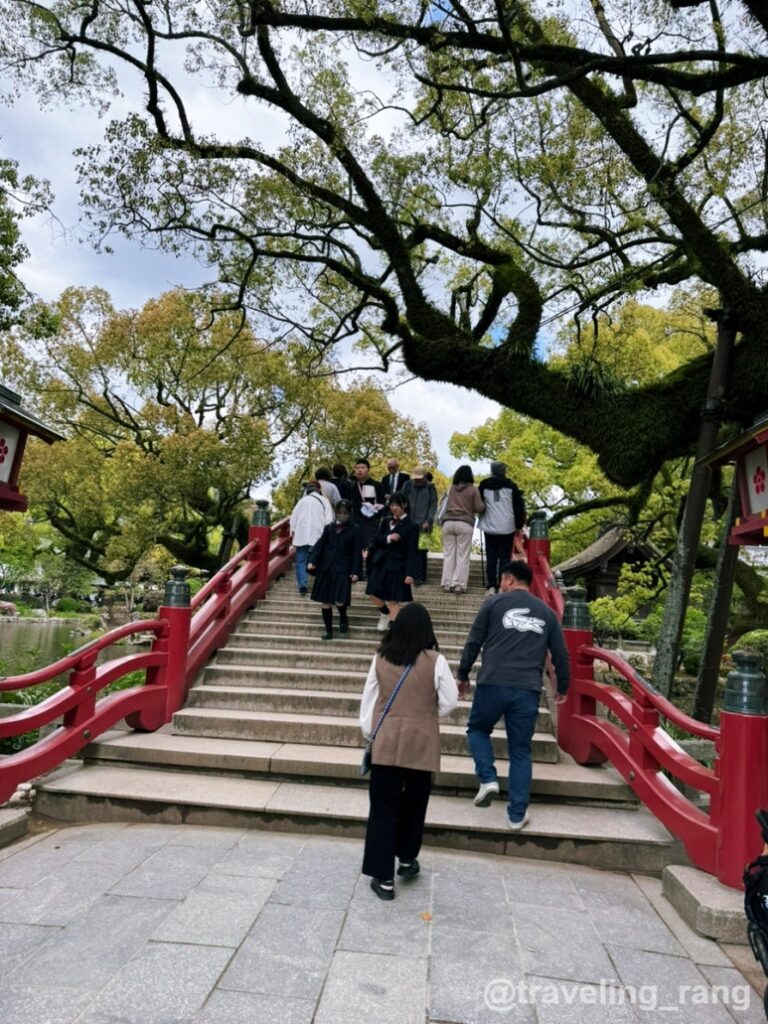
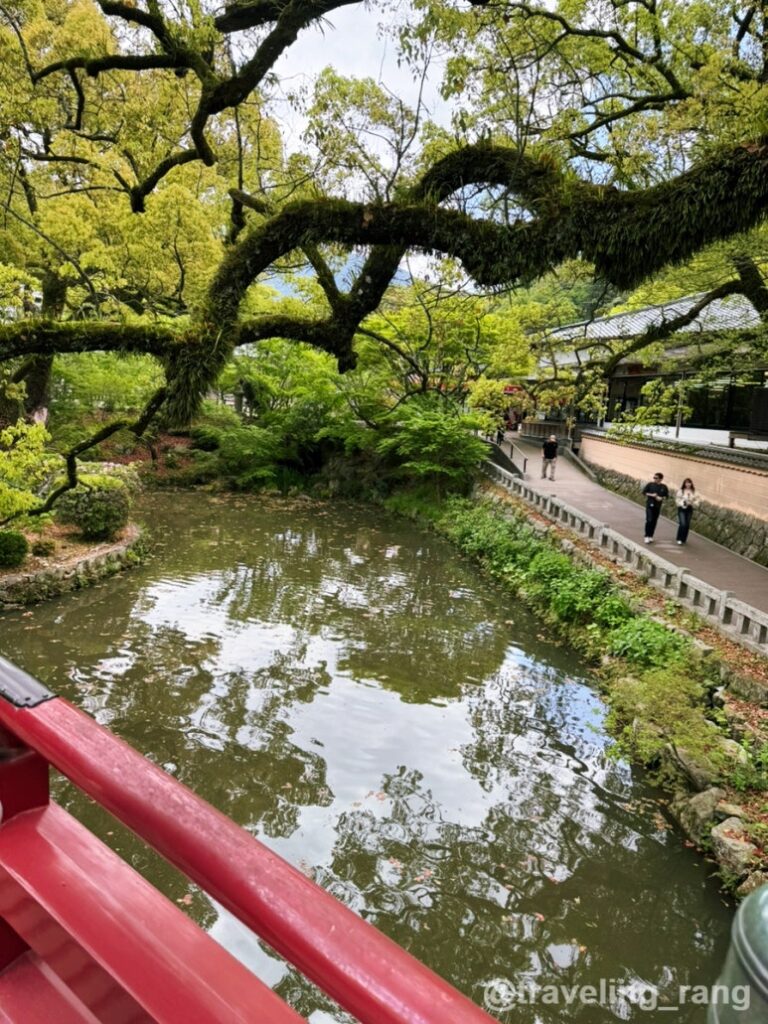
Further into the grounds, you’ll cross a set of three arched bridges over a pond called Shinji-ike. Each of the three bridges represents the past, present, and future. The row of red-railed arched bridges is one of the most photogenic spots on the grounds.
Old trees, some clearly centuries old, lean out over the pond with moss climbing up their trunks — the atmosphere here is quietly striking, more so than photos really capture.
Paying Respects at the Main Hall
The main worship hall is reached through the Romon Gate, a large red structure that’s genuinely striking up close. Before approaching the hall, there’s a temizuya (water purification station) where visitors rinse their hands — a standard part of shrine etiquette in Japan. Our kids took the ritual surprisingly seriously.
If you’re unfamiliar with how to properly pray at a Japanese shrine, our [Kushida Shrine guide — INTERNAL LINK PLACEHOLDER] walks through the full etiquette step by step.
Around the main hall, you’ll see rows of ema (wooden prayer plaques) covered in handwritten wishes, many from students praying for exam success. It’s a small but moving detail that captures what this shrine really means to the people who travel here.
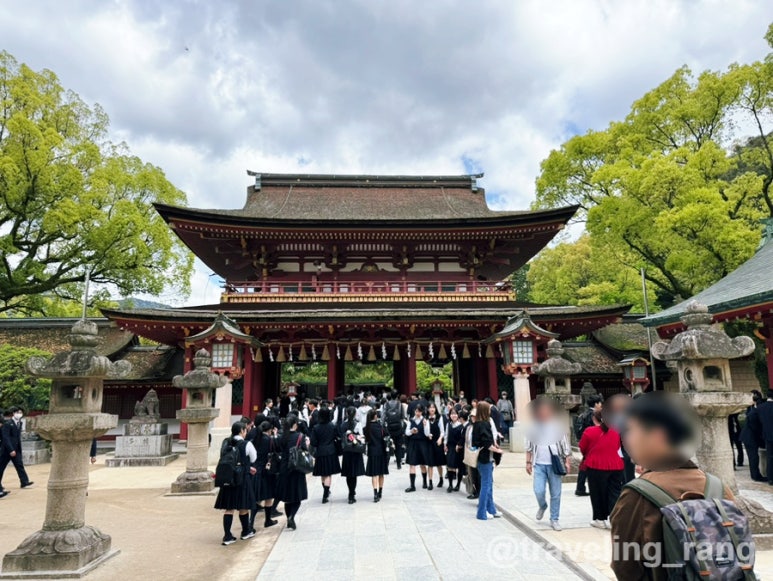
Even with the cherry blossoms gone, the mix of fresh green leaves and deep shade made for a genuinely beautiful late-April visit. On the way out, we left through a path behind the main hall rather than retracing our steps — a quieter, less crowded route back.
Must-Try Snack: Umegae Mochi
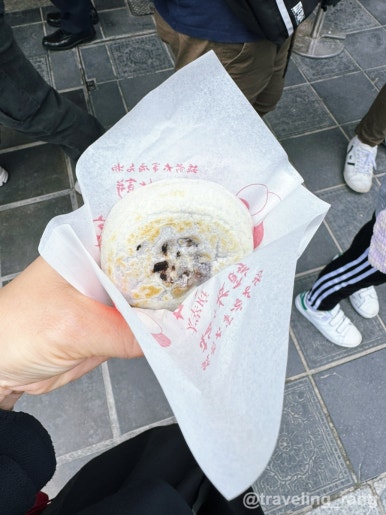
No visit to Dazaifu is complete without umegae mochi, the shrine approach’s signature snack. Eaten fresh off the grill, the outside is crisp while the red bean filling inside stays soft and warm — genuinely one of the best snacks we had on the whole trip.
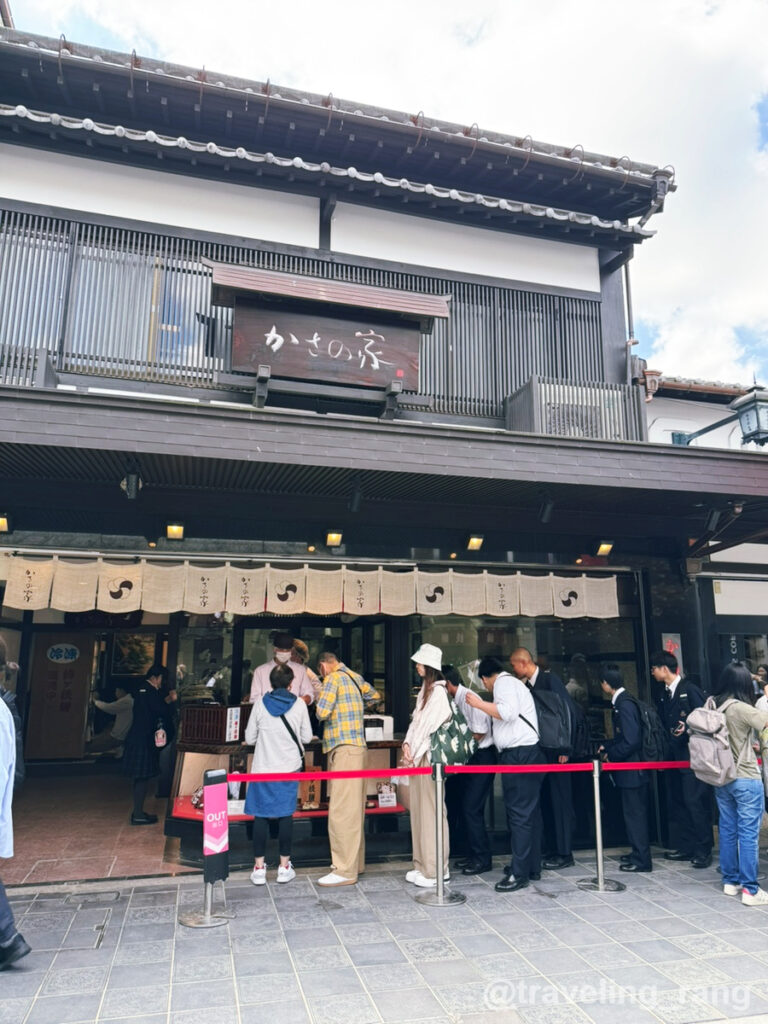
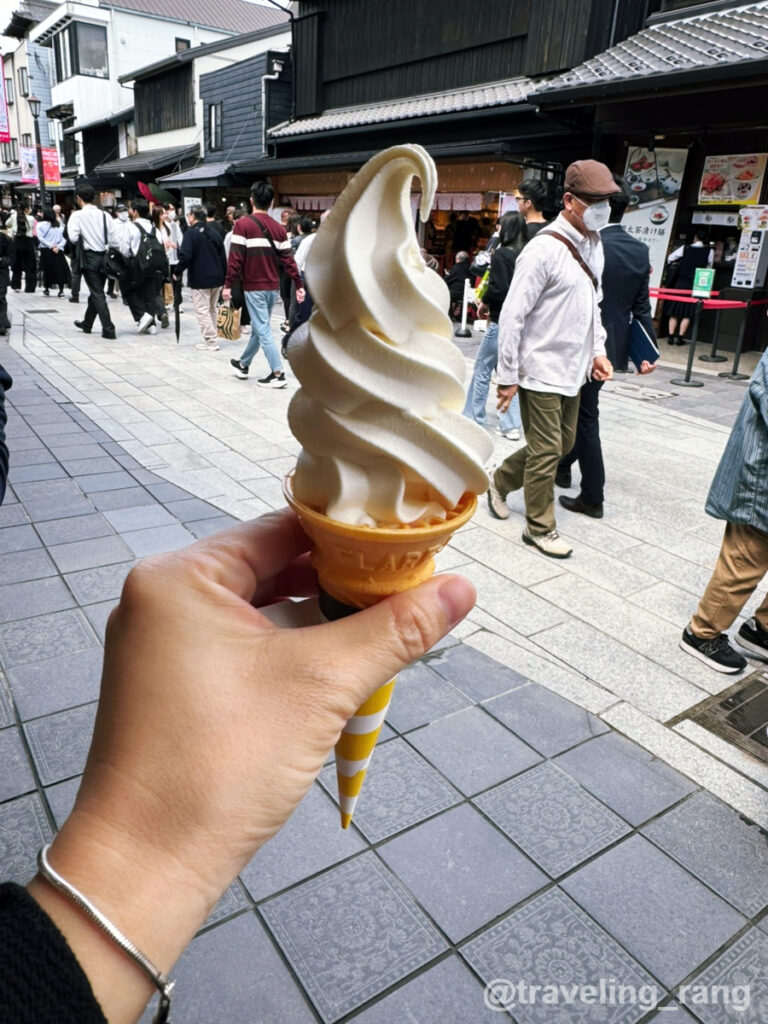
At an affordable price per piece, it’s easy to end up buying several. Add a scoop of soft-serve ice cream alongside it and you’ve got the perfect combination. Some visitors buy it on the way up to the shrine; we saved it for the walk back down and took our time with it. Either way, don’t skip it.
What Else to See Near Dazaifu Tenmangu
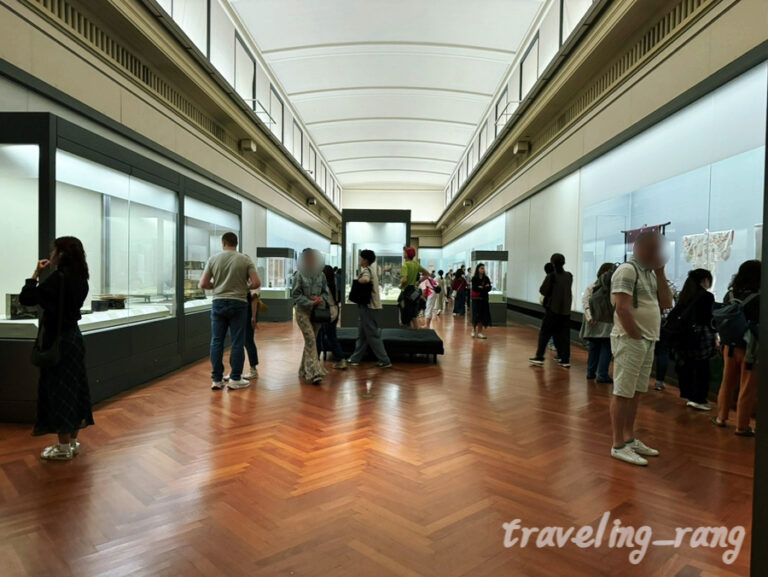
If you’re already making the trip out to Dazaifu Tenmangu Fukuoka, it’s worth knowing there’s more nearby than just the shrine itself. The Kyushu National Museum sits just behind the shrine grounds, connected by a covered walkway, and makes an easy add-on if you want an air-conditioned break between outdoor sightseeing. It’s one of only a handful of national museums in Japan, focused on the historical exchange between Japan and the rest of Asia.
A short walk in the other direction brings you to Komyozenji Temple, a much quieter Zen temple known for its raked-gravel garden. It’s a nice contrast after the busier main shrine grounds — fewer crowds, more stillness. We didn’t have time to fit it in with kids in tow, but if you’re moving at a slower pace or traveling without little ones, it’s worth the short detour.
Between the shrine, the museum, and the temple, it’s easy to turn a “quick stop” at Dazaifu Tenmangu into a genuinely full half-day outing.
Tips for Visiting with Kids
- The ox statue “hunt” naturally leads kids through the whole shrine grounds without feeling like a forced walk
- The temizuya hand-washing ritual is a good way to get kids engaged with shrine etiquette early
- Bring cash for parking and snacks — cards aren’t reliably accepted at smaller vendors
- If continuing on to other parts of Kyushu, a rental car saves a lot of repacking
Where to stay: Most visitors base themselves in central Fukuoka Hakata and day-trip out to Dazaifu.
Frequently Asked Questions
Is Dazaifu Tenmangu worth visiting from Fukuoka? Yes — despite the travel time from central Fukuoka, most visitors find it one of the more meaningful stops in the region, especially for its history, atmosphere, and the lively approach street leading to it.
How long does it take to get from Hakata to Dazaifu Tenmangu? By direct bus it takes about 40 minutes, by train (with one transfer) around 35 minutes, and by car roughly 35–40 minutes, depending on traffic.
Is admission to Dazaifu Tenmangu free? Yes, entry to the shrine grounds is free. You’ll only pay for parking and anything you buy along the approach street.
What is the must-try food near Dazaifu Tenmangu? Umegae mochi, a grilled rice cake filled with red bean paste, sold along the shrine’s approach street. It’s the signature local snack and worth trying fresh and hot.
When is the best time to visit for cherry blossoms? Mid-March through early April typically offers the best cherry blossom views along the approach and shrine grounds.
Can I combine Dazaifu Tenmangu with other nearby attractions? Yes — the Kyushu National Museum is directly connected to the shrine grounds by a covered walkway, and Komyozenji Temple’s rock garden is a short walk away, making it easy to spend a half day around Dazaifu Tenmangu Fukuoka rather than just an hour.
Hakata Station Hotel Review: Inside WBF Grande Hakata’s Rooftop Onsen